
Review · LISBON CITY TOURS
History-mistery of Lisbon (secrets societies and black arts)
Lisbon gets weird fast. This 6 pm walk weaves secrets societies, symbols, and Portugal’s darker history through real streets and landmarks, so the stories feel built into the city. I especially like how the guide anchors the mystery in architecture and place names, from Alfredo Keil Garden onward.
I also like the way the tour’s focus stays practical and human, not just abstract. If you get Slava, the vibe is warm and engaging, with lots of room for questions and a steady pace through uphill bits. One consideration: the theme can feel unsettling for some people, so if you want only sunlit, straightforward history, this might run more “occult history” than “classic highlights.”
Key things that make this Lisbon tour worth your time
- A tight 2 to 3 hours that hits major story-spots without dragging
- Real free stops along the route, so you pay mainly for the guided narrative
- Symbol hunting on the street, including Masonic angles and Templar references
- Underground Lisbon themes, from aqueduct logic to branched passageway talk
- Spectacular viewpoints timed for the evening light, especially São Pedro de Alcântara
- Private group format, so your questions do not get lost
Starting at Av. da Liberdade, the 6 pm route that feels like a story
This tour starts at 6:00 pm in central Lisbon, at Av. da Liberdade 89. The walk ends at Praça Dom Pedro IV 72, so you finish in a lively royal-sounding square that fits the finale mood. At a typical length of 2 to 3 hours, it’s short enough to slot into a packed trip, but long enough for the guide to connect dots you would never notice on your own.
The best part, in my view, is the evening timing. As the light shifts, Lisbon’s hills and stone details look extra dramatic. You are also walking when many “main sights” get crowded, so this tour gives you a different kind of energy, quieter and more focused.
And yes, expect hills. Lisbon’s center comes with climbing, and this route includes enough uphill movement that you will want comfortable shoes. Still, the pace is friendly, with stops at viewpoints and gardens that break the walking into manageable chunks. It is also offered in English, and the tour is private, meaning it’s only your group.
You can also read our reviews of more historical tours in Lisbon



Stop 1: Alfredo Keil Garden and the idea of beginnings
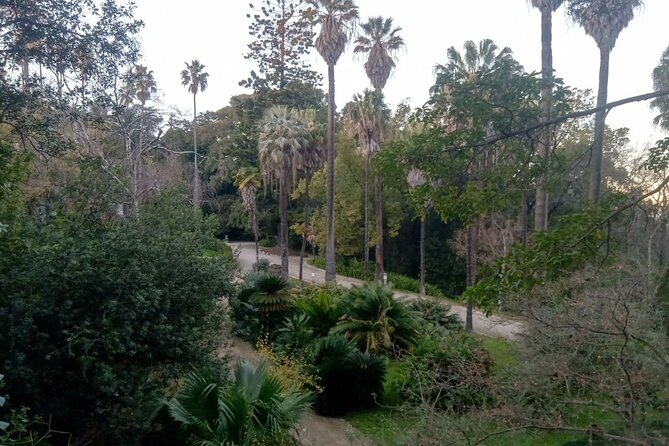
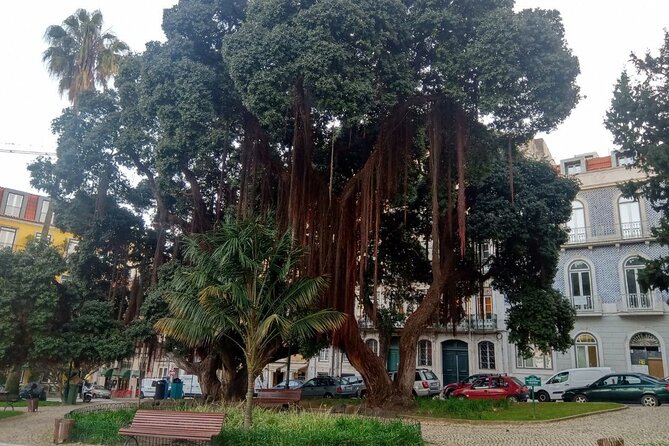
You start under the branches of majestic ceiba trees at Alfredo Keil Garden. The tour opens with a simple question that sets the tone: who lived here before the territory became Portugal, and what did people believe?
That “root of the story” framing matters because it stops the tour from feeling like a themed gimmick. Instead of jumping straight to famous names, you begin with place and belief. The garden itself is peaceful, so you get a reset before the mystery starts tightening around symbols, power, and hidden meanings.
Practical note: this is a quick stop, about 20 minutes, and the admission ticket is free. Think of it as your warm-up scene, not your final takeaway.
Stop 2: Jardim do Príncipe Real and Lisbon’s underground logic
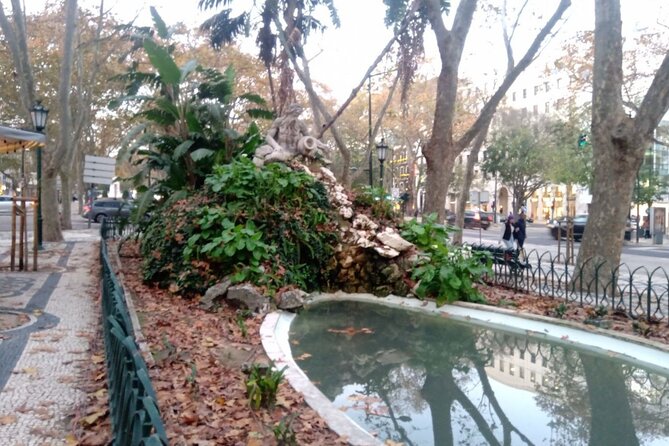
Next comes Jardim do Príncipe Real, an English-style garden with an old cedar and a mention of an underground reservoir. Here the tour turns from surface beauty to subterranean engineering and rumor. You will hear about the Aqueduct of Lisbon, including the claim that it predates the 1755 earthquake, along with mystery around the branched system of underground passageways.
Even if you treat the story elements as part of the tour’s narrative, the underlying theme is smart for visitors: Lisbon’s power has always depended on water. When you look at gardens and pipes as connected to survival and control, the city makes more sense.
This stop also runs about 20 minutes and is free to enter. It’s a good place to slow down, look up, and then look down, because the point is to train your attention beyond what most people photograph.
Stop 3: Chafariz da Rua do Século, where a fountain points to power
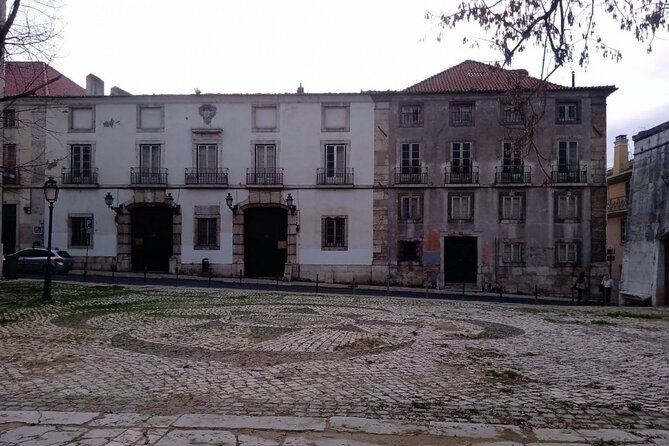
Chafariz da Rua do Século is a mysterious fountain in front of the house where Marques de Pombal was born. That detail alone makes the stop interesting, because it ties a small city feature to a huge political figure and Lisbon’s bigger transformation.
The tour’s storyline goes further into the “secret societies” theme, including the idea that these groups connect to indigenous tribes and that Pombal’s influence shaped a history timeline across Portugal and South America. Whether you agree with every framing or you simply enjoy the narrative thread, you are learning how Lisbon’s identity is often built through alliances, myths, and symbolic legitimacy.
This is a shorter stop, about 15 minutes, so keep your eyes open for any visual cues the guide points out. Fountain settings are great for that kind of symbolic reading, since they already feel ceremonial even when they are just doing their practical job.
Stop 4: Bairro Alto’s Masonic angle, beyond the bars
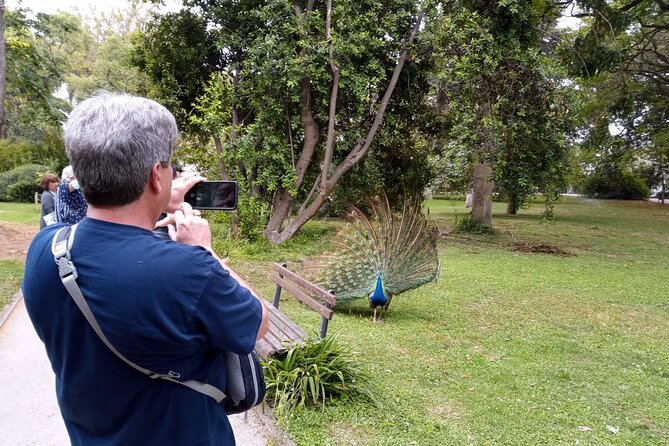
Bairro Alto is known for its bars, but this tour does not chase the nightlife stereotypes. Instead, you pass through and then stop in front of a Masonic Lodge. The focus here is the influence of Freemasonry in Portugal, past and present.
This is where the tour can feel like it either clicks for you or it does not. If you enjoy history through institutions and symbols, you’ll likely find it fascinating. The best tours like this show you how people use architecture and societies to build a shared story of power. If you want only mainstream monuments and dates, this part might feel like it takes you sideways.
Still, it stays grounded in a real location, and the stop is about 15 minutes with free admission. You get a quick, focused lesson without the walk becoming a lecture hall.




Stop 5: Miradouro São Pedro de Alcântara, viewpoint plus myths
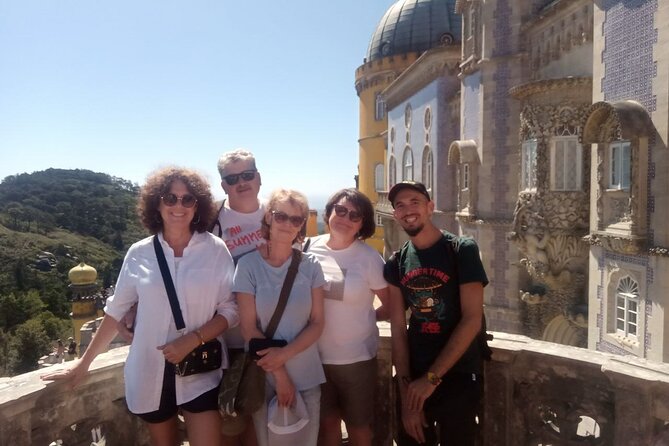
At Miradouro São Pedro de Alcântara, you get one of those Lisbon views that makes the uphill effort feel worth it. You look over the center, including Avenida da Liberdade and Restoration Square. Then the tour shifts again, from panorama to meaning: the guide talks about coats of arms of Lisbon and foundation myths.
This is a smart structure for people who love stories but hate rambling. A viewpoint gives you a natural “reset,” and the myth material then lands with more impact because you can mentally map what the city is claiming to be.
Expect around 10 minutes here. It’s brief, but it’s timed well. In an ideal world, you use this stop to take one slow photo, then put your phone away so you can listen to the symbolism without distraction.
Stop 6: Estação do Rossio and the Sintra connection
Next is Estação do Rossio, a Manueline-style station that people notice even when they are not on a tour. The building is ornate enough to feel like a landmark. And as the guide frames it, this is also a departure point for discovering Sintra.
Then comes the tour’s quirky angle: you will talk about Sintra’s special reputation and how famous people from different countries, for some reason, want to possess a bit of land there. That line might sound like a joke, but it highlights an important reality of European travel: certain places attract power and fantasy. Sintra has long carried both romance and status, so it’s a good fit for a tour that mixes history and myth.
This stop is about 10 minutes and is free to appreciate. It works well even if you have not visited Sintra yet, because it gives you a clue about what to watch for when you go.
Stop 7: Praça Dom Pedro IV, royal images and a Rio link
You then move to Praca Dom Pedro IV. This square has a “final chapter” feel, because it combines big architecture, civic space, and dramatic historical naming. The tour explores stories of various buildings in the southern part of the square, then lands on a more psychological picture of the royal family in the time of D. Pedro IV.
The guide also connects D. Pedro IV to Rio de Janeiro, tying Lisbon’s political imagination to the larger Atlantic world. Even if you do not chase every historical claim, the takeaway is useful: Portuguese history is not trapped inside Portugal. Lisbon’s story grew through ships, administration, and relationships that stretched far beyond the hills outside your hotel.
Stop time is about 15 minutes, and admission is free. Use this as your chance to ask questions before the last stop changes the mood again.
Stop 8: Largo do Carmo, monastery ruins and the 1975 Revolution question
The ending scene is Largo do Carmo, with the ruins of Carmo monastery. Today it functions as a museum, and the area also ties into the National Guard, including a 1975 Revolution museum element. That combination is why this finale works. You finish with a place that literally carries scars and memory.
The guide prompts a big question: was the 1975 revolution romantic, or closer to a coup d’etat? Then the tour compares similarities between Salazar’s Portugal and life in the Soviet Union.
This is not the kind of ending that wraps everything up neatly. It’s more like handing you a knot and inviting you to think. If you like history as debate and context, you will probably love this close. If you want simple answers, you might prefer a different tour style.
This stop lasts about 15 minutes and is free. By now, you likely see how the tour uses symbols, institutions, and political shifts as recurring characters.
Price and value: paying for the story, not entrances
At $44.58 per person, this is not expensive for a private walking tour in Lisbon, especially one that lasts up to 3 hours. Here’s where the value math becomes real: all stops are listed with admission ticket free time, so your cost is mostly for the guide’s time and interpretation.
You also get English-language hosting and a mobile ticket option, which helps if you like keeping things light in your phone. The tour is booked about 19 days in advance on average, which suggests it tends to run regularly enough that you are not stuck waiting forever for a slot.
The key value point is focus. This is not a “see everything” tour. It is a “see this theme and how it connects” tour. If that theme interests you, the price feels fair because you are buying explanations and connections, not just walking.
Pacing and what to wear, because Lisbon has opinions about your shoes
This is an active walk, and it’s in central Lisbon, which means hills. The route includes multiple short stops, with garden and viewpoint pauses that prevent the walk from becoming one long shuffle. Still, you should plan for uphill effort.
What I recommend in practice:
- Wear supportive shoes you can walk on for 2 to 3 hours comfortably.
- Bring a light layer, since evening temps can shift.
- If you get tired on hills, mention it early so the guide can adjust your pace.
A private group format also helps here. It is easier to set a rhythm when the guide is not herding a large crowd.
Who should book this Lisbon history-mystery tour
This fits best if you:
- like symbolism and you enjoy interpreting symbols in real places
- want Lisbon beyond the postcard routes, with a stronger historical edge
- enjoy conversations, not just photo stops
It may not be your best match if you:
- want only straightforward, fact-only landmark sightseeing
- get put off by “far creepier” type atmosphere or occult-adjacent storytelling
- dislike any topic that feels unsettling, even when presented as history-mystery
Should you book this Lisbon history-mystery walk
If your idea of a great Lisbon evening is walking through real neighborhoods, stopping at gardens, fountains, stations, and viewpoints while a guide connects secrets societies, Masonic symbolism, and political history, I think you should book it. The price makes sense because the entrances are free and you are paying for interpretation, not tickets.
If you want a traditional “greatest hits” tour, skip it. But if you want Lisbon to make you look twice at what you normally ignore, this one is built for you. Choose it on a day when the weather cooperates, because it’s described as needing good weather to run well, and you will want clear paths for the hills.
More Historical Tours in Lisbon



More Tour Reviews in Lisbon
Not for you? Here's more nearby things to do in Lisbon we have reviewed











Lisbon City Tours, side by side.
 ★ 5.0Lisbon City Center Tour – The Unmissable LisbonTickets from $322,234 traveller reviews
 ★ 4.7Sintra, Pena, Regaleira, Cabo da Roca & CascaisTickets from $2319,656 traveller reviews
 ★ 4.1Jerónimos Monastery Entrance TicketTickets from $2114,164 traveller reviews
 ★ 4.8History, Stories and Lifestyle Walking TourTickets from $2910,902 traveller reviews
 ★ 4.5Sunset Boat Party Cruise with DJ and Open BarTickets from $2710,378 traveller reviews
 ★ 4.7Pena Palace, Sintra, Cabo da Roca, & Cascais DaytripTickets from $919,981 traveller reviews
 ★ 4.6Oceanário de Lisboa Entrance TicketTickets from $299,943 traveller reviews
 ★ 5.0True 4Hour Private Tuk Tuk Tour: Discover Lisbon with a Local!Tickets from $1088,008 traveller reviews
More useful lists for this tour