
Review · FATIMA DAY TRIPS
Fátima and Tomar – Heritage, History & Religion
Two sacred stops, one smart day. This Fátima and Tomar trip is interesting because it connects Portugal’s faith sites with the Templar and Knights of Christ story in Tomar, all in one private 8-hour outing. You get a guided rhythm through the places people come to walk, pray, and remember, including time in the Sanctuary area and the UNESCO-listed complex at Tomar.
I especially like two things. First, I like the air-conditioned private ride from Lisbon, which makes a long day feel manageable. Second, I like how the tour explains the setting, like why Aljustrel is about 2 kilometers from the sanctuary and how the shepherd children’s homes link to the Fátima story.
One possible drawback: the Convento de Cristo ticket is not included, so you’ll want to budget for it on arrival. Also, the Sanctuary of Fátima can feel crowded on peak pilgrimage dates, so plan to move patiently and give yourself extra time if you want to light a candle.
Key highlights you should not miss
- Fátima where the story began, with a visit to the Church of Nossa Senhora do Rosário de Fátima and the pilgrimage landscape around it
- Aljustrel and the Três Pastorinhos cottages, including the House-Museum details about daily life
- Tomar’s Templar backstory, from lands granted in 1159 to Dom Gualdim Pais and the Convent of Christ
- UNESCO-listed Convento de Cristo, a major Renaissance-era centerpiece within centuries of change
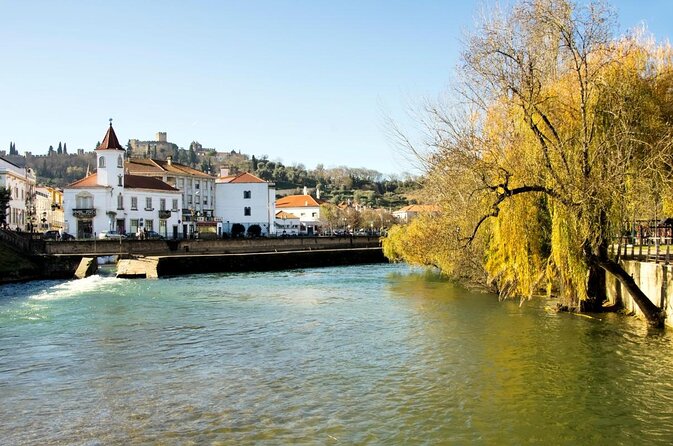
- A calm forest stop in the middle of town, at the Mata Nacional dos Sete Montes and the small Charolinha tower church
A day trip that links Fátima devotion to Templar Tomar
This is a classic Portugal pairing, and it works. Fátima is one of the world’s best-known pilgrimage destinations, while Tomar is tied to the Knights Templar and later Knights of Christ, whose influence shaped the region. When you visit them in a single day, the story starts to feel like it has chapters rather than separate attractions.
The itinerary is paced like that on purpose. You start with the Fátima sanctuary area, then you shift to the shepherds’ homes in Aljustrel, and then you head to Tomar for the UNESCO centerpiece. You finish with a nature-and-history breather in the “Forest of Seven Hills,” which keeps the day from feeling like a marathon of stone and crowds.
You can also read our reviews of more historical tours in Lisbon



Getting from Lisbon, with comfort and a private setup
The tour is designed around convenience. Pickup is offered, and you travel by air-conditioned vehicle with bottled water and free Wi-Fi. That matters because the day runs about 8 hours, and you do not want transport fatigue to take over before you reach the important parts.
It’s also a private tour, meaning it’s only your group. In real life, that usually means fewer delays than a big coach tour, and it’s easier to stick to a sensible walking pace. You can also ask questions on the way, which is where the best guiding often happens.
In the reviews, guides like Ricardo and Clayton get praised for being explanatory and friendly during the ride. If you end up with someone like that, you’ll get context you can actually use while you’re standing in front of the monuments, not just facts you forget afterward.
Stop 1: Church of Nossa Senhora do Rosário de Fátima and the sanctuary grounds
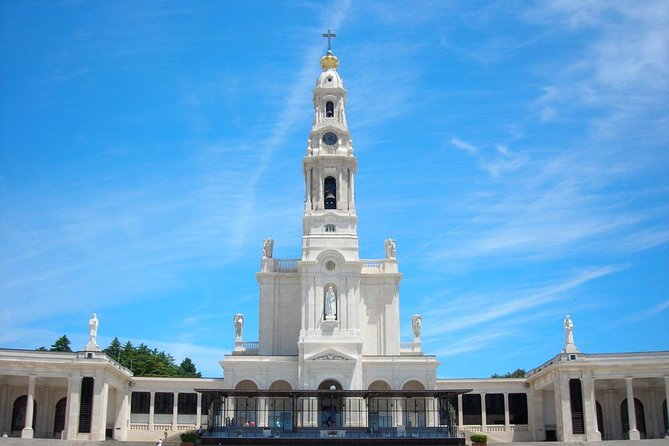
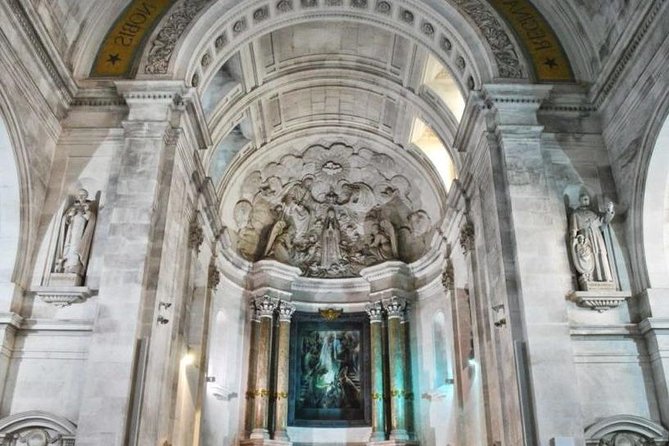
Your first major stop is the Church of Nossa Senhora do Rosário de Fátima, part of the wider Sanctuary of Fátima area. The sanctuary welcomes hundreds of thousands of people each year, both pilgrims and tourists. If you’ve never been to a working pilgrimage site, this is where you see how faith and tourism overlap in a real, day-to-day way.
One helpful detail to know before you go: Fátima has special dates. In the church calendar, May 13 marks the first apparition, and October 13 is another big moment in the year. On those dates, visitor numbers rise sharply, and the experience can feel more intense.
The sanctuary visit is your chance to orient yourself in the space people return to again and again. If you want to light a promised candle, give yourself time and don’t treat it like a quick stop. In one of the better reviews, the advice was simple: go with time if you wish to light a promised candle.
What to watch for: crowds. When there are many people, move slowly, follow staff guidance, and expect slower walking between the main areas. This is not the stop where you rush to “check a box.” It’s the stop where you absorb the atmosphere.
Stop 2: Aljustrel, Os Três Pastorinhos, and the everyday homes behind the story

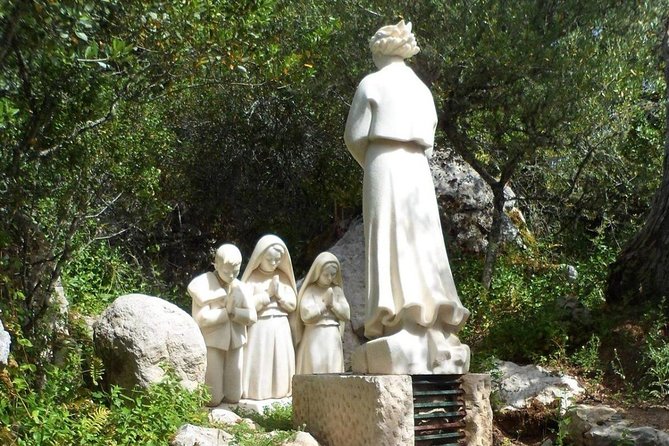
After the sanctuary, you head to Aljustrel, the village where the three children lived. The cottages of Os Três Pastorinhos are about 2 kilometers from the sanctuary, so this feels like a natural extension of the story rather than a random add-on.
This is one of the tour’s best choices because it brings you closer to everyday life. The shepherd children were Lucia, Francisco, and Jacinta, and their homes were simple, single-storey cottages designed with the practicality of rural living in mind. Visiting the houses helps you understand why the Fátima story is remembered through small, human details, not only big religious ceremonies.
You’ll see two key house locations. Jacinta and Francisco’s home was built in 1888, and Lucia’s was built in 1885, with the two homes separated by about 200 meters. That close distance is part of what makes Aljustrel feel intimate.
Right next to Lucia’s house, there is a House-Museum that shows everyday objects from the early 20th century, like agricultural tools, cooking utensils, clothing, and furniture. Even if you are not a museum person, this is a meaningful stop because it shifts the focus from legends to lived reality.
Timing tip: aim to walk through calmly, even if you could go faster. The best value here is noticing how the objects and plain rooms explain the children’s world. If you spend one hour but do it at a steady pace, you get more than if you speed through.
Stop 3: Tomar’s Templar legacy, from 1159 land grants to UNESCO status
Then the day changes gears and you reach Tomar, often described as the city of the Templars. Tomar’s importance comes from the Order of the Templars, which received these lands in 1159 as a reward for support they provided to Dom Afonso Henriques during the Christian reconquest.
The story continues with Dom Gualdim Pais, the first Grand Master in Portugal. He founded the castle and the Convent of Christ inside, and the complex expanded and changed across centuries. That layered timeline is part of why Tomar feels so different from other Portuguese towns: you’re not just seeing one era, you’re seeing the results of centuries talking to each other through architecture.
You also get a broader sense of how this shaped the city beyond the main site. Tomar has other traces of Templar influence, so even before you reach the Convento de Cristo, you’re already building a map of what to look for.
Admission at this stage is free, and the stop length is about 2 hours. That duration is a sweet spot: long enough to get oriented, short enough that you don’t feel trapped wandering while your energy drops.




Stop 4: Convento de Cristo, a UNESCO monument you’ll remember
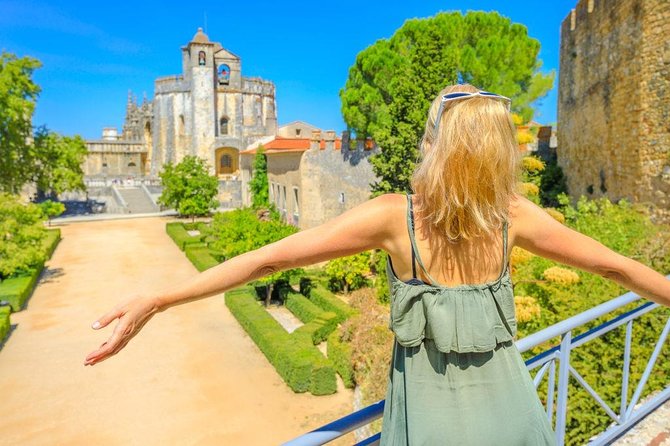
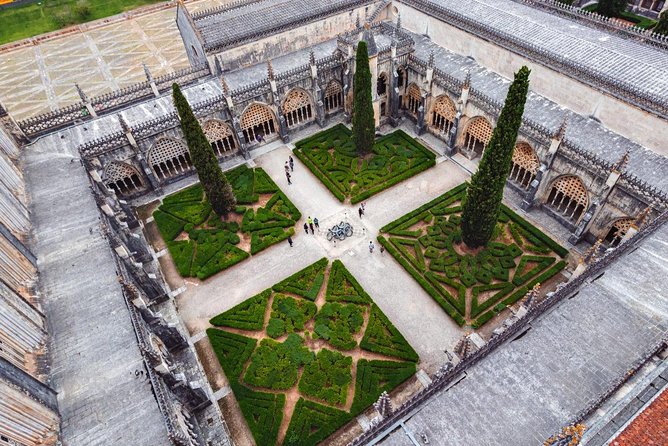
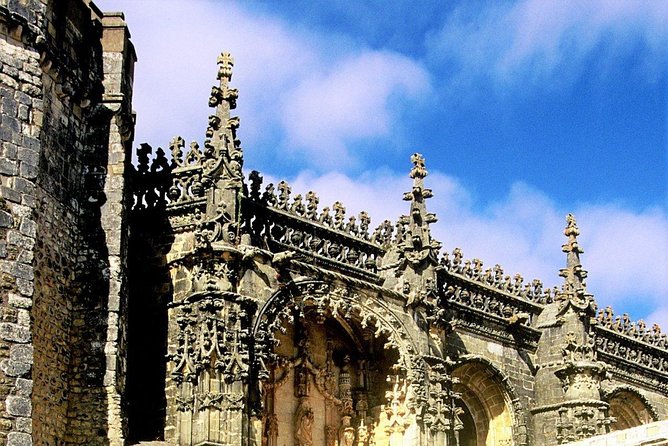
The highlight building at Tomar is the Convento de Cristo. UNESCO recognized the Templar Castle and the Convent of the Knights of Christ in 1983 as World Heritage. This is described as a unique monument in the history of the western world, and when you stand there, you can see why people treat it like a major destination.
The complex is built on a site that had Roman worship before the Christian era. So you’re not just looking at “a church.” You’re seeing a long chain of religious and historical use in one place.
The Convento of Christ is tied to the Knights of the Temple and later the Knights of Christ through the lands Afonso Henriques bestowed between the Mondego and Tagus rivers. The site’s legend and historical links help explain why Portuguese rulers and orders cared so much about this specific ground.
One practical thing: tickets are not included for this stop. Plan ahead so you don’t lose time. It’s about 1 hour on the schedule, which means you should be selective with what you focus on. If you’re the type who wants every room and every view, you might feel rushed; if you pick the key areas and let the building do its work, the hour will feel right.
Stop 5: Mata Nacional dos Sete Montes and the Charolinha tower church
After the stone-heavy stops, you end with a calmer change of pace at Mata Nacional dos Sete Montes, also known as the Forest of Seven Hills. This is a 39-hectare national woodland right in the center of Tomar, and it acts like a green link between the city and the castle area.
What makes this stop interesting is the connection to the Order of Christ. The woodlands were part of the convent’s surroundings and used for growing and harvesting crops. So you are not just taking a break, you’re stepping into the landscape that helped keep the religious and military community functioning.
The vegetation includes centuries-old cypress trees, Judas trees, oak trees, and olive trees. You also get a quirky, memorable feature: a miniature church called the Charolinha, built as a cylindrical tower. It appears to replicate lantern towers from the Convento de Cristo, which is exactly the kind of visual link that makes architecture tours more satisfying.
This is only about 30 minutes, and it’s often the moment where the day resets your attention. If your feet are tired, you can keep it simple, take a few photos, and enjoy the shade.
Price and value: what you’re really paying for
At $286.91 per person for an 8-hour private day, this is not a budget-only option. The value comes from the combination of private transportation, comfort, and guiding that helps you understand what you’re seeing.
The included basics are straightforward and useful:
- Private transportation with bottled water
- Free Wi-Fi
- Air-conditioned vehicle
You also get a mobile ticket. The schedule is built around multiple free admission stops, including the Church of Nossa Senhora do Rosário de Fátima, Aljustrel cottages, Tomar’s general time block, and the Forest of Seven Hills.
What’s not included is equally important: tickets and meals are not included, and that especially affects Convento de Cristo. Gratuities and private expenses also aren’t included. That means your total cost depends on what you decide to pay at the main paid site and how you handle meals that day.
One more practical value note: the experience is often booked about 13 days in advance. If your dates line up with heavy pilgrimage season or you want a specific time window, I’d treat early booking as smart, not just nice.
What the day feels like in real life
This is a full-day route that balances faith sites, human-scale storytelling, and major monuments. You’re not just moving between attractions, you’re moving between meanings.
In Fátima, you’ll feel the intensity of a place that is actively used for devotion. In Aljustrel, the pace shifts to something more reflective because you’re looking at homes, tools, and everyday life. In Tomar, your attention snaps back to big architecture and historical orders, especially at the Convento de Cristo complex.
If you like when history has a storyline, this tour works well. It explains why Tomar is more than a pretty town, and why Fátima is more than a one-time photo stop.
Who should book this Fátima and Tomar tour
This tour is a good fit if you:
- Want a private day trip rather than a crowded group bus experience
- Like religious history with real place context
- Prefer comfort during longer travel hours
- Would enjoy pairing a major sanctuary with a UNESCO-class monument in the same day
It’s also a good match if you want clear explanations during the stops. The reviews highlight that guides such as Ricardo and Clayton can make the journey feel like more than transportation.
If you are a hardcore museum-goer who wants to linger for two hours inside the main paid site, this might feel a bit tight. Still, for most people, 8 hours with a mix of free and paid stops is a practical way to see a lot without burning the day.
Should you book this Fátima and Tomar day tour?
If you want the strongest “one-day version” of Fátima and Tomar from Lisbon, I think this is worth booking. You get a private ride, helpful context, and key stops that connect, especially the move from sanctuary to Aljustrel.
Book it if you can handle a long day and you’re okay paying separately for the Convento de Cristo ticket. If you want maximum flexibility to wander at your own pace in Tomar, you may find you’ll still need to keep a schedule, because the route is structured.
If your dates are close to major Fátima celebrations, consider giving yourself extra patience around crowds, and if candle lighting is important to you, plan to have time. Then you’ll get the best of both worlds: faith at its source and Templar-era architecture that feels unusually alive for a monument.
FAQ
How long is the Fátima and Tomar tour?
The tour lasts about 8 hours.
Is pickup from Lisbon included?
Pickup is offered, and the tour uses a private transportation vehicle with air-conditioning.
Are tickets included for all stops?
Admission tickets are free for some stops, but the Convento de Cristo ticket is not included. Tickets and meals are listed as not included overall.
What is included in the price?
The tour includes free Wi-Fi, air-conditioned vehicle, bottled water, and private transportation.
Is this a private tour?
Yes. It is a private tour/activity, and only your group participates.
What is the latest time I can cancel for a full refund?
You can cancel up to 24 hours in advance for a full refund. If you cancel less than 24 hours before the experience starts, the amount paid will not be refunded.
More Historical Tours in Lisbon



More Tour Reviews in Lisbon
Not for you? Here's more nearby things to do in Lisbon we have reviewed










Fatima Day Trips, side by side.
 ★ 4.7From Lisbon: Fátima, Nazaré, Batalha, and Óbidos Guided TourTickets from $473,060 traveller reviews
 ★ 4.7From Lisbon: Fatima Batalha Nazaré & Óbidos Small-Group TourTickets from $792,563 traveller reviews
 ★ 5.0Fatima, Nazare, Obidos 8-People Small Group, Day-Tour from LisbonTickets from $71995 traveller reviews
★ 5.0From Lisbon: Fátima, Nazaré, Batalha and Óbidos Guided TourTickets from $55922 traveller reviews
 ★ 4.8From Lisbon: Fátima, Batalha, Nazaré, and Obidos Tour by VanTickets from $80893 traveller reviews
 ★ 4.7From Lisbon: Fátima, Batalha, Nazaré & Óbidos Full-Day TourTickets from $94881 traveller reviews
 ★ 4.0The Best of the West – Fátima, Nazaré, Óbidos & BatalhaTickets from $92856 traveller reviews
 ★ 4.3From Lisbon: Fátima, Batalha, Nazaré and Óbidos Day TourTickets from $88782 traveller reviews
More useful lists for this tour