
Review · LISBON CITY TOURS
3 Tours Private / Tour SINTRA Second Day Tour FÁTIMA Third day Tour LISBON
Three days, three legends of Portugal. This private route strings together Sintra palaces and UNESCO sights, Fátima pilgrimage spaces, and Lisbon landmarks, all starting at 09:00 and ending back at your Lisbon accommodation. I really like how the schedule stays flexible with your driver, so you can linger where you care most. The one catch to plan for: tickets are usually not included, so a few big sites need extra payment and some queue time.
I also like the comfort factor. You travel in an air-conditioned vehicle with WiFi and bottled mineral water, and it helps a lot when you are bouncing between mountain viewpoints and solemn sanctuaries. If your group has mobility limits, the pace can matter, and you will want to communicate your needs early.
Key highlights you can count on
- Private, door-to-door flow in Lisbon so you are not juggling meeting points all day
- Sintra first day with a tight mix of Pena, the Moorish Castle area, Quinta da Regaleira, and more
- Fátima second day that includes Valinhos and multiple basilicas within the sanctuary complex
- Lisbon third day viewpoints plus Belém’s big hitters like Jerónimos and Torre de Belém
- Flexible time with your driver so the route can fit your walking pace and interests
How this Lisbon-based private 3-day route works
This is a private 3-day program that runs from Lisbon. Each day starts at 09:00, and each day ends back where you’re staying in Lisbon, which is a big deal when you want a smooth trip instead of time wasted on transfers.
The tour vehicle is air-conditioned and has WiFi, plus bottled mineral water. That sounds like basic comfort, but it really matters on Portuguese routes where you can go from cool palace shade to bright open viewpoints fast. Also, there is no restroom on board, so plan your comfort stops at sights rather than assuming a mid-drive option.
One more useful detail: the time in each location can flex to match your day. That is where a private tour beats a fixed-group bus, especially if you want more time at the palace interiors or if photos matter more than strict timing.
You can also read our reviews of more private tours in Sintra



Day 1 in Sintra: Pena Palace, Sintra National Palace, and Regaleira’s mystery
Sintra is the kind of place where you feel like you are walking through a storybook, but the key is not to overpack your day. This route keeps you focused on the big, high-impact sights that most people come for, then leaves room for your driver to adjust timing.
Pena National Palace and its panoramic payoff
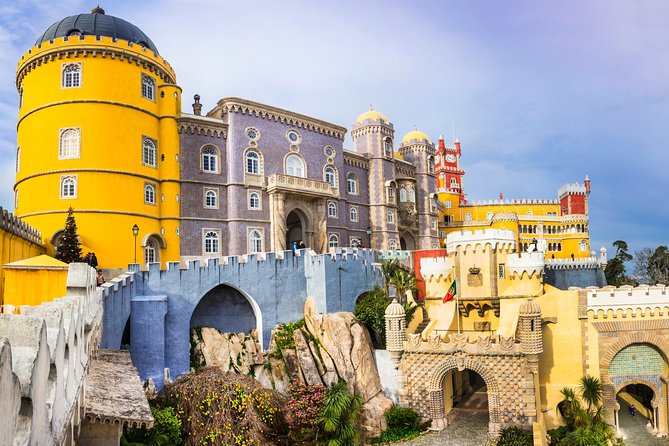
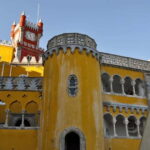
You start with the Park and National Palace of Pena, set high on Monte da Pena. The palace is a standout example of 19th-century Romanticism in Portugal, and it was built on the site of an older monastery. It was commissioned after D. Fernando de Saxe Coburg-Gotha, husband of Queen Dona Maria II, purchased the convent and surrounding lands in 1836.
What makes Pena worth your money is the combination of palace drama and the view. One wing even has a restaurant setup with a terrace looking out over the Sintra Mountains and toward the coast. Tickets are not included here, so plan ahead, and expect you’ll want at least a full chunk of time, not a rushed glance.
The historic center: fast cultural grounding
Next comes the Centro Histórico de Sintra, the UNESCO-classified core of the town. You get a walking look at layers of history through different buildings and periods, without needing museum-style focus. Admission is free, which helps keep the day from feeling like everything costs extra.
This stop also works as a reset. After palace viewpoints, a stroll in the village helps you re-orient. If you are the type who likes a little atmosphere, this is where you get it.
Sintra National Palace: royal Portugal, medieval style
The Sintra National Palace is next, and it is a different vibe than Pena. This one is often described as unique among Portugal’s royal medieval palaces, and it’s tied to Portuguese kings and queens across time. The palace you see today was rebuilt on the initiative of Dom João I and later enriched by Dom Manuel I, including a new wing.
You’ll visit the interior, where the mix of artistic styles reflects shifting eras. The decoration can feel busy if you try to sprint through, so slow down and pick a few areas to focus on. Tickets are not included, so budget that cost and factor it into how much time you spend inside.


Quinta da Regaleira: romantic revivalism with symbolic vibes
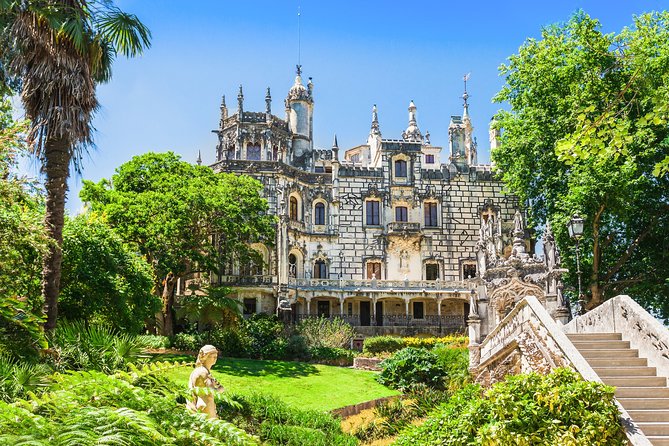
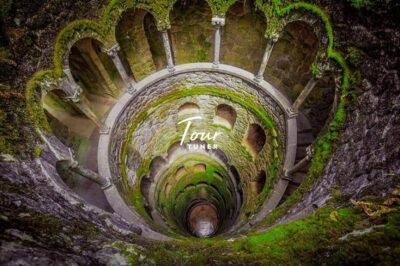
Then you head to Quinta da Regaleira, one of Sintra’s most enigmatic sites. This property was created in the early 20th century by millionaire Antonio Augusto Carvalho Monteiro, with scenographic architect Luigi Manini helping realize the dream.
The palace style is a romantic revival mash-up, mixing Gothic, Manueline, and Renaissance forms, plus esoteric symbolism. Even if symbolism is not your thing, the place is still visually compelling, and the gardens give you that Sintra feeling of hidden meaning and surprises. Admission is not included, so treat this as a paid highlight and plan 1.5 hours rather than a quick walk.
A bonus romantic park vibe: Monserrate
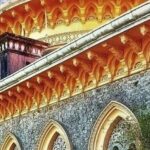
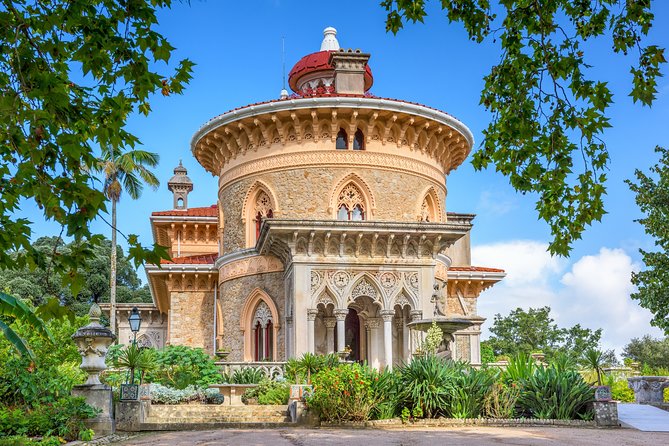
The day can also include Park and Palace of Monserrate, a Romantic park created by William Beckford. This is a “different energy” stop compared with the formal palace interiors. If you want greenery and architectural mood rather than strict royal rooms, it is a great balance.
Moorish Castle and Sintra’s mountain geography
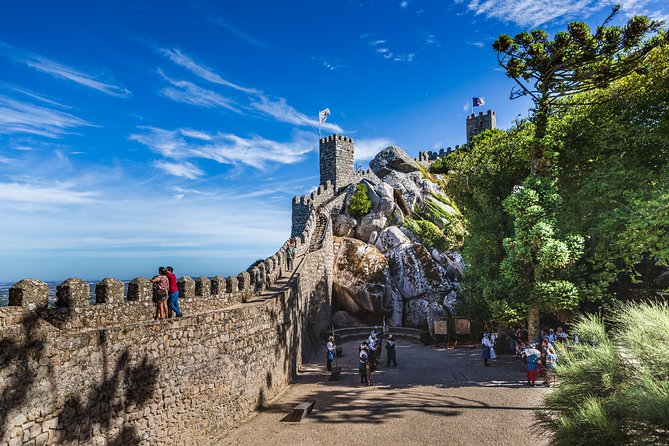
A big chunk of what makes Sintra feel special is the setting. The route includes the Moorish Castle, which sits between the two Sintra mountain ranges. The site dates to the early Moorish occupation, and it goes back to the 8th century.
Later, it was taken by Dom Afonso Henriques in 1147, and a Christian chapel dedicated to St. Peter of Penaferrim was built. In the romantic period in 1860, the walls were restored under Dom Fernando II, who also wooded the surrounding areas and gave more dignity to medieval ruins. Two details I love here are the Moorish cistern inside and the Royal Tower, because they connect you to how people lived and defended spaces long before selfie culture.
The stop is about 3.5 km from the historic center of Sintra. That matters for pacing. If your group prefers minimal walking, you’ll want to coordinate with your driver on how much walking time makes sense between viewpoints.
Day 2 in Fátima: Valinhos pilgrimage calm and the sanctuary’s key buildings
Fátima changes the tone completely. Sintra is dramatic and playful in a way, while Fátima is about steadiness, prayer, and space. This day keeps you in and around the sanctuary area, including Valinhos and multiple major sites.
Valinhos Sanctuary: the Via-Sacra route and local devotion
You start in Valinhos Sanctuary, where thousands of pilgrims take the Via-Sacra route to the Hungarian Calvary. You also visit the Chapel of St. Stephen of Hungary and then head to see the House of Lucy and the House of Francis and Jacinta Marto in Aljustrel.
This is a great stop for understanding context. The sculptures connected to the site include the Angel of Portugal and the Via-Sacra stations, created by Maria Amélia Carvalheira da Silva. Admission is free, and the route feels meaningful without requiring you to be religious to appreciate the devotion and the landscape.
Basilica of the Holy Trinity: modern scale with no supports
Next is the Basilica of the Holy Trinity, located within the sanctuary enclosure on the opposite side of the Basilica proper. It was inaugurated in 2007 but planned since 1973, because the older basilica was not large enough for service capacity on high turnout days.
The building is modern and round, in white stone color known as the white of the sea. It measures 125 m in diameter with no intermediate support, which is the kind of engineering fact that makes your brain pause while your camera keeps clicking. Admission is free, so you can spend time inside without paying extra.
Capela das Aparições: the holm-oak site and the chapel’s humble design
Then you visit Capela das Aparições, built by local people in 1919 in response to Our Lady’s request during the apparitions. The first mass held there was in 1921. Changes over the years were made for preservation and maintenance, but the chapel keeps its modest, rough hermitage-like design.
The spot is marked by an image of Our Lady where the holm-oak tree once stood, tied to the story of the apparitions. The original tree disappeared over time as believers removed pieces. Capela time is typically short, but it hits hard because it’s simple and direct. Admission is free.
Basilica of Our Lady of the Rosary: the major sanctuary centerpiece
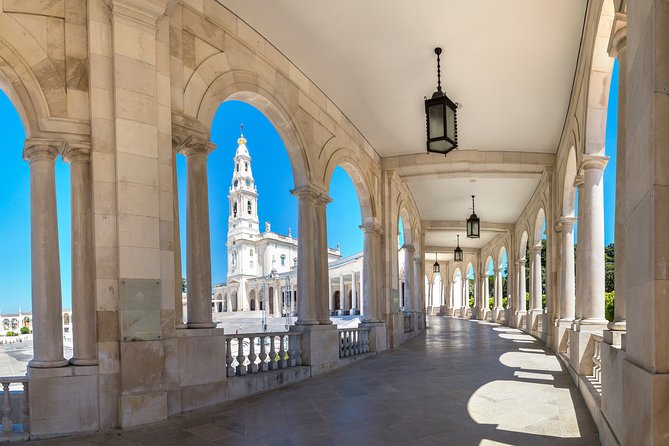
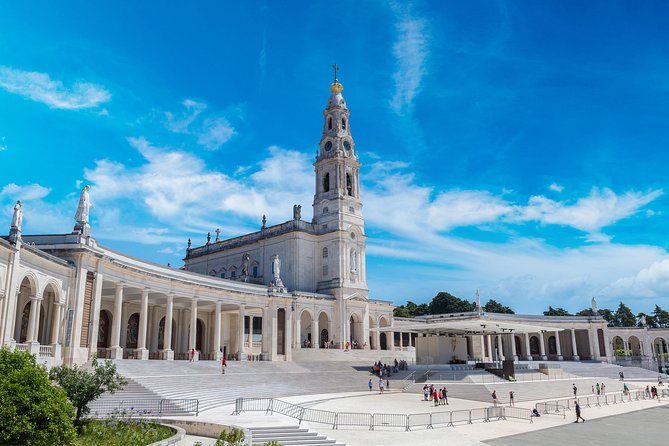
Finally, you visit the Basilica de Nossa Senhora do Rosario de Fátima, often called the Basilica of the Rosary. This basilica integrates the sanctuary of Fátima, located in Cova da Iria in the municipality of Ourém.
Even if you keep your visit brief, this stop gives you the main focal point for the site. Admission is free, and it is an easy place to pause and take in how the sanctuary is arranged for crowds and ceremony.
Day 3 Lisbon: Jerónimos, Belém Tower, and viewpoints that make the city click
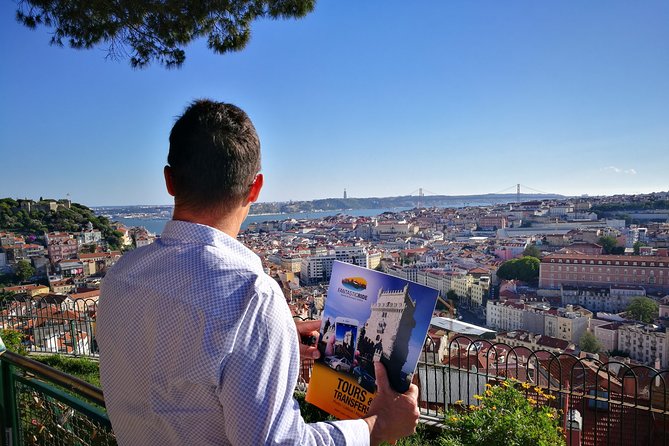
Lisbon can be a lot if you do it randomly. This route focuses on the city’s most important architectural statements and then adds viewpoints where you understand the city’s layout.
Jerónimos Monastery: Manueline architecture tied to the Discoveries
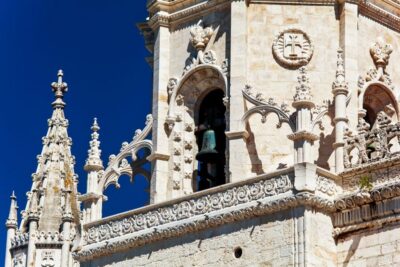
You start at Mosteiro dos Jerónimos, a top example of Manueline architecture on the Tagus. The current monastery sits where there was once a small hermitage dedicated to Santa Maria, built by Infante D. Henrique in 1452.
In the early 16th century, King Manuel I planned a large monastery, approved by the Holy See and donated to the Order of the Friars of St. Jerome. This makes it deeply linked to Portugal’s age of exploration. Admission is not included here, so treat it as one of your paid anchors for Day 3.
Torre de Belém: a defensive jewel on a basalt island
Next comes Torre de Belém, ordered by King Manuel I and built between 1514 and 1521 by Francisco de Arruda. The tower’s ornamentation looks almost delicate, but it was a defensive bastion meant to protect the Tagus entrance and work alongside the St Sebastian tower.
Originally it sat on a basalt island near the right bank in front of Restelo beach. Over time, the river’s course shifted, and the tower ended up practically swallowed by the bank. UNESCO classified it in 1983. Admission is not included, so plan your time accordingly and double-check ticket needs.
Pastéis de Belém: why the pastries exist
At Pastéis de Belém, you get a short stop tied to a real origin story. Pastéis were created from a sugar cane refinery connected to the monastery area. When convents and monasteries were shut down in 1834 after the liberal revolution, the clergy and laborers were expelled.
To survive, someone offered sweet pastries for sale in a store. These pastries quickly became known as pastéis de Belém. Since the stop is brief and admission is listed as free, it is an easy way to connect food to history without turning the day into a meal marathon.
Padrão dos Descobrimentos: a monument built in stages
You also visit Padrão dos Descobrimentos along the riverside. It was designed in 1940 to commemorate the Exposition of the Portuguese World, but it was only built in 1960 for the 500 years since the death of Prince Henry the Navigator.
This stop is less about walking in an interior and more about reading the design and context. If you like symbolism in public art, you’ll likely get more out of it than if you only want photo spots.
Eduardo VII Park and the city’s view angles
Then comes Parque Eduardo VII, near Avenida da Liberdade. The gardens were originally called Parque da Liberdade, then renamed after British King Edward VII visited in 1903. Admission is free, and the main draw is the panoramic city view.
This is a good “breather” between major monuments. You can pause, orient yourself, and decide which neighborhoods you want to explore next, on your own time.
Rossio Square and Lisbon Cathedral: rebuilding and layers underneath
You also stop at Rossio Square, reconstructed after the 1755 earthquake. It marks the northern reach of Pombaline Downtown and is dominated by the neo-classical D. Maria II Theatre, built on the site of the former House of the Inquisition.
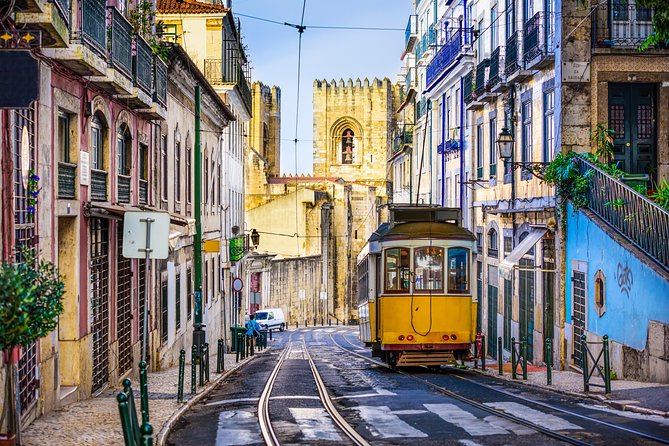
Then you visit Lisbon Cathedral (Sé Catedral de Lisboa), dedicated to the Mother of God since 1147. Construction began after D. Afonso Henriques reconquered Lisbon from the Moors. It was built on a Muslim mosque, and archaeological excavations confirmed the mosque was built on an earlier Visigothic Christian temple.
That layered origin matters. It makes the cathedral feel less like a single monument and more like a timeline you can walk through. Admission is not included here.
Miradouro Santa Luzia and Senhora do Monte: views that make Lisbon make sense
The route includes two major viewpoints. At Miradouro de Santa Luzia, you get a wide look over Alfama and the Tagus River. You’ll notice key landmarks like the dome of Santa Engrácia, the Church of Santo Estêvão, and the two white towers of the Church of São Miguel.
There are also modern tile panels on the south wall, including depictions tied to Praça do Comércio before the earthquake and Christians attacking the castle of St. George, made by António Quaresma and manufactured at the Lamego Widow Factory.
Finally, Miradouro de Senhora do Monte in São Vicente (Graça) offers more wide city scope. You can see the sea of straw, the Castle of São Jorge, parts of Baixa, and the Tagus estuary. Looking west, the view reaches toward Bairro Alto and Monsanto. To the north you can view the Avenida Almirante Reis valley. Next to the viewpoint is the small old hermitage of Our Lady of the Mount, founded in 1147 and consecrated to St. Gens, and tradition ties it to D. Afonso Henriques setting up camp to conquer the city.
Price and logistics: what $581.78 buys, and what to budget next
At $581.78 per person, this tour is priced for a private, multi-region setup. For a lot of people, the value is in what you do not have to manage: you get private transportation, air-conditioning, WiFi, and water, plus a route that connects three very different areas without you planning every leg.
What you should budget extra for is tickets and food. The tour lists tickets as not included, and that matters because some of the biggest items are ticketed, including Pena Palace, Quinta da Regaleira, Jerónimos, Torre de Belém, and Padrão dos Descobrimentos. Other stops are free, like parts of the historical center in Sintra and the Fátima sanctuary sites you visit.
Also, there is no restroom on board. That is not a deal-breaker, but it does mean you should use breaks at the sights.
One more practical detail: it is booked about 45 days in advance on average. That suggests it is not a “wait and see” plan if you are traveling during peak seasons. If you have fixed dates, give yourself time to lock it in.
Comfort, pace, and the human touch that makes this tour work
This is the kind of itinerary where the guide matters. The stops are famous, but Sintra hills, palace interiors, and Fátima crowds are where timing can either feel smooth or feel exhausting.
The most praised element in past experiences is how guides handle pace and needs. One guide, Margarida, was highlighted for adjusting the tour to better support a group with two people who had issues walking, and the group was described as six ladies on holiday. Another guide, Filipe, was praised for professionalism and Portuguese history knowledge, and for being proud of his city.
Even if you do not get these exact guides, the pattern is clear: a good guide here is not just reading facts. It is managing your day so you do not feel like you are sprinting from ticket line to viewpoint. Since you are on a private tour, you can ask for that kind of adjustment directly.
If you prefer structured days with minimal navigation stress, this setup is a big win. If you like total spontaneity and do your own museum wandering, you may find the structure limiting, but the built-in flexibility helps.
Who should book this tour, and who should not
This tour suits you if you want a first-timer friendly, big-sights route across Sintra, Fátima, and Lisbon without renting a car or doing constant public transit math.
It also suits you if you value comfort and privacy. The AC vehicle with WiFi and bottled water makes long days easier, and returning to your Lisbon accommodation each night reduces logistics stress.
You might think twice if you dislike paying separate admission fees. The schedule includes many ticketed highlights, so you will need to plan your budget beyond the tour price. You might also feel the day is full if you need lots of long breaks, since many stops are time-bounded.
Should you book this private 3-day Sintra, Fátima, Lisbon route?
Yes, if you want a smooth, curated-feeling overview with the option to shift timing to your pace. The biggest strength is the combination: Sintra’s iconic palaces, Fátima’s major sanctuary sites, and Lisbon’s most important Belém and viewpoint landmarks, all handled by a driver in an air-conditioned private vehicle.
Before booking, do two things: check which stops require tickets, and think about how long you want at each. If you are the type who loves interiors, you’ll appreciate the palace and cathedral time. If you care more about views, build your day around the viewpoint stops and plan for shorter interior visits.
If you want, tell me your travel month and group age range, and I’ll suggest which paid sites are the highest priority for your day flow.
FAQ
What time does the tour start and where does it end?
The tours start in Lisbon at 09:00 and end back in the same place, meaning your accommodation in Lisbon.
Is pickup included?
Pickup is offered, and the program is designed to start from Lisbon and return you to your accommodation at the end of each day.
Is this tour private?
Yes. It is a private tour/activity, and only your group participates.
Are entrance tickets included?
Tickets are not included. You should plan to buy tickets for sites that list admission as not included.
What about food and drinks?
Food and drinks are not included. The tour provides bottled mineral water in the vehicle, but you will need to handle meals separately.
What’s included in the vehicle?
You get an air-conditioned vehicle, private transportation, bottled mineral water, and WiFi on board.
Is there a restroom on board?
No. Restroom on board is listed as not included.
How far in advance do people book it?
On average, it is booked around 45 days in advance.
What is the cancellation policy?
Free cancellation is available. You can cancel up to 24 hours in advance for a full refund, based on local time.
Are these stops mostly walking?
Some stops involve walking and walking uphill, especially in Sintra. You can adjust time with your driver, but the day includes multiple viewpoints and historic areas.
More Private Tours in Sintra



More Tours in Sintra

More Tour Reviews in Sintra

Not for you? Here's more nearby things to do in Sintra we have reviewed








Lisbon City Tours, side by side.
 ★ 5.0Lisbon City Center Tour – The Unmissable LisbonTickets from $322,234 traveller reviews
 ★ 4.7Sintra, Pena, Regaleira, Cabo da Roca & CascaisTickets from $2319,656 traveller reviews
 ★ 4.1Jerónimos Monastery Entrance TicketTickets from $2114,164 traveller reviews
 ★ 4.8History, Stories and Lifestyle Walking TourTickets from $2910,902 traveller reviews
 ★ 4.5Sunset Boat Party Cruise with DJ and Open BarTickets from $2710,378 traveller reviews
 ★ 4.7Pena Palace, Sintra, Cabo da Roca, & Cascais DaytripTickets from $919,981 traveller reviews
 ★ 4.6Oceanário de Lisboa Entrance TicketTickets from $299,943 traveller reviews
 ★ 5.0True 4Hour Private Tuk Tuk Tour: Discover Lisbon with a Local!Tickets from $1088,008 traveller reviews
More useful lists for this tour