
Review · LISBON CITY TOURS
Lisbon to Porto with stop Aveiro-Fátima-Coimbra-Tomar-Nazaré-Óbidos
A road trip with built-in stops changes everything. This Lisbon to Porto transfer is a door-to-door way to see several Portugal highlights in one day, without the stress of renting a car. I like that you get an air-conditioned private ride plus structured time in each town, so you can actually experience places like Óbidos and Fátima instead of just passing through.
What I also like is the mix of styles: medieval streets in Óbidos, famous beach scenery in Nazaré, the big spiritual draw of Fátima, and university-town vibes in Coimbra, with Aveiro’s canals and sweets to round it out. One consideration: you are given free time in each stop, not a full guided tour walk-through in every town, so you should be ready to explore on your own and ask your driver questions while you’re in the car.
Quick take: what really matters on this Lisbon to Porto transfer

- Door-to-door pickup and drop-off means you start from your hotel in Lisbon and end at your accommodation in Porto.
- Pick the stop count that matches your expectations, since your schedule is based on the cities you select.
- Óbidos is made for an hour of castle views, winding lanes, and a quick stop for ginjinha.
- Fátima is a real time-saver if you want to see the main sanctuary areas without planning transport.
- Aveiro pairs well with a moliceiro cruise, if you want a little extra time on the water.
- Expect a private transfer, not a guided tour marathon, especially if you choose multiple towns.
Door-to-door pickup, then a smooth run to Porto
This is built for convenience. You meet your driver in Lisbon at your hotel or accommodation, then you head toward Porto with the option to break the journey into a sequence of classic stops along the way. The vehicle is private, and it’s air-conditioned, with bottled water and a driver fluent in English.
That matters more than it sounds. Lisbon and Porto are not just “two cities,” they are logistics tests. A door-to-door transfer helps you keep your day clean: no station hopping, no taxi math, and no parking headaches. Plus, you can travel with luggage without stress, since you are not juggling transfers like you would on public transport.
Your ride is also unidirectional, meaning it’s designed as a Lisbon-to-Porto (or Porto-to-Lisbon, if you choose the opposite direction) journey, then you get dropped at your place in the arrival city. The itinerary timing is flexible, and you can adjust the pickup time if 8:30 am does not fit.
You can also read our reviews of more tours and experiences in Lisbon.



Choosing your stops: why the “3 to 8 hours” range feels real
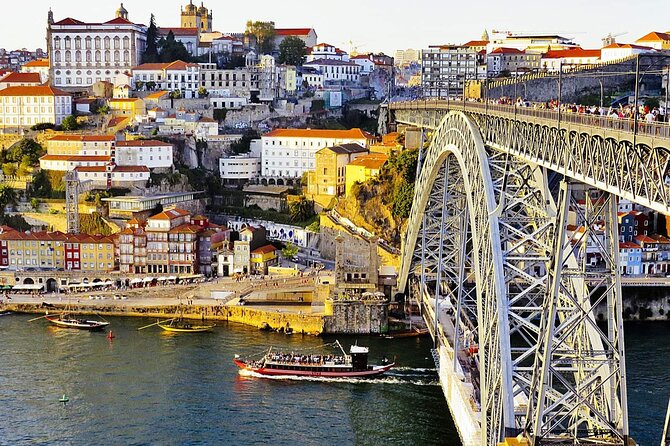
The overall duration is listed as 3 to 8 hours, and the difference comes down to how many stops you select and how long you actually want in each place. The practical advice is simple: plan for about 1 hour per city. If you want extra time, you add time in bigger blocks (the guidance provided is that adding extra stop time is equivalent to 2 hours).
This is where you need to be careful, because the most common mismatch people feel is when their expectations are bigger than the stop set they selected. If you choose fewer stops, you should expect the day to move faster. If you choose more, you will be busy, but you will cover more variety.
The vehicle type also depends on group size. For 1 to 3 passengers, you get a sedan. For 4 to 8 passengers, it’s a van. One extra detail that’s worth thinking about: if you have lots of bags, even a small group might be assigned the larger vehicle so everyone fits comfortably.
Óbidos: medieval lanes, castle views, and ginjinha in one focused hour
Óbidos is the kind of place where one hour can actually feel like enough, as long as you keep it simple. You get a drop-in style stop with free time to roam the medieval core, including typical historic streets and castle-area viewpoints.
Here’s how I’d do your hour if you want the best return on time:
- Start by walking the lanes close to the historic core first, so you get your “wow” factor early.
- Keep an eye out for castle-adjacent viewpoints, since that’s where the town’s layout becomes clearer.
- If you want the famous local sip, make time for the ginjinha (the cherry liqueur served in the chocolate cup is part of what draws people here).
Potential drawback: if you love museums or long, guided explanations, an hour may feel short. This stop is about atmosphere and photo-worthy streets more than deep dives.
Nazaré: beach time with the world-famous waves factor
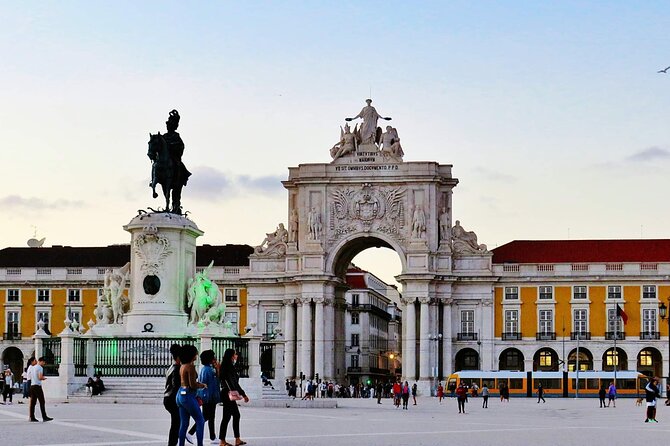
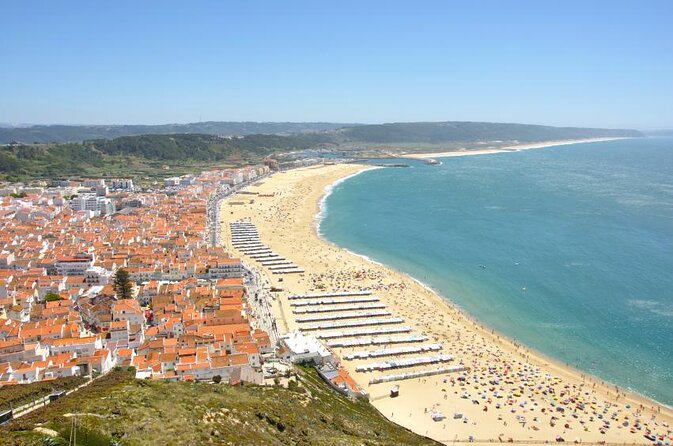
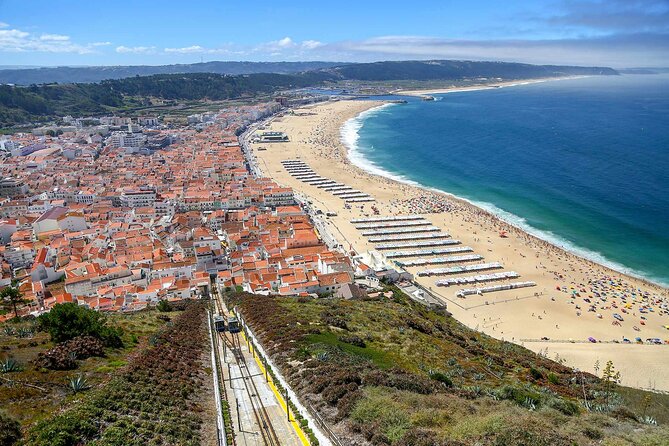
Nazaré is your sea day. You stop in the city by the beach, with time to observe the scenery that made Nazaré waves famous worldwide. Think of this as a “see the place” stop, not a long beach day.
During your hour, what works best is flexibility:
- If it’s clear and windy, you’ll enjoy the big open views and the coastline drama.
- If it’s rainy, you can still get the feel of the waterfront, just plan for shorter walks and more time near viewpoints.
Because this is free time, you set your own pace. Want photos? Great. Want to walk the waterfront? Also great. Just don’t over-pack your plan. This isn’t the kind of stop where you want to run your day like a checklist.
Fátima’s sanctuary time: Basilica and Capelinha highlights
Fátima is one of Portugal’s most important pilgrimage sites, and the stop is designed to give you meaningful access without logistics work. You get free time to visit areas including the Basilica and the Capelinha das Apparições, plus other parts of the sanctuary complex.
What makes this stop valuable is how practical it is. If you try to do this with independent transport on the fly, you can lose time figuring out local connections and schedules. Here, you simply arrive, then use your hour to see the core areas that most people come for.
A good way to manage your time:
- Give the Capelinha area priority first, since it tends to be the most emotionally significant part for many visitors.
- Then shift to the Basilica area to broaden the context of what you’re seeing.
Consideration: even with an hour, Fátima can feel busy depending on the day and time. Keep your expectations calm and respectful. This stop is about presence more than speed.



Coimbra: city center and university vibes in a tight hour

Coimbra is often described as a university town, and this stop is built to show you the center without requiring a full day. You get a one-hour window to see the city core and the university area.
With limited time, focus on what you can absorb quickly:
- Walk through the central areas to get the feel of the streets and atmosphere.
- Spend a bit of time near university-related areas so you understand why Coimbra feels different from other towns on this route.
If you want deeper architecture, specific viewpoints, or long museum visits, this is not that type of stop. It’s a “get your bearings fast” moment. The payoff is that you leave Coimbra with a strong sense of why it matters.
Aveiro: canals, regional sweets, and the moliceiro option

Aveiro is the stop where the route turns more relaxed and visual. You spend 1 hour 30 minutes, and you’re in the center with an option to take a cruise on a moliceiro boat. You also get time for regional sweets and general wandering.
This is a great stop to slow down a little. With more time than the other towns, you can do both:
- If you want a boat view, consider using part of your time for the cruise option. It’s one of the few chances on this route to experience the estuary from the water.
- If you skip the cruise, you still get time to wander the canals and try local treats.
The best approach is to match your mood. If you love water views, the moliceiro cruise can be the highlight. If you prefer quick browsing and snacks, Aveiro still delivers.
Porto drop-off: ending clean, not chaotic
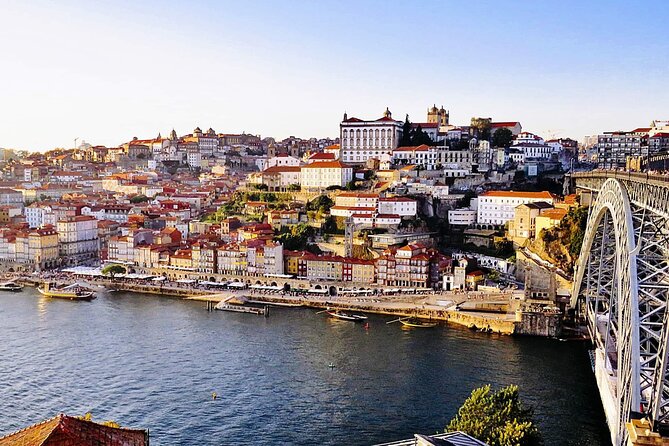
The day finishes with a drop-off in Porto at your hotel or accommodation. The time listed for the final leg is short, but that’s intentional. You’re not meant to cram in another activity at the end. You get delivered and can switch gears immediately.
This matters because Porto is not always easy to navigate when you’re tired. By the time you arrive, you’ll likely want a real plan: where to eat, where to walk first, and how to handle your luggage. A good transfer sets you up for that next step.
I also like that the experience is private. If you have specific questions while you’re arriving, it’s the right moment to ask before you check in and lose your chance to get an easy answer.
Price and value: when this beats the train, and when it doesn’t
At $217.23 per person, the value comes from what you avoid paying in effort: the time, confusion, and transport moves that add up between Lisbon and Porto. A normal train ride gets you there. This gets you there plus keeps your day interesting.
Where the private format shines:
- You start from your hotel in Lisbon and end at your hotel in Porto.
- You choose a handful of towns and use time efficiently.
- You can travel without worrying about luggage transfers.
Where you should compare carefully:
- If you are strictly budget-focused, the train is usually cheaper.
- If you wanted a guided, narration-heavy tour in every stop, this is not positioned that way. You’re getting a transfer with time to explore.
So I’d call it a good deal if your priority is convenience plus variety in a single day, not maximum depth in one place. The “right stop count” decision is the key to feeling like you got what you paid for.
What to expect from the driver: helpful context, not a scripted walking tour
The driver is English-speaking and the ride is private. In the best-case scenarios, guides like Vasco Praça, Luis, Mario, or Jose Da Silva are described as helpful and well organized, with clear explanations and attention to comfort. You can also get practical suggestions for how to use your time once you arrive.
But here’s the important balance: the structure gives you free time to explore each town. That means the driver is driving and coordinating, and you are responsible for your walking time inside the stops.
If your ideal experience is a long guided walk in each city, you might feel shortchanged. If your ideal experience is a smooth ride with enough guidance to orient you plus plenty of time to wander, you’ll likely enjoy it.
Who should book this Lisbon to Porto route?
This works especially well for:
- Small groups who want a stress-free alternative to renting a car
- People who want a “greatest hits” day across several towns
- Travelers who have luggage and want to avoid transit transfers
- Anyone who likes mixing viewpoints, town centers, and a quick spiritual stop without planning it themselves
It may not be the best match if:
- You want long, museum-level sightseeing in every stop
- You plan to use the trip as a replacement for a full-day guided tour
- You are the type who needs every minute scheduled with formal commentary
The route is best treated like a smart sampler. Then you can return later to whichever town pulls you in.
Should you book? My honest take
If your goal is to go from Lisbon to Porto while still tasting Portugal along the way, this transfer is a strong option. The value is in the door-to-door convenience and the exact set of towns you can pack into a single day.
My biggest advice is simple: match your stop selection to what you truly want to see, then plan to explore during each free-time window. When you do that, you get a day that feels like more than a transfer.
FAQ
What time does the tour start?
The start time is 8:30 am.
Where do I get picked up and where do I get dropped off?
You get picked up at your hotel or accommodation in Lisbon, and you get dropped off at your hotel or accommodation in Porto.
How many stops are included?
You select how many stops you want from the available cities, and the schedule is based on those selected stops.
How long does the trip take?
The duration is listed as 3 to 8 hours, depending on how many stops you choose and how long you stay in each place.
What is included in the price?
Included features are an air-conditioned vehicle, bottled water, private transportation, unidirectional travel, and a driver fluent in English.
Is lunch included?
No, lunch is not included.
Are there any paid monument entrances included?
No. Entrance to paid monuments is not included.
Is this tour private?
Yes. It is a private tour/activity, and only your group participates.
What if the weather is bad?
This experience requires good weather. If it is canceled due to poor weather, you will be offered a different date or a full refund.
More Tour Reviews in Lisbon

Not for you? Here's more nearby things to do in Lisbon we have reviewed











Lisbon City Tours, side by side.
 ★ 5.0Lisbon City Center Tour – The Unmissable LisbonTickets from $322,234 traveller reviews
 ★ 4.7Sintra, Pena, Regaleira, Cabo da Roca & CascaisTickets from $2319,656 traveller reviews
 ★ 4.1Jerónimos Monastery Entrance TicketTickets from $2114,164 traveller reviews
 ★ 4.8History, Stories and Lifestyle Walking TourTickets from $2910,902 traveller reviews
 ★ 4.5Sunset Boat Party Cruise with DJ and Open BarTickets from $2710,378 traveller reviews
 ★ 4.7Pena Palace, Sintra, Cabo da Roca, & Cascais DaytripTickets from $919,981 traveller reviews
 ★ 4.6Oceanário de Lisboa Entrance TicketTickets from $299,943 traveller reviews
 ★ 5.0True 4Hour Private Tuk Tuk Tour: Discover Lisbon with a Local!Tickets from $1088,008 traveller reviews
More useful lists for this tour