Review · LISBON
Discover Bairro Alto’s Hidden Gems and Stunning Viewpoints
Lisbon views, history, and one great station facade. This walking tour links the heart of Rossio to Luís de Camões and ends with a payoff viewpoint finish in the Bairro Alto area. It is built around street-level storytelling, so you see how Lisbon became Lisbon, step by step.
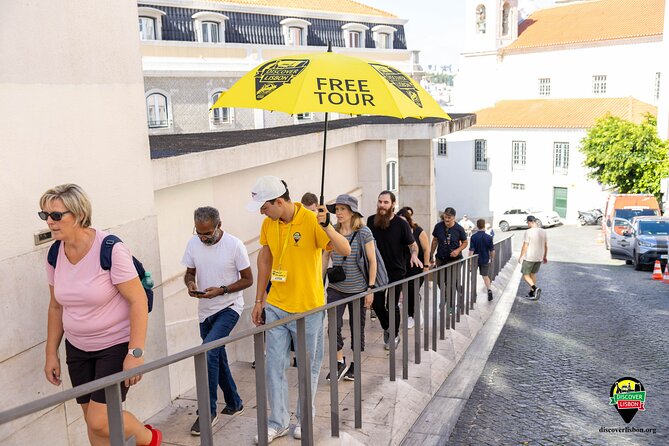
I love the Neo-Manueline drama of Estação do Rossio and the way the guide explains why it looks like a temple, not just a station. I also love the stop at Largo do Carmo, tied to Nuno Álvares Pereira’s Carmelite vow. One possible drawback: this is an uphill-feeling neighborhood walk in Bairro Alto, so comfortable shoes matter and you should plan for moderate physical fitness.
Key things to know before you go
- Estação do Rossio is Neo-Manueline romance, with two intertwined horseshoe portals at the entrance.
- Luís de Camões connects poetry and Portugal’s identity, including Os Lusíadas and the phrase language of Camões.
- Bairro Alto is explained through real turning points, from the city’s Age of Discoveries to plague-era changes.
- The Carmo church and convent trace back to Nuno Álvares Pereira, after the Battle of Aljubarrota.
- You finish at Miradouro de Santa Catarina, where your walk ends and the views do the talking.
A budget-friendly walking tour with big context
For about $3.61 per person, you are really paying for a guided walking route, not a lineup of expensive ticketed attractions. The value shows up in two ways: you get a dedicated local expert guiding you through a compact route, and you get the story behind what you see, including Lisbon’s earthquake-era destructions.
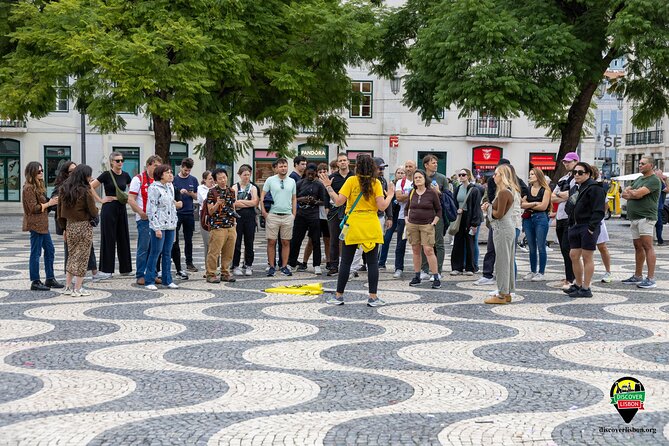
This tour runs about 2 hours 30 minutes and is offered in English. With a maximum group size of 50, it stays manageable. You will also get a mobile ticket, which is handy in a city where you spend most of your time checking your bearings on foot.
The other “value” detail is what is not included. There is no private transportation, and entry to the Santa Justa elevator is not part of the plan. Also, the tour notes a 10-20€ contribution to the guide. If you budget for that, the total experience still feels fair for what you cover.
You can also read our reviews of more tours and experiences in Lisbon.

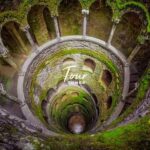

Starting at Praça Dom Pedro IV, getting your Lisbon legs
You begin at Praça Dom Pedro IV, right in the Rossio area, and the route quickly pushes you beyond the main square into the neighborhood streets that make Lisbon feel like a place, not a postcard. This first segment is short, about 25 minutes, but it matters because it sets the rhythm: quick context, then walking, then another anchor point.
Why this start works: you are already in a central zone where Lisbon has layers. Rossio is more than a meeting point. It is the kind of place where local life happens, and where the streets naturally funnel you toward the older quarters you came for.
Practical tip: wear shoes that can handle uneven pavement. Even if the walking pace feels calm, Lisbon does not always give you smooth footing.
Estação do Rossio, the Neo-Manueline facade that looks like a temple
Estação do Rossio is one of those sights where you stop just to look up and then keep looking because the details keep going. The station exterior was commissioned by the Portuguese Royal Railway Company and designed between 1886 and 1887 by architect José Luís Monteiro, then completed in 1890.
Here is what the guide helps you notice, and it is the kind of thing you might miss if you only snap photos:
- The station is built in Neo-Manueline, a Romantic recreation of the Manueline style from the early 1500s.
- The entrance features two intertwined horseshoe portals, labeled to read Central Station.
- The outside facade is described as more temple-like than typical station architecture.
- The station helped connect Lisbon to the Sintra region, tying local movement to wider travel patterns.
This stop is about 25 minutes, and it is perfect for orientation. Lisbon’s neighborhoods can feel like separate worlds. Seeing Rossio Station in this architectural “big statement” form helps you understand how the city also modernized while still borrowing from earlier Portuguese identity.
If you are the kind of traveler who loves buildings that tell you who someone wanted to impress, this is a highlight.
Praça Luís de Camões, where one poet becomes a national reference point
Next comes Praca Luis de Camoes, a square named for Portugal’s national poet and author of the epic poem Os Lusíadas. The guide connects Camões to the story Portugal tells about itself: the poem describes Vasco da Gama’s sea route to India, framing exploration as both adventure and destiny.
You also get a couple of key biographical notes that make the name feel human, not just a plaque on a wall. Camões is said to have lost one eye in a battle in Ceuta. And his influence is so strong that Portuguese language is sometimes called the language of Camões.
This stop is about 30 minutes, and it is more than a quick history hit. It gives you a lens for the rest of Lisbon, because Portuguese identity here is not abstract. It is tied to literature, exploration, and memory. When you later walk into older city areas, the stories feel less random.
Practical tip: if you like taking photos, this is a good place to pause and reset. You have been in architectural and textual context, and you are about to hit neighborhood history.
Bairro Alto’s layers: walls, plague shifts, and the city after the earthquake
Then the route turns toward Bairro Alto, and you hear how this area changed over centuries. The guide frames it around population pressure and geography. In the late 15th century, Lisbon drew people from around the world during the Age of Discoveries. That growth created a need to enlarge the center.
One detail that sticks is how today’s map differs from the older city layout. The area around Camões square used to function as an entrance to the city, and earlier fortification features included the Fernandine wall and the door of Santa Catarina. After the earthquake, Lisbon’s rebuilding is reflected here too, including the arrival of two churches, Encarnação and Loreto.
The story does not stay neat and royal. On the other side of the wall were areas connected to rich noble families, and above them sat a cemetery of black plague victims. In 1506, King Manuel I requested a relic of Saint Roque from Venice and placed it in a hermitage near that cemetery.
Then comes the human logic behind the urban change. With demographic increase and the black plague, the less fortunate and the sick moved closer to the church. An urban plan followed to receive these people. This is how Bairro Alto’s later texture makes sense: the neighborhood becomes a place shaped by need, not just aesthetics.
The Bairro Alto section is about 30 minutes, and it is where the tour’s “hidden gems” style (lesser-known angles) really works. You are not just watching sunsets and nightlife streets. You are learning how the street plan grew out of real crises and real decisions.
Possible drawback here: if you hate stairs and slopes, Bairro Alto can feel like a workout. You do not need to sprint, but you do need stamina and good shoes.


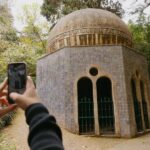
Largo do Carmo, Nuno Álvares Pereira, and the Carmelite vow
The final major stop is Largo do Carmo, home to the Carmelite church and convent. This is a place with a very specific origin story, tied to the political and military turning points of medieval Portugal.
The church and convent were built in 1389 after Nuno Álvares Pereira made a vow. He was a general helping King John repel the Castilian troops. The key date is the victory at the Battle of Aljubarrota in 1385. After the Portuguese won, the story says Nuno kept his word and funded what was meant to be the world’s most beautiful church, then later joined the Carmelite order. The convent construction is said to be completed in 1423, and he reportedly spent the rest of his life in the convent.
This stop is shorter, about 15 minutes, so the goal is not a long interior visit marathon. It is time to understand why this church exists in the first place, and to connect the building to names you will keep seeing in Portuguese history.
If you are into devotion, power, and how personal vows turn into architecture, you will enjoy this stop. If you prefer strictly scenic viewpoints, you might feel you want more time here. But even a short explanation adds a lot.
Finishing at Miradouro de Santa Catarina, when the walk pays off
The tour’s end point is listed as Miradouro de Santa Catarina. That matters because it is not a random exit. Lisbon viewpoints are where you finally get the “why” of the city’s shape, hills, and winding streets. After the walking and the historical context, you can look out and see the city as a physical place.
Even if you are not a formal viewpoint person, this finish is smart planning. It gives you a built-in moment to slow down, catch your breath, and orient yourself for the next hours in Lisbon.
If you want to stretch the experience, stay around a bit and watch how people move through the area. Bairro Alto and its edges tend to feel most alive when the light changes.
What the tour includes, and how it affects your day
Here is what is included in a practical sense:
- A local expert and dedicated guide
- Insights into Portugal culture and history
- A focus on earthquake history and past destruction
- Fun facts tied to famous monuments
- Discounts for booking other experiences later the same day and night in Lisbon
The discount part is one reason I like this format. You can use the guide’s perspective to plan the rest of your time without guessing. Just keep expectations realistic: discounts are helpful, but you still want to choose experiences that match your interests.
Also, since there is no private transportation, this is a foot-powered plan. That is part of the value and part of the effort. If you like walking and learning at street level, you are a strong fit.
Price and value: $3.61 is the headline, the details are the story
At $3.61 per person, this tour looks almost too cheap to be real. The key is what you are actually buying. You are not paying for elevator tickets or other major paid entries. The stops listed include free admission tickets, and you are moving through public spaces and major landmarks.
The “real” cost you should consider is the 10-20€ guide contribution, which is not included. I like that this gives you a chance to decide based on how much you enjoyed the guidance. If the guide keeps the pace clear and the stories grounded, it is easy to feel good about contributing.
If you are budget-focused, this is attractive. If you hate walking or you want lots of ticketed museum time, you may feel under-served. But for a history-and-views combo on foot, the value is strong.
Who should book this tour, and who might prefer a different style
This tour is a good match if you:
- Want to connect Lisbon landmarks to real stories, not just quick photo stops
- Like architecture and want help reading what you see, especially Estação do Rossio
- Enjoy neighborhood history, including how disease, borders, and rebuilding shaped areas like Bairro Alto
- Prefer a smallish group format, max 50, over a huge crowd
You might not be the best fit if:
- You want mostly indoor time and fully flat walking
- You only care about one or two famous monuments and would rather do them at your own pace
- You dislike guided storytelling and prefer pure self-guided exploration
One more small note: the tour is described as having a moderate physical fitness level. That is not a warning label, it is a heads-up to plan like you are walking hills for most of the afternoon or early evening.
Quick FAQ on this Bairro Alto and Rossio walk
FAQ
How long is the tour?
It runs for about 2 hours 30 minutes.
Where does the tour start and end?
It starts at Praça Dom Pedro IV, 1100-581 Lisboa, Portugal, and ends at Miradouro de Santa Catarina, 1200-262 Lisboa, Portugal.
Is the tour offered in English?
Yes, it is offered in English.
Do I need to buy entry tickets for the stops?
The tour notes admission ticket free for the listed stops. Entry to the Santa Justa elevator is not included.
Is a mobile ticket provided?
Yes, the tour uses a mobile ticket.
What fitness level do I need?
A moderate physical fitness level is recommended.
Can I cancel and get a full refund?
Yes. You can cancel up to 24 hours in advance for a full refund.
Should you book this Lisbon walking tour?
If you are trying to make Lisbon feel understandable fast, I think this is a smart booking. You get Rossio orientation, a major Neo-Manueline architectural moment, a clear cultural anchor at Luís de Camões, and Bairro Alto history that explains why the neighborhood looks and feels the way it does. Then you finish at Miradouro de Santa Catarina to close the loop with a view.
My call hinges on two things: your comfort with walking hills and your interest in history that is tied to specific names and buildings. If both are yes, book it. If either is no, you might still love Lisbon, but you may want a different style of tour that matches your pace and interests.