
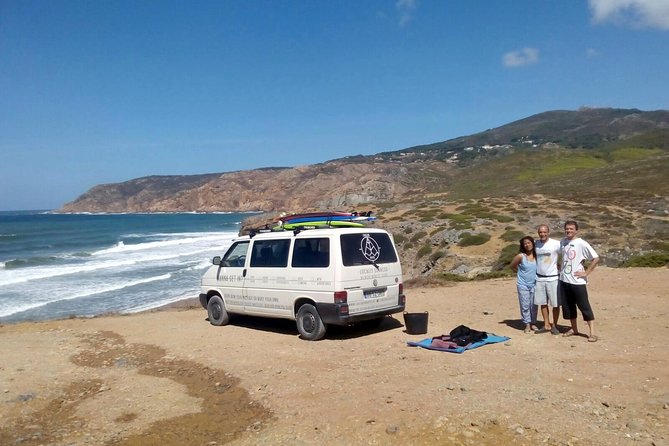
Review · LISBON CITY TOURS
Surf Experience in Cascais, Lisbon
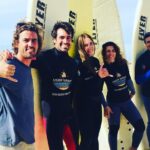
Surf in Portugal is a mix of sea, confidence, and good coaching, and this lesson gets you into it fast. I love the small group setup, because you get real feedback instead of crowd-wave chaos. I also love that your wetsuit and surfboard come with the tour, so you can show up in swimwear and get moving right away. The only downside to plan for is that you do not get hotel pickup, so you’ll want to be at the beach meeting point on time.
You can also expect a lesson that is equal parts technique and safety. You will learn the local conditions, warm up on land, then practice paddling, stance, and takeoff until it starts to feel natural. If the ocean is running a bit different that day, the team may choose either Carcavelos or Guincho depending on your skill and the conditions.
Key Surf Takeaways From This Lesson
- Carcavelos or Guincho based on your level and ocean conditions, not a one-size-fits-all plan
- Constant instructor supervision in the water, including help choosing waves and correcting your position
- Surf theory on the beach (currents, reference points, wave types) so you understand what you are aiming for
- Warm-up plus stretching before you paddle, then you practice first on sand, then in the sea
- Maximum 6 travelers, which usually means more individual attention and faster progress
Surf Lesson Setup: Where You’ll Actually Learn, Not Just Watch
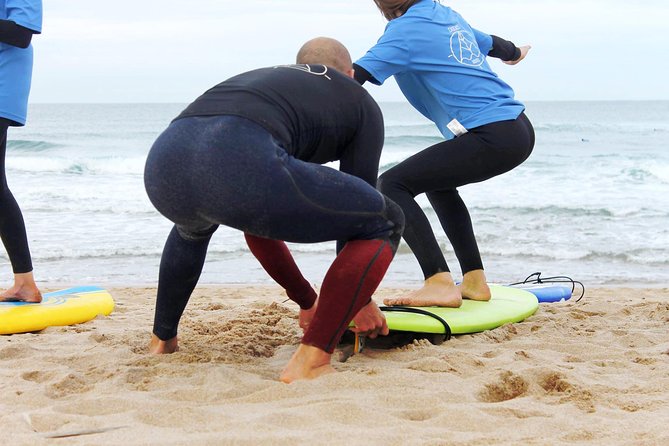
This is a practical surf experience in Cascais focused on getting you doing the key movements. The total time is about two hours, and the lesson follows a simple flow: learn the spot, warm up, practice on land, then go into the water with your instructors right there.
What makes it feel efficient is the way the instruction is structured. You start with an explanation of the beach and wave setup, then you rehearse the fundamentals like paddling, board position, and takeoff on the shore. After that, you put those exact steps into action while an instructor watches and coaches you live.
Also, the group size matters here. With a maximum of 6 people, it is easier for your instructor to notice what you are doing, not just whether you are still out there. That attention is a big part of why this type of lesson works for beginners and improvers.
You can also read our reviews of more tours and experiences in Cascais.



Carcavelos vs Guincho: How the Team Chooses the Right Waves
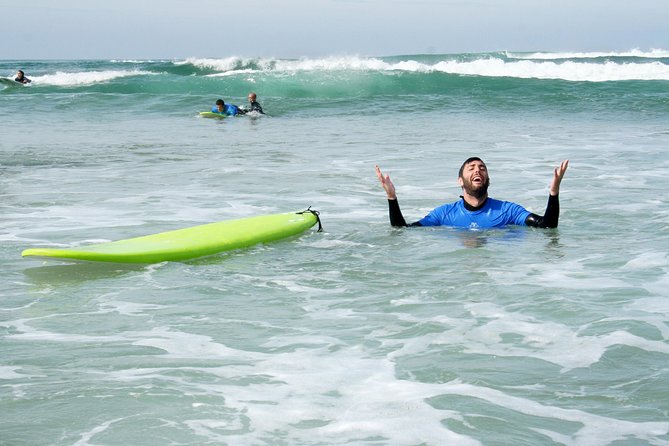
You will surf either at Praia de Carcavelos or Guincho beach, depending on your surfing ability and what the ocean is doing. That choice is not random. It is the difference between trying to learn on waves that are too big for your current level, versus getting reps on something you can actually ride.
Carcavelos is one of the most well known surfing areas in the Lisbon region, and it is often the kind of place where learners can build confidence. Guincho can feel more intense and windswept depending on conditions, which means the instructor might steer more advanced surfers there when the timing and waves line up.
The good news: you are not stuck guessing. Your instructor is responsible for matching you to the conditions, and they will also help you pick which waves to attempt once you are in the water. That wave selection part is where many first-timers either get lucky or struggle. Here, you get guidance.
A small practical note: because the beach choice depends on conditions, the feeling of the session can vary day to day. You might come in expecting one vibe and get another, but the purpose is to help you practice safely and effectively.
The 2-Hour Flow: Theory, Warm-Up, Sand Practice, Then Real Water Coaching
The lesson is built to move you from understanding to doing, with very little dead time. Even if you have never surfed before, you are not thrown into the sea with zero prep.
Step 1: Conditions explained on the beach
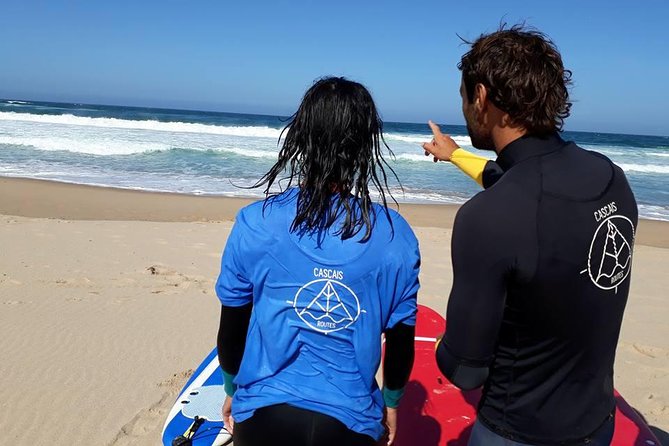
You begin with a clear rundown of what matters at that spot. Expect talk about the beach layout, wave types, currents, and reference points you can use to orient yourself. In plain terms, you learn how to read the ocean so you stop treating every wave like a surprise.
This matters because surf can be confusing when you cannot tell which direction is safe, where the waves break, and how the flow is moving. The instructor’s explanation gives you a mental map you can use in real time.
Step 2: Warm-up and stretching
Before you paddle, you warm up and stretch. This is not just for safety, it is also for performance. Surf demands quick leg engagement for the takeoff, plus shoulder and core control for paddling and balance.
If you show up feeling cold or stiff, you will notice it in your first attempts. A warm-up makes the session more productive, especially when you are learning new body positions.


Step 3: Fundamentals taught on land
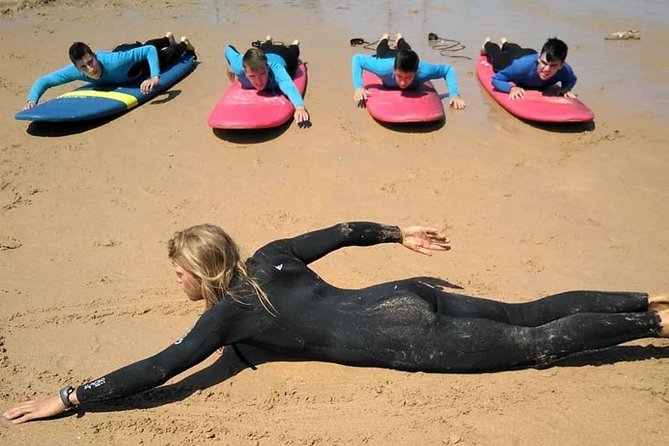
The first exercises happen on the sand. You practice things like where your feet should go, how to hold your board position, and how to take off. There is also safety instruction, including what to do in the water.
This part is underrated. When your body is learning balance, it helps to rehearse in a stable environment first. Once you go into the ocean, the goal is to transfer those movements from “I understand” to “I can do it.”
Step 4: Paddling and practice in the water
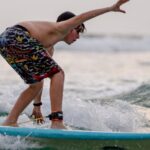
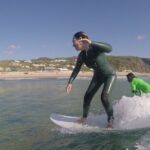
Then you get into the sea to put it all into practice. Once you are there, instructors provide constant supervision. They watch your performance closely, comment on your technique, help you choose the right waves, and correct your position when needed.
That correction piece is the fastest path to improvement. Instead of repeating mistakes on your own, you get real-time adjustments that help you connect what you feel with what you need to change.
The session ends back at the meeting point, so you do not have to navigate a complicated route after you are done.
What You’re Provided: Gear That Removes the Usual Stress
You do not need to bring surf gear. The lesson includes the necessary equipment, including a wetsuit and a surfboard. Insurance is also included, and you are taught by local surf certified instructors.
This matters for value because surf gear rentals and last-minute purchases can add up quickly. When equipment is included, you can focus on learning instead of logistics.
Still, you should plan for comfort and weather. Portuguese coastal water can feel chilly, even in pleasant months, so your wetsuit is a key part of being able to stay in the water long enough to learn.
What to Bring: Keep It Simple, Keep It Practical
The essentials are straightforward. Bring a swimming suit, a towel, sun protection, water, and comfortable clothes plus footwear.
A few practical tips based on how these lessons typically run:
- Wear something you can easily get out of once you change after surfing.
- Use sun protection even if the sky looks mixed. Coastal sun can sneak up on you.
- Bring water, because you may not want to rely on finding it during the session.
You should also keep your footwear plan simple. You need comfortable shoes to walk on sand and move around the meeting area before and after getting suited up.
Coaching Style: Encouragement Plus Specific Corrections
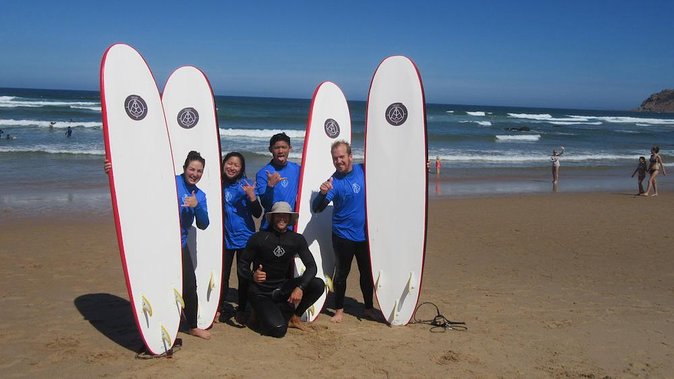
One reason this lesson earns such high scores is the teaching tone. You are not just handed instructions and left to figure it out.
The coaching approach tends to be encouraging and patient, especially when standing up is your hardest step. If you struggle to get into position or you feel wobbly on the board, you get help adjusting your movement until you can start to catch the flow.
You also get discussion that goes beyond the mechanics. A standout learning moment can be figuring out how to spot that perfect wave to try. That is a real skill, because wave choice is not just about bravery. It is about timing, direction, and matching the wave to your current ability.
That combination, kind support plus actionable correction, is what turns a first session into a repeatable skill instead of a one-off stunt.
Value for Money: Why This Price Works for Most People
The price is $48.16 per person for around two hours, and it includes the equipment, insurance, and local surf certified instructors. It also includes the core lesson components: surf practice and surf theory, plus guidance in the water.
For many first-timers, the big question is whether they are paying mostly for the ocean time or for the instruction. Here, you get both, and the equipment is covered. That is a strong match for beginners who want structure.
You are also booking on a schedule that often sells out slower than some top city tours, with an average booking lead time of about 22 days. If you are planning ahead, you have a decent shot at picking a convenient slot.
The one cost to mentally factor in is that there is no hotel pickup or drop-off. You will need to handle getting to the meeting point on your own.
If you are staying in or near Cascais and you like walking or quick public transport hops, that is usually not a big issue. If you are relying entirely on private transfers, it can make the total trip cost feel less neat.
Who This Fits Best (And Who Might Want a Different Option)
This lesson is set up for people of all skill levels and ages, with a minimum age of 6. That makes it friendly for families with older kids, and for adults who want a gentle start or a guided refresher.
It is also a strong choice if you care about safety and technique. You get both beach-based theory and in-water supervision, so you are not left guessing about currents, wave behavior, or how to position yourself.
You might want to consider a different style of surf experience if:
- You want a longer session where you can build stamina across more sets.
- You prefer a totally independent vibe where you are mostly on your own in the water.
- You have trouble meeting at Carcavelos beach on time without pickup support.
Logistics That Matter: Meeting Point, Timing, and Group Size
You start at Carcavelos beach in Portugal, and the activity ends back at the meeting point. The tour does not include food or drinks, so plan for that based on your day.
The lesson is in English, which is helpful if you want clear explanations without guessing. It also has near public transportation access, so you should be able to plan a simple route.
The group size cap of 6 travelers is a practical advantage. Smaller groups typically mean fewer people waiting in line for coaching time, and more consistent attention when you are learning.
The Day of Your Lesson: A Calm Checklist That Helps
If you want this to go smoothly, treat it like a short sports lesson, not a sightseeing stop. Arrive ready to change quickly, listen carefully during the beach briefing, and do the warm-up even if you feel fine.
During practice:
- Pay attention to the instructor’s wave choice advice.
- Watch for correction on your position, because it is usually the difference between standing and wiping out.
- If you cannot stand on the first tries, that is normal. The goal is progress, not perfection in one set.
And yes, it helps to relax. The activity is designed with a simple expectation, relax and enjoy yourself. Learning a sport is hard work, but you do not have to make it stressful.
Should You Book This Surf Experience in Cascais?
I think you should book this if you want a structured surf introduction with real coaching. The included wetsuit and board, the tight maximum 6-person group, and the hands-on supervision in the water make it a good value for first-timers. It also works well if you already surf a bit but want clearer fundamentals and safer wave selection.
Skip it if your main goal is a long, independent surf session, or if you need hotel pickup to make your day work. Also, if you strongly dislike ocean-based variability, note that the team may choose between Carcavelos and Guincho based on skill and conditions.
If you like learning by doing, and you want a calm, patient instructor guiding you from theory to sand drills to actual rides, this is the kind of surf lesson that pays off fast.
FAQ
What beach will we surf at?
You will surf at either Carcavelos beach or Guincho beach. The choice depends on your surfing skills and ocean conditions.
How long is the surf experience?
The activity lasts about 2 hours.
What is the price per person?
The price is $48.16 per person.
What should I bring?
Bring a swimming suit, towel, sun protector, water, and comfortable clothes and footwear.
Do I need to bring a surfboard or wetsuit?
No. All necessary equipment is provided, including a wetsuit and a surfboard.
Is hotel pickup included?
No. Hotel pickup and drop-off are not included. The lesson meets at Carcavelos beach and ends back at the meeting point.
What language is the lesson offered in?
The experience is offered in English.
How many people are in the group?
The activity has a maximum of 6 travelers.
What is the minimum age?
Participants must be 6 years of age or older.
What is the cancellation policy?
You can cancel for free up to 24 hours in advance for a full refund.
Is insurance included?
Yes, insurance is included.
More Tour Reviews in Cascais
Not for you? Here's more nearby things to do in Cascais we have reviewed








Lisbon City Tours, side by side.
 ★ 5.0Lisbon City Center Tour – The Unmissable LisbonTickets from $322,234 traveller reviews
 ★ 4.7Sintra, Pena, Regaleira, Cabo da Roca & CascaisTickets from $2319,656 traveller reviews
 ★ 4.1Jerónimos Monastery Entrance TicketTickets from $2114,164 traveller reviews
 ★ 4.8History, Stories and Lifestyle Walking TourTickets from $2910,902 traveller reviews
 ★ 4.5Sunset Boat Party Cruise with DJ and Open BarTickets from $2710,378 traveller reviews
 ★ 4.7Pena Palace, Sintra, Cabo da Roca, & Cascais DaytripTickets from $919,981 traveller reviews
 ★ 4.6Oceanário de Lisboa Entrance TicketTickets from $299,943 traveller reviews
 ★ 5.0True 4Hour Private Tuk Tuk Tour: Discover Lisbon with a Local!Tickets from $1088,008 traveller reviews