
Review · LISBON CITY TOURS
Cascais: Glamour and Decay by The Lisbon Coastline – Private Tour
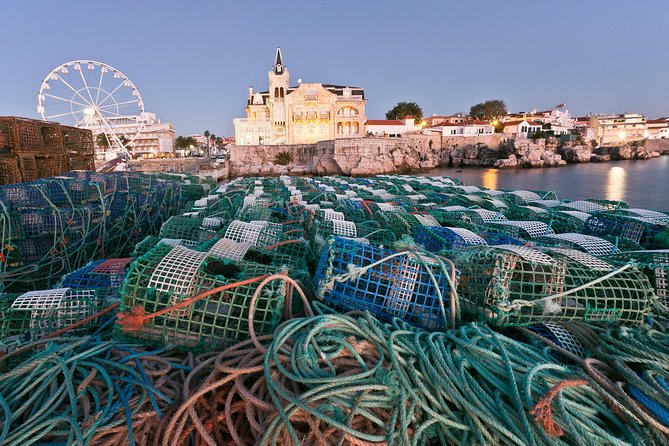
Cascais flips from glam to gritty fast. This private 3-4 hour walk along the coast and into town hits historic landmarks and sweeping seaside views, all with a guide who keeps the pace easy.
I especially like the way you get context as you move, not just stop-and-snap sightseeing, and I also like the photo-friendly approach that helps you “see” the town as it used to be. One thing to consider: it’s still a walking tour with a moderate fitness level, so plan for several stretches on uneven streets.
Key highlights worth your attention
- A true private group experience: your group only, with a guide who can slow down or steer the route to your interests
- Photo support built in: you have a professional photographer guide mindset, plus old images and visuals to help the story land
- A lineup of standout stops: Praia da Rainha, the citadel area, the fort, the museums, and parks, all in one afternoon
- Cascais-to-Estoril coastal feel: the route is designed so you get that bigger shoreline perspective, not just the town center
- Most stops are free to access: admission tickets are listed as free for the stops on this route, so you are not constantly paying entry fees
Cascais in One Walk: From Praia da Rainha to Estoril Views
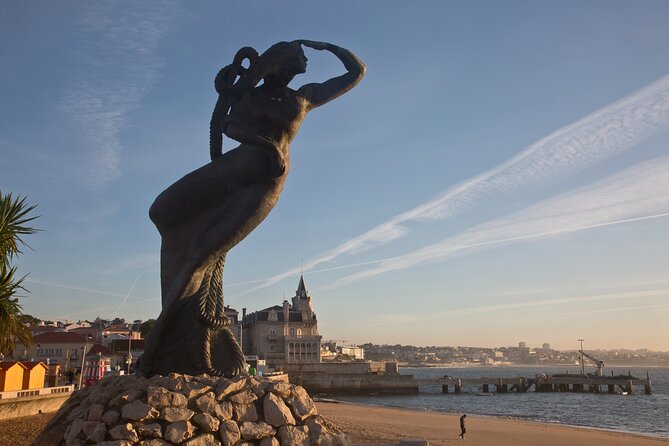
Cascais is one of those places where the mood changes block by block. You start with the postcard beach at Praia da Rainha, then work your way through the old fishing-village core and up into places that show how the town became a glamorous court and seaside refuge. By the time you’re near the lighthouse and parks, you can feel the mix of eras in the buildings and the angles of the coastline.
The other reason I like this style of tour is that it gives you a map for later. After a few hours, you’ll know which streets feel old, where the views open up, and what’s worth lingering at if you return on your own. It’s an easy way to get your bearings fast, without feeling like you’re sprinting between sites.
You can also read our reviews of more private tours in Cascais



How the Route Actually Works (and why meeting matters)
You meet at Estação de Cascais, the train station area, and the walk ends back in Cascais at R. Visc. Luz 21. The schedule is built around short stops, roughly 10-20 minutes each, so you keep moving but still get enough time to look, ask questions, and take photos.
Because hotel pickup is not included unless you chose that option, you’ll want to plan how you get to the station. If you’re using Lisbon as your base, you likely already know the train system, but it’s worth budgeting a little extra time so you arrive early and calm. Also, the tour has a moderate physical fitness level, so wear shoes you trust on curbs and uneven stone.
A nice plus: it’s offered in English, and it’s designed as a private tour for small groups, with a maximum of 12 people. That size keeps the experience more personal than large group bus tours, especially when you start asking about architecture or how the town changed.
Stop-by-Stop: What You Gain at Each Cascais Spot
This is the part that makes or breaks a walking tour, so here’s what each stop adds to your understanding of Cascais.
Praia da Rainha: The coast that sets the tone
Praia da Rainha is one of the most photogenic beaches in Cascais, and it’s a smart first stop. In the opening minutes, you get an orientation to the town’s position on the coast and the story behind why Cascais developed the way it did. It’s also a great moment to judge the light for photos before you go deeper into the town.
What to watch for: the way the shoreline views frame the rest of the walk. If you like street-level photo angles, start here, then compare later when you’re higher up or closer to monuments.
Centro Histórico de Cascais: Fishermen, citadel, and lingering memories
The Centro Histórico de Cascais pulls you into the old heart of town, where the fishing-village roots and citadel influence still show. This is where the town doesn’t feel like a resort brochure. It feels lived-in, with the beach and the town’s core stitched together by walkable streets and walls.
You’ll spend time here learning the connections between the beach, the fortification mindset, and how the “memories” of the old settlement still show up in the way buildings sit and streets funnel people.




Palácio Seixas: When a harbor town turns glamorous
Palácio Seixas is a quick stop, but it’s an important turning point. It’s where your guide explains how Cascais moved from a small fishing harbour to a court town with a different kind of attention and money. You start to see why the architecture and the ceremonial atmosphere matter here, not just the sea views.
If you’re into historical cause-and-effect, this is one of the most satisfying stops. It helps you understand why certain areas look more formal than you might expect in a seaside town.
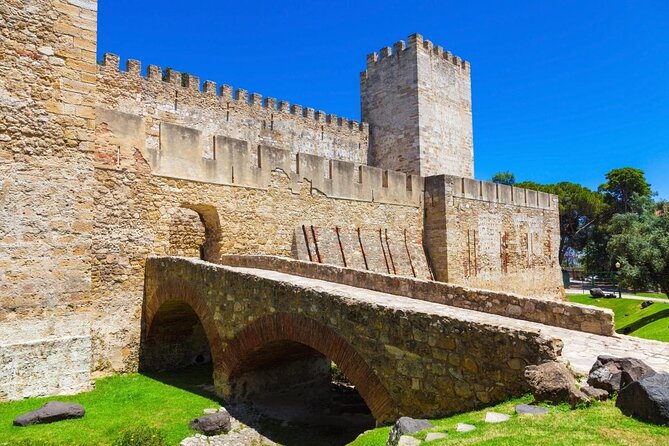
Fortaleza de Nossa Senhora da Luz: Citadel heritage with contemporary art
Fortaleza de Nossa Senhora da Luz is part of the citadel story and also includes the more modern side of Cascais. The combination matters because it shows you that the town doesn’t only preserve the past. It also repurposes spaces and encourages new creative use.
In practical terms, it’s a strong “pause and look” location. The fort area gives you both architectural details and a sense of defensive planning, and then the contemporary art presence adds a modern contrast.
Centro Cultural de Cascais and the Sommer House: Architecture that explains itself
At the Centro Cultural de Cascais, you spend time around the Sommer House and the cultural center. This stop is about architecture, storytelling, and the fact that places get revisited and revamped rather than frozen in time. That matters in Cascais because the town’s identity is constantly being renegotiated.
If you enjoy design details, you’ll likely find this stop more rewarding than it sounds. The guide’s explanations turn the buildings from background scenery into readable clues about how Cascais thinks about culture.
Marina de Cascais: The Count of Arnoso and the modern coast
The Marina de Cascais stop is where you get the “after” story. You’ll hear about the legacy connected to the Count of Arnoso, then how the marina story grew outward beyond that original property. The result is a coastline that looks both upscale and very practical, built for people arriving by land and sea.
Look around and notice the change in how the town feels here. The architecture and layout shift, and you can start to understand why Cascais attracts a certain kind of visitors, including those looking for easy waterfront access.
Casa de Santa Maria: Raul Lino’s genius by the sea
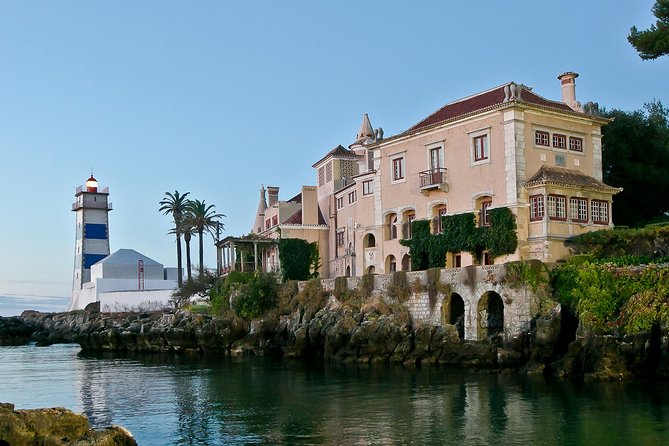
Casa de Santa Maria is one of the highlights because it’s described as an amazing house by the sea, and the name to remember is architect Raul Lino. This is the kind of stop that makes you slow down, even if your time is limited. Details in the design and the way the building relates to the coastline do a lot of the storytelling for your guide.
If you love architecture, this is worth giving your full attention. Don’t treat it like a quick photo stop. Spend those minutes looking at how it sits, not only how it looks from one angle.
Santa Marta Lighthouse Museum: A dramatic icon, refreshed
The Santa Marta Lighthouse Museum stop centers on the lighthouse itself, described as dramatic, plus a recent revamp. This is where you get a feel for how an iconic structure can remain the star while the surrounding visitor experience gets upgraded.
Even if you do not go deep inside, the lighthouse location does half the work. It gives you a powerful sense of scale and coastline direction, and it helps you connect earlier stops to the wider seascape.
Museu Condes de Castro de Guimaraes: A castle-manor mashup
At the Museu Condes de Castro de Guimaraes, you’re looking at a home that sits somewhere between a castle and a manor house. The standout detail here is the mix of styles: Romanesque, Gothic, Manuelino, and Moorish Revival. That blend isn’t random. It matches the idea of Cascais as a place where different tastes and eras left their fingerprints.
This stop is especially good if you like visual variety. The building’s “history” feels baked into its design, and your guide can help you read that mixture without needing an architecture degree.
Marechal Carmona Park: Romantic gardens and roaming poultry
Marechal Carmona Park is a different kind of break, a romantic garden and one of the most popular green spaces in Cascais. The fun practical detail: cocks, chickens, and poultry are now free to roam, so it’s not a sterile “don’t touch” garden vibe.
This is a good stop for resetting your brain and legs. You can step back from the monuments, enjoy shade or open air depending on the season, and just watch daily life play out.
What Makes It Feel Personal (and not like a script)
The best part of this tour is the guide style. The guiding spotlight goes beyond facts, and in real-world terms that means you get answers that connect the dots. People consistently praise Luis for being punctual and polite, and for giving detailed explanations that match what you ask.
A detail I like from past experiences on this route: the guide sends confirmation information ahead of time, so you don’t spend your first minutes hunting for the right person. Another standout is that you may see photos and old drawings, which helps you picture what Cascais looked like earlier, not just what it looks like today.
Also, because it’s private, your route can flex. In some cases the tour is adjusted based on your interests, and you finish with practical tips for what to do next in the area. That last part is underrated. A guide who knows what’s nearby and what’s worth your time helps you stop wasting hours on guesswork.
Price and Value: Is $36.04 per Person fair?
At $36.04 per person, this is priced like a solid half-day walking experience. The value comes from combining several things you’d otherwise pay for separately: a professional guide, a photographer guide approach, and a private small-group format.
It also helps that the stops are set up with free admission tickets for the listed points. Even though you’re not paying entry fees at each location, the stops still cover a broad set of themes: beach life, old town texture, court-town architecture, the citadel, museums with mixed styles, and a real public park. That mix makes the time feel “full,” not padded.
The main tradeoff is transportation. Hotel pickup is not included, and transportation between stops is not listed as included. So your real cost is the time and effort to get to the meeting point at Estação de Cascais. If you already plan to be in that part of town, that friction disappears.
Who This Tour Fits Best (and who might want something else)
This tour is a great match for you if you want orientation plus stories, not just checklists. I think it works especially well for first-timers in Cascais because it gives you an organized sense of where everything sits, from Praia da Rainha through the citadel area, out toward the lighthouse zones and parks.
It’s also a good choice if you care about architecture and want help connecting styles to how the town evolved. Stops like Casa de Santa Maria with Raul Lino, and Museu Condes de Castro de Guimaraes with its mix of Romanesque, Gothic, Manuelino, and Moorish Revival styles, will likely feel made for you.
If you’re the type who wants long beach downtime or a lot of museum time, this might feel a bit tight. The stops are short by design, so you’ll likely enjoy this more as a “set the scene” walk, then return later for longer lingering.
Should You Book This Cascais Coast Walk?
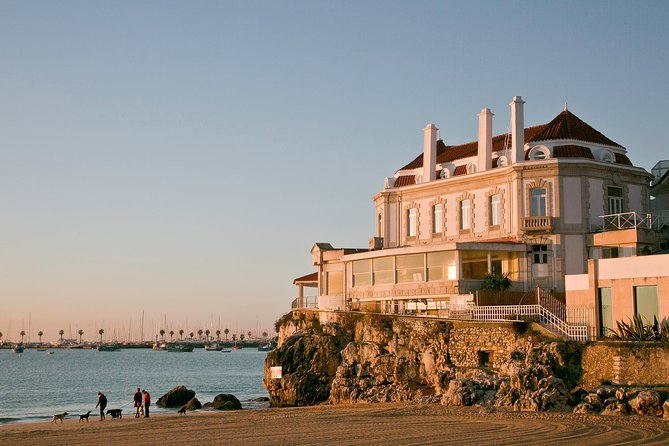
Book it if you want a high-quality guide-led introduction to Cascais that balances views, architecture, and city-story context in a time-efficient half-day. The private format, the photo-friendly approach, and the strong track record of punctual, helpful guiding make it a safe bet.
I’d think twice if you dislike walking tours, or if you expect hotel pickup and transit to be handled. Also, if you want a slow, beach-centric day with minimal street time, you might prefer a different plan.
If you’re in Lisbon and you want one afternoon that makes Cascais click, this is a strong way to do it. You’ll leave with the names, the reasons, and the angles that make the coast easier to explore on your own afterward.
FAQ
How long is the Cascais private tour?
The tour lasts about 3 to 4 hours.
Is the tour offered in English?
Yes, it is offered in English.
Is this mostly walking?
Yes, it is a walking tour with a moderate physical fitness level. Comfortable shoes are a good idea.
Where do we meet and where does the tour end?
You start at Estação de Cascais (2750-334 Cascais, Portugal) and end at R. Visc. Luz 21, 2750-414 Cascais, Portugal.
What is included in the price?
The tour includes a professional guide, a professional photographer guide, and the private tour itself.
Can I cancel for a full refund?
Yes. You can cancel up to 24 hours in advance for a full refund. If you cancel less than 24 hours before the start time, the amount you paid will not be refunded.
More Private Tours in Cascais



More Tours in Cascais




More Tour Reviews in Cascais


Not for you? Here's more nearby things to do in Cascais we have reviewed










Lisbon City Tours, side by side.
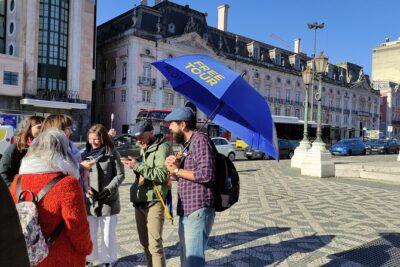 ★ 5.0Lisbon City Center Tour – The Unmissable LisbonTickets from $322,234 traveller reviews
 ★ 4.7Sintra, Pena, Regaleira, Cabo da Roca & CascaisTickets from $2319,656 traveller reviews
 ★ 4.1Jerónimos Monastery Entrance TicketTickets from $2114,164 traveller reviews
 ★ 4.8History, Stories and Lifestyle Walking TourTickets from $2910,902 traveller reviews
 ★ 4.5Sunset Boat Party Cruise with DJ and Open BarTickets from $2710,378 traveller reviews
 ★ 4.7Pena Palace, Sintra, Cabo da Roca, & Cascais DaytripTickets from $919,981 traveller reviews
 ★ 4.6Oceanário de Lisboa Entrance TicketTickets from $299,943 traveller reviews
 ★ 5.0True 4Hour Private Tuk Tuk Tour: Discover Lisbon with a Local!Tickets from $1088,008 traveller reviews
More useful lists for this tour