
Review · WALKING TOURS
Évora: Flexible Walking Tour in Historic Center
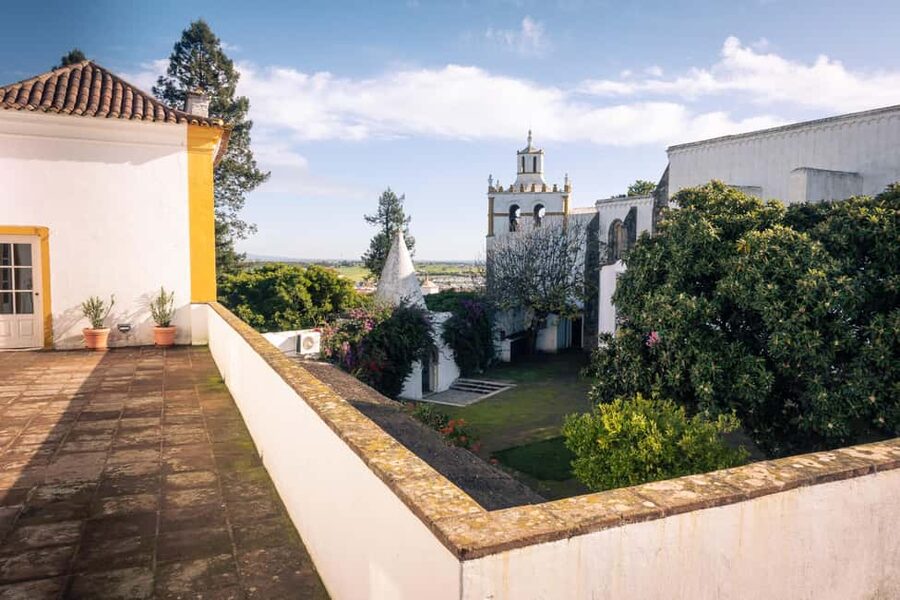
Évora sings, and you hear it walking. This Walkbox self-guided route in Évora’s historic center turns a simple stroll into a paced story of walls, plazas, and big landmarks, all at your speed. I love the offline audio that plays automatically as you arrive at each stop, and I love that you can pause, backtrack, or skip parts without feeling locked into a group schedule.
One heads-up: you’ll need a charged smartphone and a bit of steady walking, since the route is not set up for mobility impairments.
Key Points You’ll Actually Care About
- Offline Walkbox audio that starts when you’re at the right spot, with natural-sounding narration.
- True flexibility, you can do the walk in full or in parts over 5 days.
- A well-planned 5 km loop that strings together the Cathedral area, Roman Temple, and the Bones Chapel.
- English, Portuguese, French, and Spanish, so you can pick your comfort language.
- Curator support by WhatsApp or SMS, plus emergency help by phone if needed.
- Great value at about $8, since it covers the route and spoken guidance, not attraction tickets.
Why a Walkbox self-guided tour works so well in Évora

Évora is one of those towns where the streets do half the job. Instead of marching you from stop to stop, this format lets you move like a local, lingering when something catches your eye and skipping when you want to keep momentum.
What makes it work is the app design: the Walkbox tour is set up so the guidance plays as you explore, and it works offline. That matters in Portugal, where signal can be patchy. You’re not stuck trying to reload maps or hunt for the next “turn left” moment. You’re just walking, hearing the story, and noticing details you might miss if you were only reading a sign.
Also, the pacing feels human. The route is about 5 km and takes roughly 4 to 6 hours depending on how long you stop at viewpoints, churches, and interiors. So if you like photos, you’ll have time. If you like quiet corners, you’ll have time for that too.
You can also read our reviews of more walking tours in Cascais

Getting to Porta Velha da Lagoa and starting your route
Your walk starts and ends at Porta (Gate) Velha da Lagoa, near a recommended free car park. If you’re driving in, that’s a big deal, because parking can be the most stressful part of day trips from bigger cities. The tour also helps you find your way through the center without needing a live guide.
Plan around your smartphone. Bring a charged phone, because the app provides the narration and instructions there. One practical detail that’s easy to miss when booking: you book based on the number of smartphones being used, not the number of people. If you and a travel partner want separate audio tracks, you’ll likely want separate phones.
Before you go, you’ll get clear prep instructions from the tour curator after booking. During your walk, remote support is available by WhatsApp or SMS from 8:00 AM to 8:00 PM, and there’s emergency assistance by phone if something goes wrong.
Rua do Cano and Água de Prata Aqueduct to Praça de Sertório

After you begin at Porta Velha da Lagoa, the route moves you along Rua do Cano and parallels the ancient Água de Prata Aqueduct. This stretch is a good warm-up. You’re still close to the start, but you’re already seeing the layers that make Évora feel older than your calendar.
Then you reach Praça de Sertório. This is where the tour’s “watch what you’re walking past” style shines. You can see Roman baths hidden inside the Town Hall, and the app gives you the story so you understand what you’re looking at instead of just spotting a building and moving on. If you love history but hate feeling rushed, this is a strong start.
A small consideration: because you’re doing a self-guided experience, you’re responsible for deciding when to step inside places that may have their own hours or tickets. The tour content includes prices and opening hours where applicable, but you’ll still want to treat each stop like a normal visit day, not a guaranteed timed entry.
Praça do Giraldo: the fountain and the neoclassical vibe
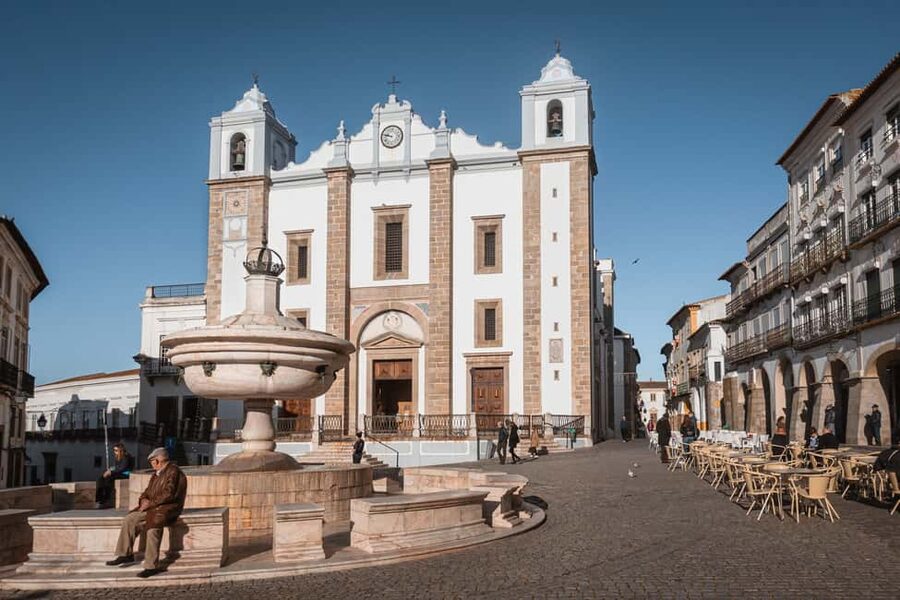
Next up is Praça do Giraldo, one of Évora’s best-known squares. The highlight here is the eight-spout fountain, which gives the plaza a sense of movement even when the streets around you slow down.
I like this stop because it resets you. After Roman-era context and quiet stone details, you land in a wide, open space where it’s easy to take photos, watch people, and get your bearings. If you’re arriving from a drive or a long bus ride, this can feel like your “okay, I’m in the city now” moment.
Also, the app’s narration helps you read the architecture. Évora isn’t just pretty. It’s also arranged and layered, and plazas like Giraldo often act like social crossroads. The tour makes that connection so you don’t only admire façades, you understand why the space matters.
Rua 5 de Outubro into the big monuments zone
From Praça do Giraldo, you move onto Rua 5 de Outubro, Évora’s main street known for crafts and local shops. This is one of those stretches where you can choose your style. If you want to buy something small, this is your zone. If you’d rather keep walking, you can treat it as a transition corridor toward the main monument area.
This part matters for pacing. You’re walking through a commercial street on purpose, not because the route designer ran out of streets. It naturally slows you down just enough to absorb the city feel before you hit the heavier-hitters like the cathedral and Roman Temple.
Then you arrive at the monumental area where the walking tour becomes truly “Évora.” This is where you start stacking viewpoints, sacred spaces, and major historic sites close together.





The Cathedral terrace views, Roman Temple, and Church of Loíos
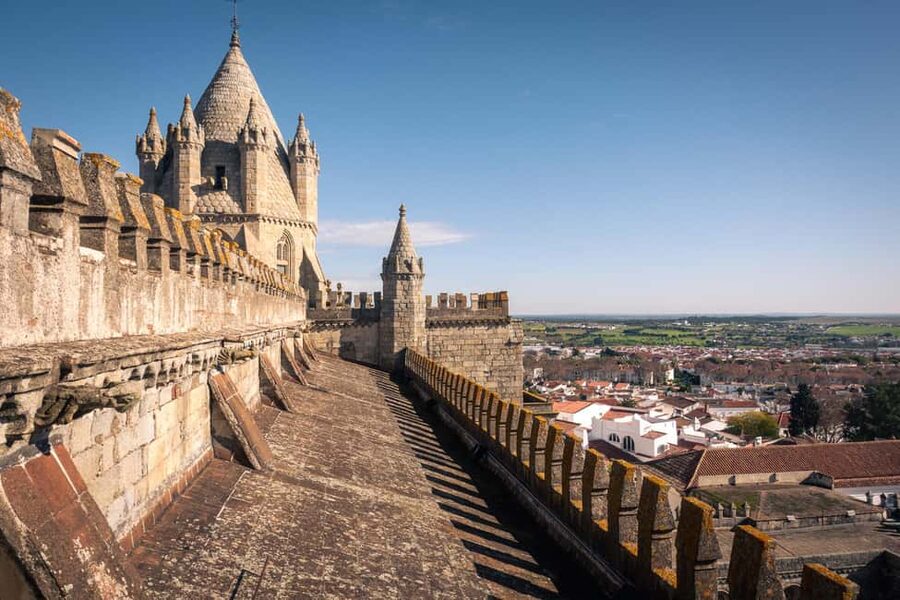
This is the core trio of the route. The app takes you to the area for Portugal’s largest medieval cathedral, with panoramic terrace views. Even if you don’t have time to explore every interior room, the value here is the vantage points. You get the kind of skyline perspective that makes you understand why people built towns up and around walls and towers.
Nearby, you’ll find Évora’s Roman Temple, a 1st-century marvel that’s described as well preserved. The Roman Temple is one of those places where the best part is usually realizing how “whole” it still looks compared to what you expect from centuries-old ruins. The tour’s spoken guidance helps you connect the dots, so you’re not staring at columns with only vague ideas of what used to be there.
Then the route includes the Church of Loíos. This is a great stop if you like interiors and symbolic details. It also breaks up the heaviness of big monuments with a different architectural mood.
One practical tip: because this tour does not include tickets, decide ahead of time which sites you’ll spend money on. If you’re trying to keep costs low, prioritize the outdoor views and the stops that you can access without paying extra that day.
Colegiais Garden, Espírito Santo College, and Páteo de São Miguel viewpoints
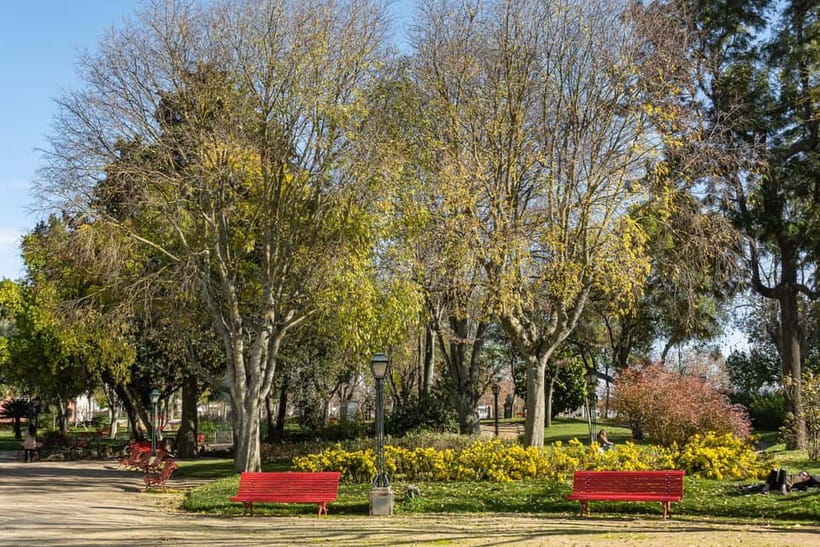
After the main monument zone, the route becomes calmer and more walkable in mood. You pass through the Colegiais Garden, which is a nice change of pace when your eyes have been busy. Gardens give you a reset, and the tour uses that break well before pulling you back into educational and religious spaces.
Then you reach the university area to marvel at the Espírito Santo College. This stop is valuable because it shows Évora’s role beyond churches and ancient sites. The story here helps you see the city as a place where learning and long-term institutions shaped daily life, not just ceremonial life.
Next is Páteo de São Miguel, where you can relax at a terrace offering panoramic views. I like this stop because it gives you a second viewpoint opportunity without forcing you into the “big cathedral only” mindset. If the cathedral terrace is busy or you’re tired of stairs, the terrace here can still deliver that wide look over Évora.
The tour sequence is smart: it balances “look up at the monuments” with “stand back and see the town as a whole.”
Igreja da Graça and the Capela dos Ossos at São Francisco
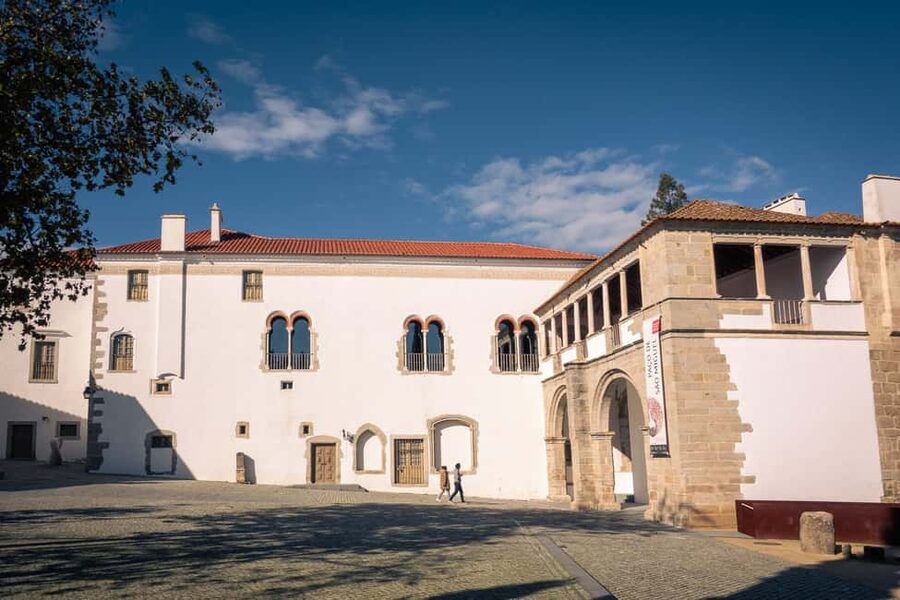
Now for the stop many people remember most. The route includes Igreja da Graça and then heads to the São Francisco Church, home to the unforgettable Bones Chapel (Capela dos Ossos).
Even if you’re not into macabre tourism, this is a place that hits you because it’s so specific. The Bones Chapel is not just a spooky room. It’s presented as a historical and religious expression that’s hard to forget. The app’s storytelling helps you get why it exists, so it becomes more than an odd-photo moment.
A consideration: this section can feel intense. If you’re traveling with kids, or if you’re sensitive to themes involving death, you’ll want to approach it with your own pacing in mind. You can take breaks, step out, and come back later on your schedule because the walk is flexible and self-paced.
Also, remember this tour is guidance, not tickets. If the chapel or related areas require separate entry fees on your visit day, plan to pay those separately.
Finishing loop along the medieval wall and a romantic garden
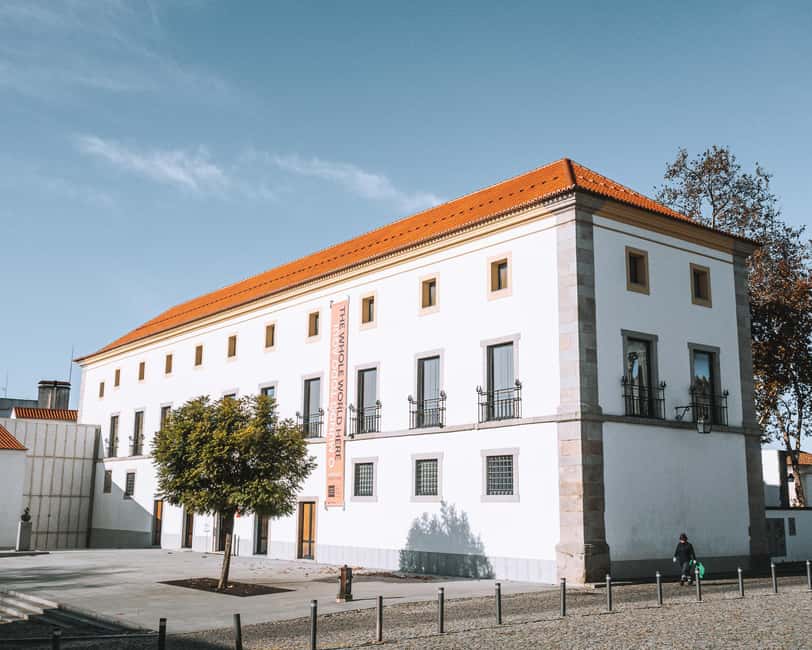
After the Bones Chapel area, the walk eases back into atmosphere. The tour ends with a peaceful stroll through a romantic garden, then returns to Porta Velha da Lagoa along the scenic medieval wall.
This finish is more than a nice ending. Walking along a medieval wall gives you a final “city in context” view. You start the tour at the gate, you follow the history across key landmarks, and then you close by tracing the edges of the old city. It’s a full-feeling loop.
If you’re taking photos, this is the moment to slow down. Light can change fast in late afternoon, and wall walks often look better once the crowds thin out.
How long the walk takes, and how to pace your stops
The route is about 5 km, and the tour typically takes 4 to 6 hours. That range is honest because your choices matter. If you spend more time on terraces and in churches, it stretches. If you keep moving and focus on the exteriors, it compresses.
The smart part is flexibility. You can do the tour whenever you like, and in full or in parts, within 5 days of booking. So if you arrive in Évora and your day gets complicated, you don’t have to panic. You can take a half-day segment, then finish later.
I suggest you plan it around your energy, not around the clock. If you want the best sense of the city, do the whole thing in one go. If you’re mixing Évora with driving, dining, or another nearby stop, use the app to build a two-part day.
Also, because the audio plays automatically as you explore, you don’t need to constantly tap through screens. You can focus on walking and looking, which makes the whole experience feel smoother.
Price and value: why $8 feels fair for an offline city walk
At about $8 per person, you’re paying for the experience design: a set route, spoken guidance, and access to the app content in multiple languages. You are not paying for a live guide, and you’re not paying for attraction tickets.
So is it value? In my view, yes, if you’re the kind of traveler who likes learning while moving. Évora is full of landmark density. A fixed walking route that connects cathedral views, Roman Temple context, and the Bones Chapel in one loop saves you the “what should I do next” time. That time is money too.
The real value is offline audio. Being able to run the tour without constant data use can save you frustration. Add the fact that you get remote support during the day if you hit a snag, and the whole thing feels low-risk.
If you prefer a human guide who can answer questions on the spot, or if you want tightly scheduled museum-style entries, you might feel this is too self-directed. But for most independent travelers, this price lands in a sweet spot.
Who should book this Walkbox route, and who should skip it
This walk fits well if you:
- want a flexible pace instead of a clock-driven group tour
- like audio guidance and learning as you walk
- have at least one smartphone per person you want using the app
- don’t mind paying separate entry tickets if certain stops require them
You might skip it if:
- you have mobility issues that make long walking routes hard, since it’s not suitable for people with mobility impairments
- you don’t want to rely on a phone battery for navigation and narration
- you’re only interested in one or two top sights and would rather do a shorter plan
For solo travelers, it’s especially handy. You get structure without losing freedom, and the app does the heavy lifting for you.
Should You Book This Évora Flexible Walking Tour?
I think this is a strong pick if your goal is to see a lot of Évora’s highlights without feeling trapped by a group. The big win is the combo of offline auto-playing audio plus a route that makes sense, starting at Porta Velha da Lagoa and bringing you through the Cathedral area, Roman Temple zone, and the Bones Chapel in a logical flow.
Book it if you want value, flexibility, and a way to connect the city’s layers without hiring a live guide. Consider skipping if you can’t do a steady walk or if you strongly prefer face-to-face explanations.
If you do book, my best advice is simple: charge your phone fully the night before, give yourself 4 to 6 hours for a relaxed pace, and decide early which ticketed interiors you really want. Then just follow the story and let Évora do the rest.
FAQ
Where does the tour start and end?
The tour starts and ends at Porta (Gate) Velha da Lagoa, near the recommended free car park.
How long is the walk?
It’s about 4 hours, though the route typically takes 4 to 6 hours depending on your pace and which stops you choose to enjoy.
How far do you walk?
The route is approximately 5 km.
Does the tour include a live guide?
No. Guidance is provided through the Walkbox app, not a live tour guide.
What languages are available in the Walkbox content?
The tour content is available in English, Portuguese, French, and Spanish.
Does the Walkbox app work offline?
Yes. Walkbox works offline, so you can use the tour without relying on mobile data.
Can I do the tour in parts?
Yes. You can do the tour in full or in parts within 5 days of your booking date.
What do I need to bring?
Bring comfortable shoes, comfortable clothes, and a charged smartphone.
Is a ticket included for entry attractions?
No. Tickets to paid attractions are not included.
What if I need help during the tour?
Your tour curator provides remote support via WhatsApp or SMS between 8:00 AM and 8:00 PM, and emergency assistance is available by phone.
Is this tour suitable for people with mobility impairments?
No. It’s not suitable for people with mobility impairments.
More Walking Tours in Cascais
More Tours in Cascais






More Tour Reviews in Cascais


Not for you? Here's more nearby things to do in Cascais we have reviewed












Walking Tours, side by side.
 ★ 4.8History, Stories and Lifestyle Walking TourTickets from $2910,902 traveller reviews
 ★ 5.0Best of Lisbon Small-Group Guided Walking TourTickets from $234,869 traveller reviews
 ★ 4.9Food and Wine Small Group Walking TourTickets from $724,082 traveller reviews
 ★ 4.9Best of Lisbon Walking Tour: Rossio, Chiado & AlfamaTickets from $232,700 traveller reviews
 ★ 5.0Age of Discoveries Walking Tour in BelémTickets from $31,513 traveller reviews
 ★ 5.0Sintra & Cascais Day Tour with Pena Palace Entry and Gardens WalkTickets from $92962 traveller reviews
 ★ 5.0Lisbon Roots – Small group Food & Culture Walking Tour w/tastingsTickets from $168910 traveller reviews
 ★ 4.9Starter Walking Tour to the highlights in GermanTickets from $33781 traveller reviews
More useful lists for this tour