
Review · LISBON CITY TOURS
Lisbon: Surf Lesson
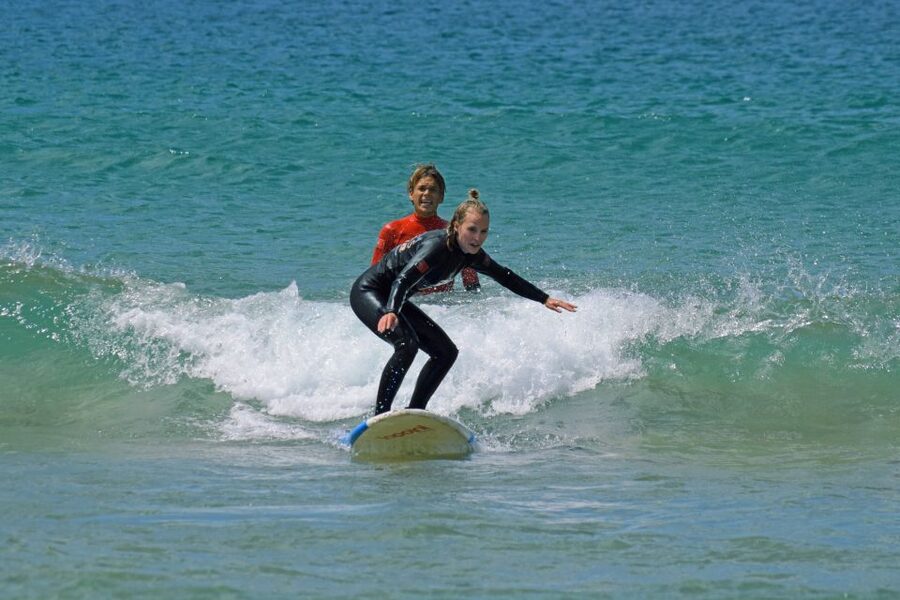
A saltwater intro beats another museum day. This 2-hour Lisbon surf lesson gets you on real Atlantic waves fast, with step-by-step coaching in Carcavelos (or sometimes Guincho). I love the small group setup, where the instructor can actually watch you and correct your pop-up and paddling, and I also love that you learn practical safety and wave-reading, not just how to stand up. The main thing to consider is that the beach can be busy, and you are at the mercy of wind and swell, so the lesson site may shift.
You meet right at Carcavelos Beach, at the surf school location next to Bar o Moinho, so you are not wasting time being shuttled around town. Gear is handled for you too, including wetsuit and board, plus the instructor and insurance are included, which makes the $47 price feel more like a skill session than an activity gamble. Still, there is no hotel pick-up or drop-off, and you will want to plan for getting there on your own.
This is best for beginners and for adults who want a fun, safe introduction. You should also know the lesson is not suitable for kids under 6, pregnant women, or people with mobility impairments, and groups run with 1 instructor and up to 5 people.
Key things I’d bet on in this lesson
- Carcavelos or Guincho depending on weather so you surf when conditions are better
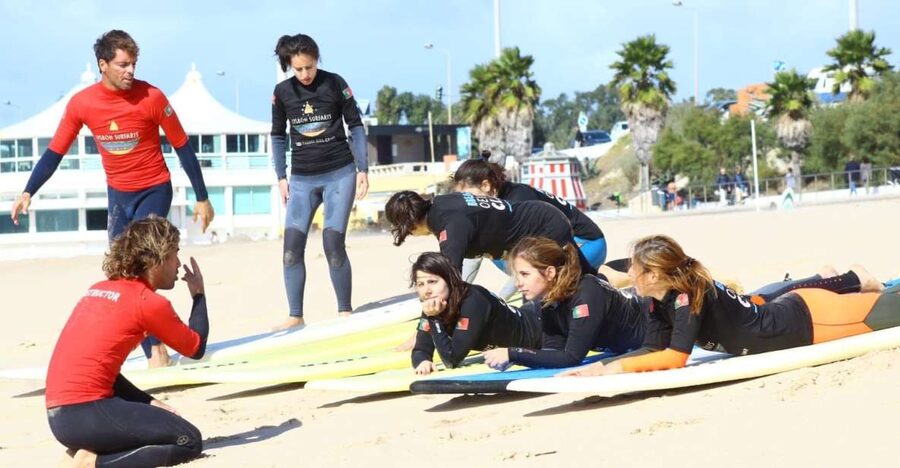
- Up to 5 people per instructor, so you get real corrections
- Safety plus ocean-reading basics, so you learn more than just standing up
- Gear is included, including wetsuit and board
- First-wave focus, with practice built into the full 2 hours
Why this Carcavelos-or-Guincho start works for beginners
If you are learning to surf in Lisbon, you want two things: consistent coaching and a beach that matches the day’s conditions. This lesson is designed around that reality. You start at Carcavelos, but the school takes you to the beach that looks best based on wind and weather, either Carcavelos or Guincho.
That choice matters. Beginners usually struggle for two reasons: they catch the wrong kind of wave for their skill level, or they get nervous out in the water and waste energy. By shifting locations when needed, the lesson improves your odds of having waves you can actually work with during your limited time.
Also, both beaches are part of Lisbon’s surfing identity, which is a plus if you want the experience to feel local, not like a cookie-cutter trip. You get to ride the real Atlantic rhythm without having to be an experienced surfer first.
More Lisbon tours and experiences for the shortlist

Meeting at Carcavelos, then getting fitted and ready
The meeting point is simple: Lisbon Surfaris is directly at Carcavelos Beach, right next to Bar o Moinho. That is good news if you like being efficient. No hotel pickup, no long waiting game in a lobby. You go straight to the water-facing part of your day.
Once you arrive, you get equipped with surfing gear. The lesson includes a wetsuit and a board, and the goal is to get you into the water feeling warm enough and stable enough to focus on technique. You also get an instructor guiding the full sequence, so you are not left guessing what to do with the leash, how to hold the board, or how to position yourself before paddling.
Practical tip: bring a towel and sunscreen, and use your ID or passport for check-in. If you have ever felt cold after changing into swimwear, you will appreciate that you are already starting with the right thickness of wetsuit for the session, since the school has different wetsuits for different needs.
What you learn on day one: safety, ocean reading, and wave choice
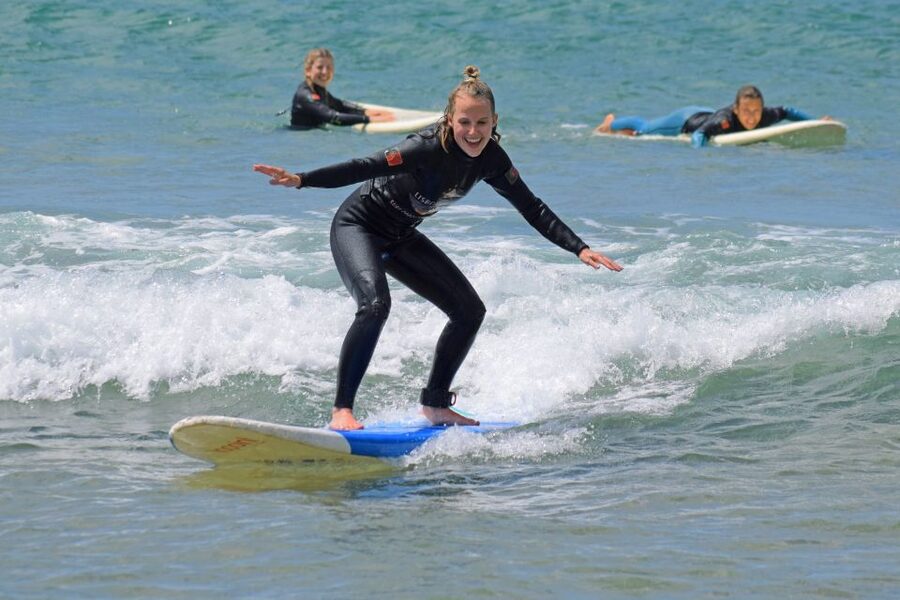
A lot of beginner surf lessons skip the part that keeps you safe and helps you improve. Here, the instruction is built around the fundamentals that make you safer and faster.
You will get essential coaching in three areas:
1) Safety basics
This includes how to move around with a board, how to handle the water safely with other surfers nearby, and what to do when conditions are not ideal.
2) How to read the ocean
Instead of treating each wave like a random surprise, you learn how to look at what the sea is doing and how to pick waves that make sense for your level.
3) How to choose a wave
This is huge for beginners. If you only learn the mechanics of the pop-up but not the selection part, you keep paddling for the wrong moment and you get frustrated. Wave choice is the difference between feeling like you are progressing and feeling like you are just wrestling the surf.
Instructors also give hands-on coaching during the session, and you can expect the vibe to be practical rather than lecture-heavy. The lesson time is short, so the teaching style is focused on what helps you in the water right now.
The paddling and pop-up practice that leads to your first wave
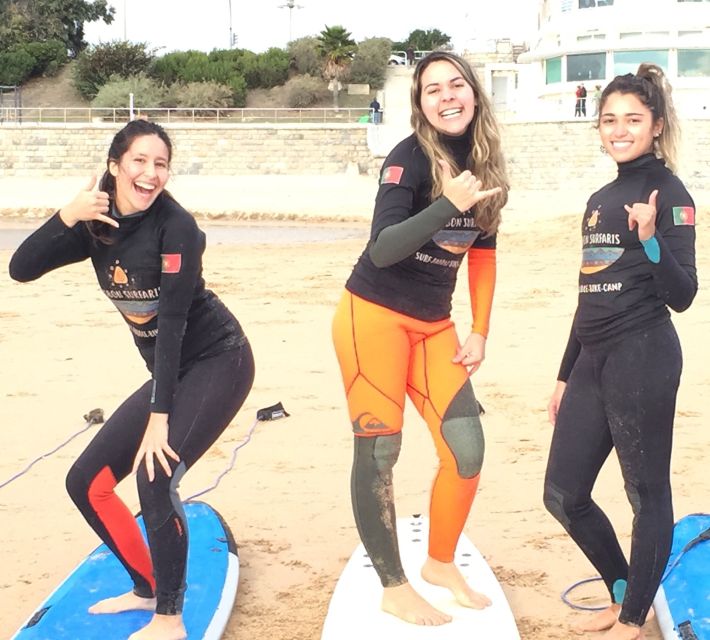
The heart of the lesson is learning the movements that turn you from board-holder into rider.
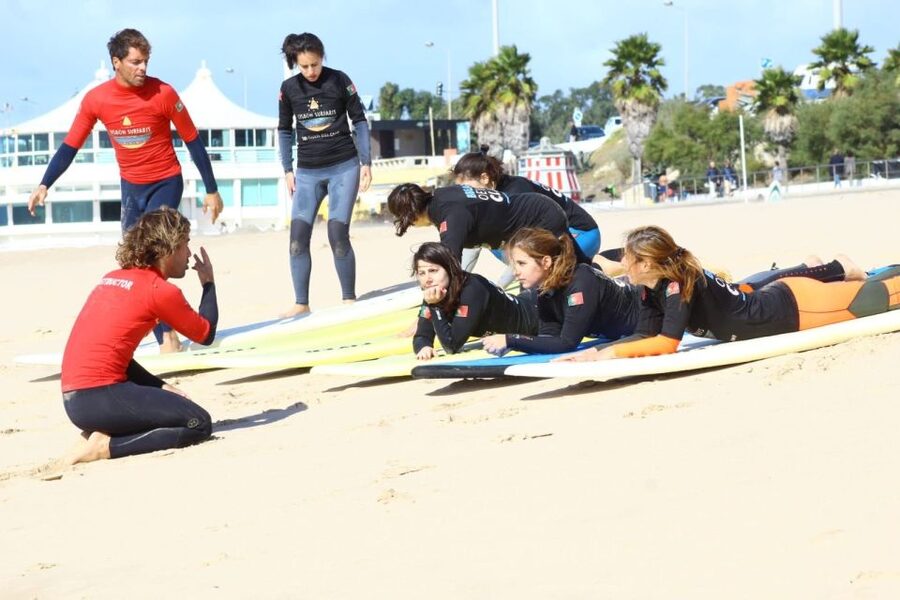
You start with paddling technique. That usually sounds boring until you try it. The difference is whether you paddle efficiently enough to get into position before the wave breaks. Your instructor works with you on the practical motions, so you are not just flailing and burning energy.
Then you practice the pop-up steps. Standing up on a surfboard is not just strength, it is timing and body positioning. Beginners often think they need more balance, but the real issue is that their feet land too early or too late, or their hands never get the board stable. This lesson focuses on the exact sequence you need to catch a wave and stand without fighting the board.
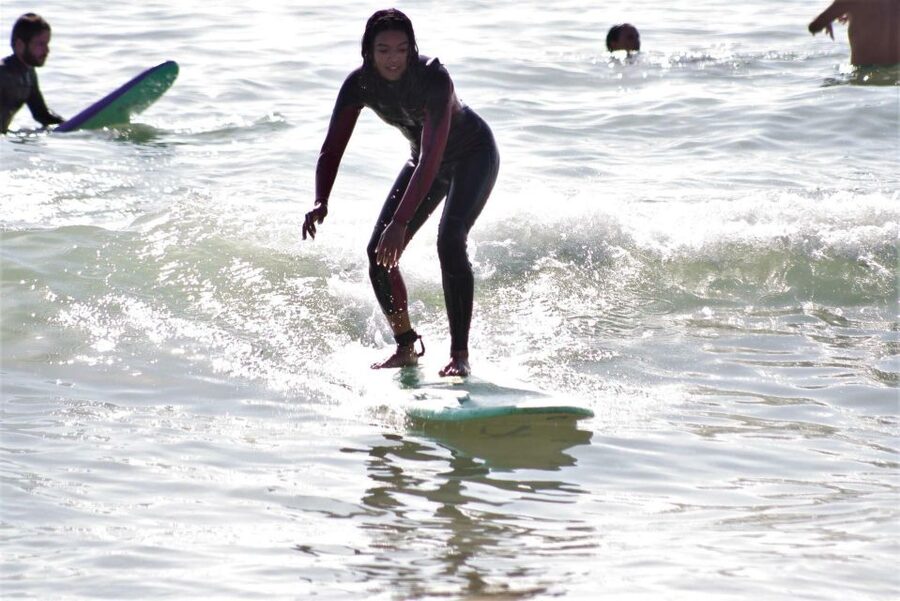
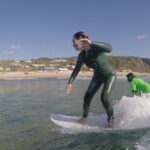
And yes, the lesson is structured with the goal of catching your first wave on the Lisbon ocean. That matters because catching a wave is the moment your brain finally connects the theory to movement. Even if you do not nail it every time, you are not spending the whole two hours waiting for some magical later skill.
One more thing: the coach stays close and gives feedback. That shows up in the teaching style described by past students, including notes that instructors like Patrick, Tiago, and Ivo are patient, upbeat, and quick to correct issues. You also see praise for instructors providing individual feedback, which is what you want when you are learning something as physical as surfing.
Shared vs private: how the group size changes your learning curve
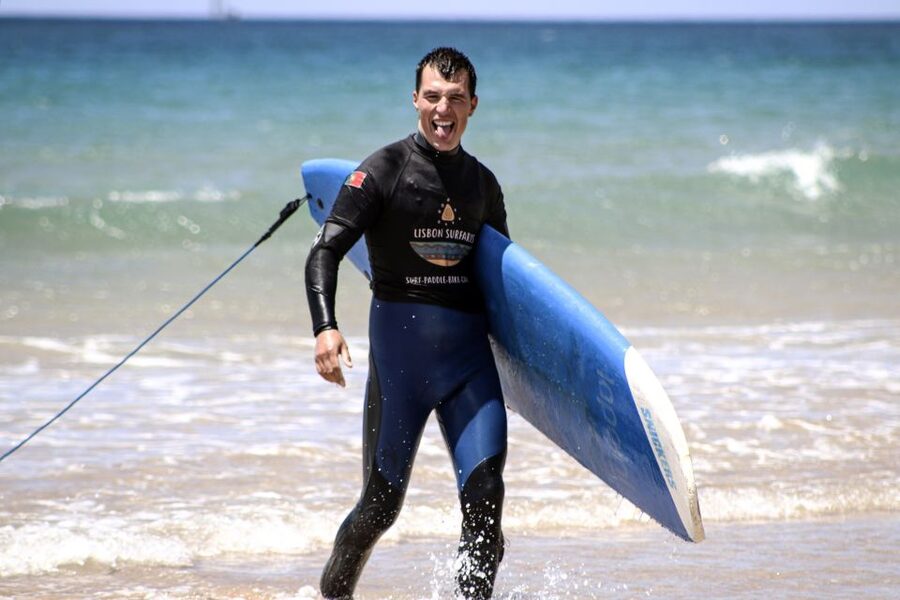
You can choose between a shared lesson or a private lesson. Either option can be a good fit, but the value changes depending on how you learn.
A shared lesson is still small. The group runs with 1 instructor and a maximum of 5 persons, which is already the difference between useful coaching and chaos. With that limit, you get time to practice and time for correction, without long stretches of watching other people only.
A private lesson is the best pick if you:
- learn faster with one-on-one attention,
- want a calmer pace,
- or want to focus on a specific issue like balance or timing.
If you are traveling solo and you want maximum wave time per person, private can be worth it. If you are traveling with friends and you want fun plus coaching, shared is a smart way to keep the price reasonable while still staying in a small group.





Price and value: is $47 really enough time?
Let’s talk money in plain terms. This lesson costs $47 per person for 2 hours.
For that price, you are getting more than a rental:
- surf equipment (including wetsuit and board),
- an instructor,
- insurance,
- and transportation to the beach if necessary (not hotel pickup).
When you compare that to typical surf experiences where you pay separately for gear, instruction, and logistics, the bundled package is the value hook. The 2-hour duration is also realistic for beginners. You have time to get through safety basics, learn technique, practice repeatedly, and still have enough energy left to actually catch waves.
The one financial catch is that food and drinks are not included. That is common for beach activities, but you should plan for it so you do not run out of water during your day.
Getting there without stress: transport notes that matter
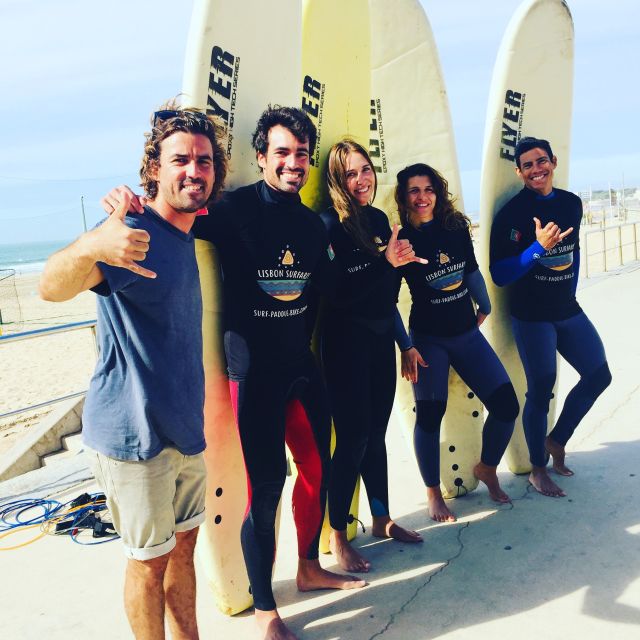
There is no hotel pick-up and drop-off, so your job is to get yourself to Carcavelos Beach by your own means. The good part is that the meeting point is right at the beach, so once you find the area, your logistics get easy.
If transportation to the beach is necessary on the day, it is included. That matters because you might end up at the alternate beach location depending on conditions. In practice, this keeps you from having to figure out last-minute routes when the wind changes.
What to pack, so your body and brain can focus
This is not the kind of activity where you can wing it with only flip-flops. You want a simple, comfortable kit.
Bring:
- Passport or ID card
- Towel
- Sunscreen
And plan to dress for the water. The wetsuit handles warmth, but you still want to arrive ready to change, and you want to be able to dry off afterward without improvising.
If you get cold easily, pay extra attention to wetsuit fit and thickness. Past experiences note that the school has different wetsuits and size options, which helps when Atlantic conditions feel brisk, especially around shoulder seasons.
Who this surf lesson suits best, and who should skip it
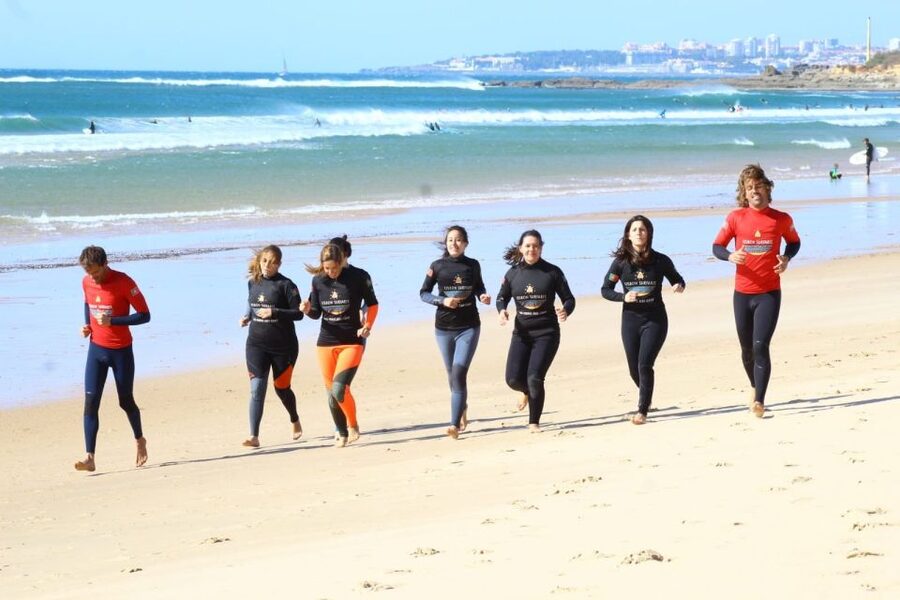
This lesson is designed for beginners and for people who want a structured first taste of surfing. It is a good fit if:
- you want to learn safety and ocean-reading, not only tricks,
- you like the idea of personal feedback,
- you want a local surf vibe at Carcavelos.
It is not suitable for:
- children under 6,
- pregnant women,
- people with mobility impairments.
Also, if you hate crowds, keep in mind that the beach can be busy. One experience highlighted that the shore was crowded on the day, even though the actual coaching and fun factor stayed high. You cannot control that, but you can control your mindset: show up ready to share space, follow safety instructions, and focus on your practice.
Language and teaching style: how you’ll understand the cues
You can expect instruction in Spanish, English, Portuguese, or French, depending on what the team schedules for your lesson.
That matters because surfing technique uses fast cues. If you understand the coach’s instructions clearly, you spend less time guessing and more time building the movement patterns that help you catch waves.
Past experiences also highlight a friendly, high-energy teaching style from instructors like Tiago and Patrick, with direct safety emphasis and a constant focus on getting each person improving. The best lessons do not just tell you what to do, they keep you progressing with immediate corrections.
Final call: should you book this Lisbon beginner surf lesson?
If you want a first surf experience that feels organized, safe, and beginner-friendly, I think this is a solid booking. The biggest reasons are simple: small group coaching (up to 5 people), gear included, and instruction that covers both safety and the ocean skills that help you actually improve.
Book it if you:
- are a true beginner or coming back after time away,
- want to learn wave-reading and safety along with technique,
- value personalized feedback over a big group demo.
I’d think twice if you:
- need hotel pickup and drop-off,
- cannot handle being on a beach that can be crowded,
- or you fall into the lesson’s listed safety limits.
If you line it up with clear expectations and show up with your towel and sunscreen, you are set for a fun, practical start to surfing in Lisbon.
FAQ
How much does the Lisbon: Surf Lesson cost?
It costs $47 per person.
How long is the surf lesson?
The duration is 2 hours.
Where do I meet for the lesson?
You meet at Lisbon Surfaris directly at Carcavelos Beach, right next to Bar o Moinho.
Do I need to bring surf gear?
No. The lesson includes surfing equipment, including a wetsuit and board.
What if the lesson moves to another beach?
The plan can go to Carcavelos or Guincho, depending on the weather. Transportation to the beach is included if necessary.
Is food included?
No. Food and drinks are not included.
What languages are offered by the instructor?
Instructors teach in Spanish, English, Portuguese, and French.
Are private lessons available?
Yes. You can choose between shared or private lessons, and there are small groups available.
What should I bring with me?
Bring passport or ID card, a towel, and sunscreen.
Who should not book this activity?
It is not suitable for children under 6, pregnant women, or people with mobility impairments.
More Workshops & Classes in Cascais



More Tour Reviews in Cascais
Not for you? Here's more nearby things to do in Cascais we have reviewed










Lisbon City Tours, side by side.
 ★ 5.0Lisbon City Center Tour – The Unmissable LisbonTickets from $322,234 traveller reviews
 ★ 4.7Sintra, Pena, Regaleira, Cabo da Roca & CascaisTickets from $2319,656 traveller reviews
 ★ 4.1Jerónimos Monastery Entrance TicketTickets from $2114,164 traveller reviews
 ★ 4.8History, Stories and Lifestyle Walking TourTickets from $2910,902 traveller reviews
 ★ 4.5Sunset Boat Party Cruise with DJ and Open BarTickets from $2710,378 traveller reviews
 ★ 4.7Pena Palace, Sintra, Cabo da Roca, & Cascais DaytripTickets from $919,981 traveller reviews
 ★ 4.6Oceanário de Lisboa Entrance TicketTickets from $299,943 traveller reviews
 ★ 5.0True 4Hour Private Tuk Tuk Tour: Discover Lisbon with a Local!Tickets from $1088,008 traveller reviews
More useful lists for this tour