
Review · SINTRA DAY TRIPS
Sintra: Hispanic Moorish Tile Workshop
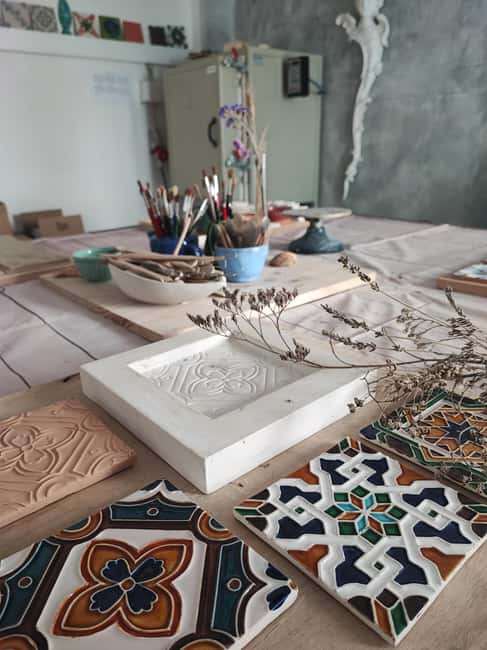
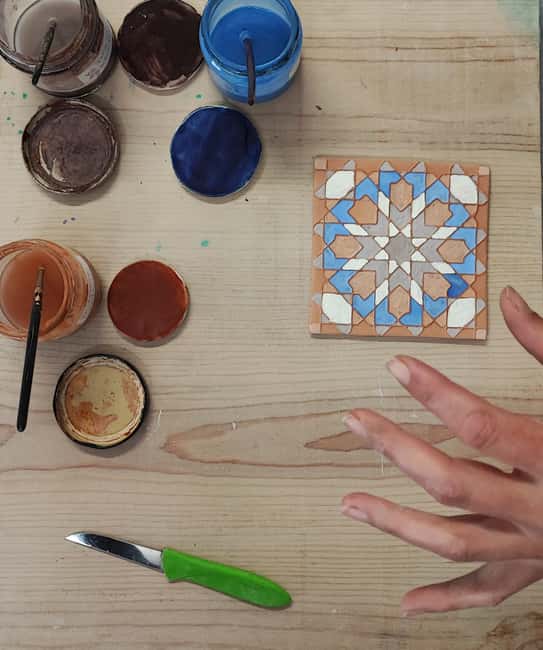
A tile workshop in Sintra feels like stepping into the region’s artwork. In Estudio Lazuli, you learn the traditional Aresta tile decoration technique with Islamic influence, then you make one tile by shaping fresh clay and using a mold. You also paint a second tile with colored glazes, with plenty of motifs to choose from.
What I like most is the hands-on process, from clay and molding to paint and glaze color choices, all in a small group limited to 8. I also really appreciate the teaching style, with instructors such as Aldina (and Dina in some guest notes) praised for being patient and upbeat, plus the added context about tile history and azulejos.
One consideration: you need to plan for your tile after firing, since you either pick it up later or arrange shipping, and U.S. mail shipping is currently restricted. That means you should not count on leaving Sintra with everything in hand the same day.
Key highlights worth your attention
- Small-group format capped at 8, so you get real guidance while you work
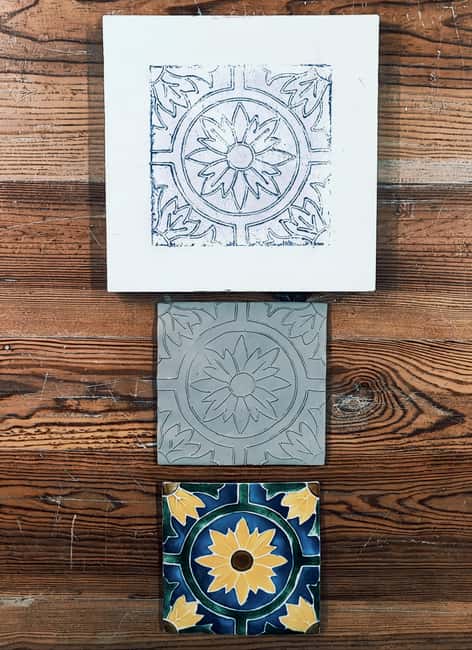
- Two-part making experience, shape a clay tile with a mold, then paint another tile with colored glazes
- Aresta technique lessons with Islamic influence, tied to Hispanic Moorish tile decoration
- Motif choice from a wide selection for both molds and tiles
- Firing service included, so your painted tile gets finished properly afterward
- Take-home options include studio pickup later or shipment (with special U.S. restrictions)
Why a Sintra tile workshop beats another souvenir stop
Sintra already pulls you in with its tile-covered streets and Moorish-influenced look. But a workshop gives you something more personal than a postcard. You get to understand how the patterns are planned and executed, instead of just admiring the finished wall.
I love that this is a very focused 2-hour activity, running from 3 to 5pm. It fits neatly into an afternoon plan, especially if you are already in Sintra for a couple of hours before dinner. And because the studio limits the class size, the experience stays calm, not like a factory tour.
The other big win is that you leave with a tangible result. This is not just watching someone else work. You create and paint your own piece, then the studio fires it, so you can pick it up later (or arrange delivery if you cannot collect it).
The workshop also has that rare mix of hands-on craft and context. You do learn the technique behind Hispanic Moorish tile decoration, including the Aresta approach with Islamic influence. And you get background on azulejos and tile history, which makes it easier to appreciate what you see around Lisbon and Sintra afterward.
You can also read our reviews of more tours and experiences in Sintra.



The studio experience: making with clay, then painting glazes
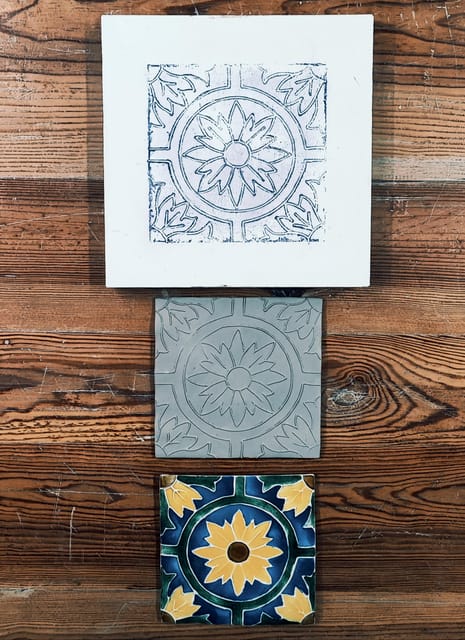
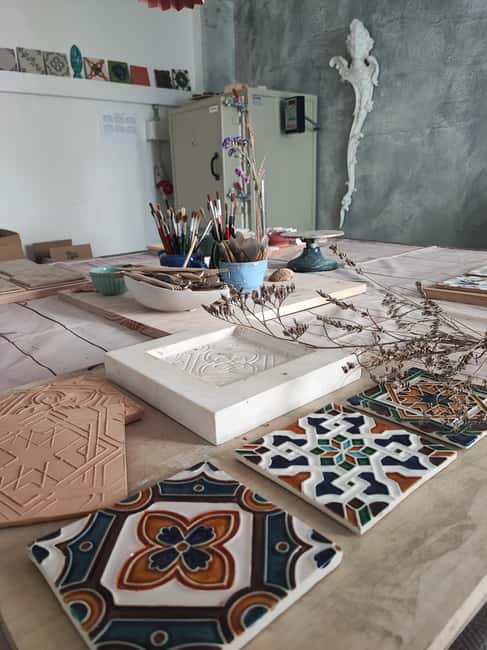
The session is built around two different creative moments. First, you craft a tile using fresh clay and a mold. This step matters because it shows you the structure behind the design, not just the final painted surface.
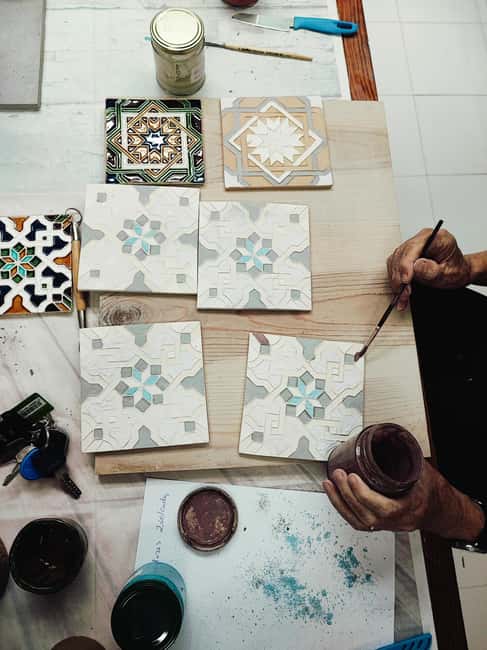
Then you paint a separate tile using colored glazes. You are choosing from a wide selection of motifs, and that choice helps the workshop feel personal even if you are a first-time creator. It is also where a lot of the fun happens, because you can think about line work, symmetry, and how different colors change the look of the pattern.
You get guidance throughout, and the small-group size helps instructors keep an eye on details. In guest feedback, the vibe is repeatedly described as relaxed and well run, with studios noted as clean and thoughtfully organized.
One practical note: the tile you paint stays in the studio to be fired. So if you want a finished take-home item immediately, this is not that kind of workshop. The result is worth waiting for, but plan around it.
Aresta technique and Hispano-Moresque patterns, explained in real terms
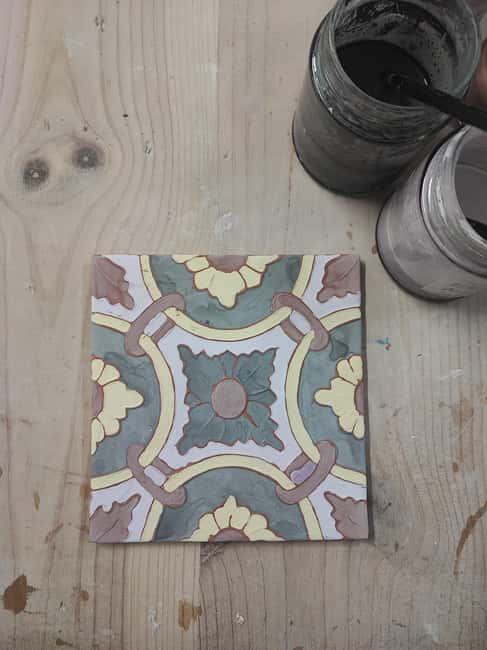
This workshop centers on the traditional Aresta tile decoration technique with Islamic influence. You do not just hear the name and move on. The technique becomes visible in how you select motifs and work through the steps that lead to crisp, pattern-driven decoration.
You also learn about a style called Hispano-Moresque, described as a design that came from Spain in the 15th century. That matters because it gives your artwork a cultural context, not just a decorative look. Once you understand that these patterns have a lineage, you start noticing them everywhere in Lisbon and Sintra.
What you actually do, choosing motifs for both molds and tiles, helps this history feel practical. Instead of treating it as an abstract story, you see how a design system guides color placement and geometric balance.
If you enjoy Islamic-influenced geometry and Moorish-style ornamentation, you will probably appreciate the way the workshop emphasizes motif choice and pattern structure. Even if you do not know the terms beforehand, the class walks you through it in a way that keeps you moving.
Your 3 to 5pm schedule, and how to plan your afternoon
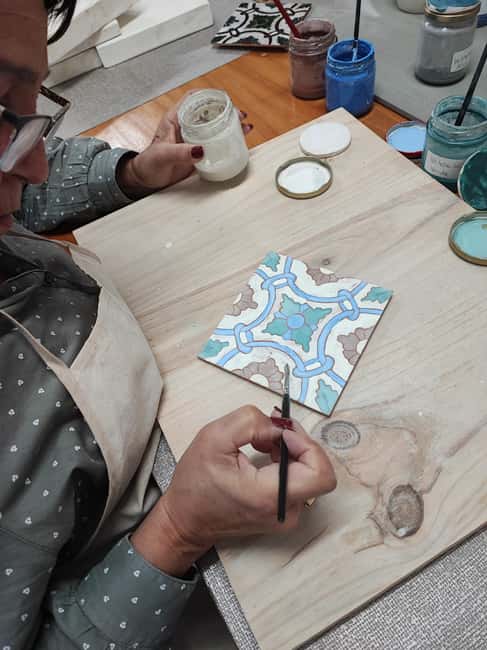
The workshop runs 2 hours, from 3pm to 5pm, and it is scheduled inside the Studio. That timing is ideal if you want something hands-on after sightseeing without getting derailed into a half-day commitment.
Here is the flow you should expect during those two hours:
- Welcome and technique setup
You get an overview of what you will do, including the idea behind the decoration technique and what the studio will handle after class.
- Clay and mold tile crafting
This is where you work with fresh clay and a mold to create your tile base. It is a tactile step, and it helps you understand the pattern framework.
- Glaze painting on a separate tile
Then you paint a different tile with colored glazes. You pick from available motifs, and you paint to your chosen design.
- Closing and firing handoff
Your painted tile is left in the studio to be fired. You receive the plan for how you will get it afterward.
The workshop includes all materials and equipment, so you are not arriving to hunt for supplies. It also includes one painted tile plus the firing service for it, which is a big part of the value. Most craft experiences that feel similar charge extra for the firing stage, so having that handled for you is a smart detail.
If you are building your day in Sintra, I suggest pairing the workshop with a light sightseeing window before it starts. One guest shared using a short train from Lisbon to Sintra and exploring the town before class. Another noted the studio is a quick walk to the train station, which makes it easier to connect transport with your workshop time.
Value check: is $58 for a fired tile fair?
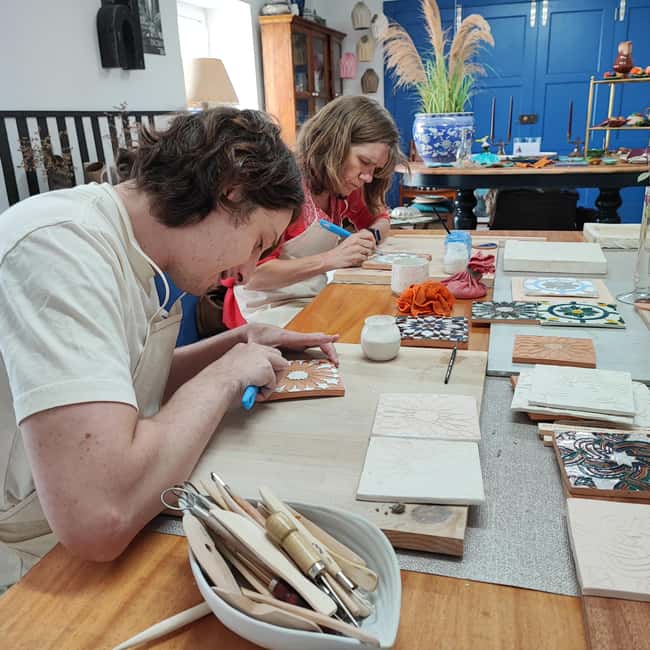
At $58 per person for a 2-hour workshop, the main question is what you actually get. Here, you are paying for instruction, materials, equipment, and the firing of your painted tile. You also get the full making and painting process, not just one quick craft step.
You get:
- A hands-on clay and mold crafting segment
- A glaze painting segment with motif choices
- One painted tile that the studio fires for you
- Option to pick up later or have it shipped (shipping costs are separate in the studio)
- A small group format, limited to 8 participants
That adds up to good value if you want a real creative souvenir. In other words, you are not paying just for a session of entertainment. You are paying for an artwork outcome, and the studio finishes it for you.
The $58 also becomes more attractive when you consider that this is in Sintra, where “quick craft stops” can turn into overpriced items in tourist shops. Instead, you come out with something you made yourself, in a style linked to the local tile tradition.



Take your tile home: pickup timing and shipping limits for U.S. plans
This is the part you cannot gloss over. Your painted tile is fired after the workshop, and then you handle the handoff.
You have two options:
- Pick up later at the studio, with tiles ready in about 2 to 3 days
- Ship the tile to your home address, with a fee charged separately in the studio
But there is an important U.S. specific notice. Due to current restrictions affecting shipment of goods to the United States, Portugal’s postal services are temporarily restricting shipments to the U.S. For now, the studio says it is currently unable to send your painted tiles by mail to the United States.
What you can do instead as a U.S. participant:
- Pick up in person when your tile is ready in 2 to 3 days
- If you cannot collect it, arrange delivery to your hotel via courier (additional fee applies)
- If needed, the studio will keep your tile stored safely until international shipping becomes available again
Other guests reported that shipping has been possible in the past and described it as reasonable, but the current notice is the one you should plan around. So treat shipping as an option, not a guarantee, especially if you are trying to get your tile before you leave Portugal.
Practical tip: build at least a small buffer into your Sintra or Lisbon schedule. If you are flying out the next day, pickup logistics could become tricky. If you are staying longer, you can usually make pickup work without stress.
Who this workshop suits best, and who might want to skip it
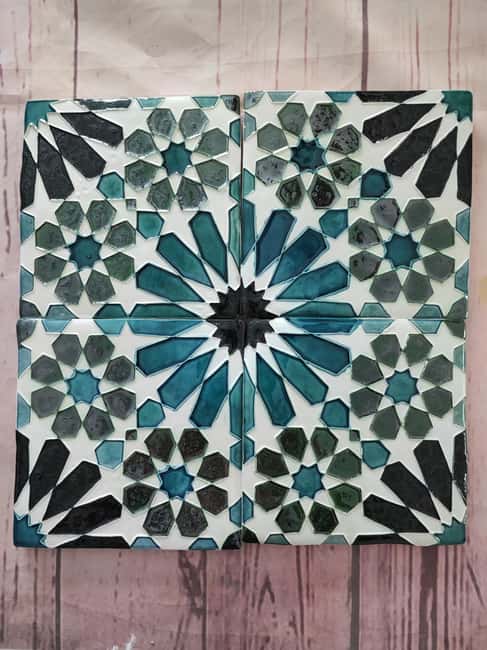
This class is great for people who love craft and want a souvenir with meaning. If you enjoy geometric patterns, Moorish and Hispano-Moresque looks, or you want to come away understanding azulejos more deeply, this hits the mark.
It is also a strong choice if you like small group settings. With only up to 8 participants, you can actually ask questions and get hands-on help during both clay and painting steps. English instruction also makes the experience easier to follow without needing art jargon.
Families should note the age limit. It is not suitable for children under 7 years. If you are traveling with younger kids, you might need a different activity.
If you hate waiting on finished results, consider the takeaway policy carefully. Your painted tile needs firing, so you will not have a completed item immediately. The payoff is that you get a properly finished piece, but it is a wait-and-collect situation.
About the instructors and the workshop vibe
The studio is run in a friendly, guided way, and the teaching style shows up in repeated feedback. In guest comments, instructors like Aldina and Dina are described as kind, patient, and knowledgeable, with clear instruction and a welcoming tone.
You should also expect a studio environment that feels tidy and organized. Multiple notes mention a clean studio and a relaxed pace, which makes it easier to focus on your design instead of worrying about chaos around you.
Another plus for ongoing interest: the studio runs multiple workshop types. One guest specifically mentioned other classes such as pottery, Tiffany glass, and jewelry. If you already like the idea of making something in the Sintra area, this might be the first step of a craft-focused trip plan.
Should you book the Hispanic Moorish Tile workshop in Sintra?
If you want a meaningful souvenir, book it. This is a real making experience, clay plus glaze, tied to a specific technique (Aresta) and style (Hispano-Moresque). With firing included and one finished painted tile as the outcome, the value is clear.
Book with extra attention to your timeline if you are short on days. Because your tile is fired and then needs pickup or shipping, you should not plan to leave immediately. For U.S. travelers, the current mail restriction means you may need to choose pickup or a courier delivery option instead.
I would skip it only if you want something you can take home the same afternoon, or if you are not interested in pattern-based craft. Otherwise, this is exactly the kind of activity that turns a sightseeing day into a story you can hold in your hands later.
FAQ
Where is the workshop located?
The workshop takes place in the Sintra area, at the Estudio Lazuli studio.
How long is the workshop?
It lasts 2 hours, scheduled from 3pm to 5pm.
What is the price?
The price is $58 per person.
Is the workshop taught in English?
Yes, the instructor teaches in English.
How big are the groups?
The workshop is a small group, limited to 8 participants.
Is it wheelchair accessible?
Yes, the workshop is wheelchair accessible.
What do I make during the workshop?
You craft a tile using fresh clay and a mold, then you paint another tile using colored glazes.
Do I take the tile home the same day?
Your painted tile is fired after the workshop. You can pick it up later at the studio or have it shipped, so it is not typically taken home immediately.
Can the tile be shipped to the United States?
The U.S. shipment notice says the studio is currently unable to send painted tiles by mail to the United States. The alternative mentioned is pickup, hotel courier delivery (additional fee), or storage until shipping is available again.
Is food included?
No, food and drinks are not included.
More Tour Reviews in Sintra
Not for you? Here's more nearby things to do in Sintra we have reviewed












Sintra Day Trips, side by side.
 ★ 4.7Sintra, Pena, Regaleira, Cabo da Roca & CascaisTickets from $2319,656 traveller reviews
 ★ 4.2Sintra: Pena Palace and Park Entrance TicketTickets from $1117,410 traveller reviews
 ★ 4.7Pena Palace, Sintra, Cabo da Roca, & Cascais DaytripTickets from $919,981 traveller reviews
 ★ 5.0Sintra and Cascais Small-Group Day Trip from LisbonTickets from $607,018 traveller reviews
 ★ 4.8Sintra, Pena, Cabo da Roca, Cascais Tour with PickupTickets from $575,080 traveller reviews
 ★ 5.0Small Group Tour to Sintra, Pena Palace, Cabo Roca and CascaisTickets from $673,559 traveller reviews
 ★ 4.9Sintra, Pena Palace, Cabo da Roca, & Cascais TourTickets from $563,509 traveller reviews
 ★ 4.8Sintra, Pena, Cabo da Roca Coast & Cascais Day TourTickets from $413,124 traveller reviews
More useful lists for this tour