
Review · SINTRA DAY TRIPS
Private Tour Sintra, Cabo da Roca e Cascais – Half Day
Sintra in one half day, plus the ocean. This private route strings together royal palaces, UNESCO-listed streets, and Atlantic drama, all with onboard Wi-Fi so you waste less time on your phone. I also like the easy pickup and drop-off options, since you can start right from your Lisbon hotel, AirBNB, station, or airport. The main catch: it is a packed schedule, so you will see a lot, but you will not linger.
You can choose a morning or afternoon departure, which is a smart way to keep your trip flexible. And if you care about getting the story behind the sights, this tour is designed to keep things moving while a guide puts the pieces together, from Moorish-era ruins to 19th-century Romantic palaces. One more thing to consider: some palaces can be affected by conditions, so a good guide matters for how the plan works in real life.
At $132.45 per person, you are paying for a private vehicle, water, Wi-Fi, and guide time, while the big-ticket palace admission is not included. That can still be good value if you want a tight route without logistics stress, especially when you have limited hours.
Key points before you go
- Private, half-day format (about 4 to 5 hours) keeps you efficient, not overwhelmed.
- Wi-Fi on board helps with maps, translation, and planning, especially in places with spotty signal.
- Hotel, port, airport, and station pickup options make this easy for cruise days or first-time visitors.
- Sintra’s highlights are grouped logically so you do not bounce around the hills all day.
- Cabo da Roca and Cascais add variety fast, with ocean views and a classic seaside town.
- Tickets are not included, and that is the one part you must budget for (especially Pena).
How the 4 to 5 hour plan stays realistic
This tour is built for people who want the classic Sintra, Cabo da Roca, and Cascais combo, but do not have a full day to manage buses, parking, or timing. The vehicle is an air-conditioned minivan, and you stay comfortable while you jump between mountain views and coastal stops.
The schedule is intentionally short: you get focused time where it matters most, then you move on. That is great if you like structure. If you prefer wandering for long stretches, you will feel the time pressure. The upside is that your half day is not wasted in transit lines, and you end with enough energy left to explore on your own after you are dropped back.
Also, you can pick between a morning or afternoon tour, which matters in Portugal. Morning often feels calmer for photos, while afternoon can be nicer for light and relaxed pacing in town. Either way, you are getting a clean route with a clear shape.
You can also read our reviews of more private tours in Sintra



Moorish Castle in Sintra, where layers of power show up fast
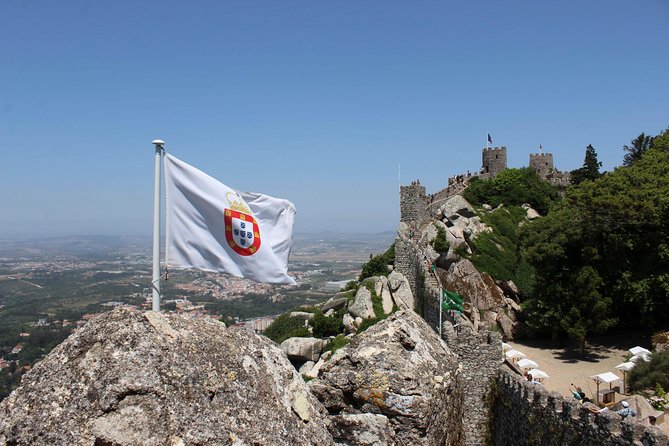
The day starts at Moorish Castle, a ruin with deep roots. This site dates back to the early Moorish occupation of the Iberian Peninsula, reaching into the 8th century. Then the story shifts to Portuguese rule: it was finally taken by Dom Afonso Henriques in 1147, and a first Christian chapel was established, dedicated to St. Peter of Penaferrim.
What I like about starting here is that it gives you context before you zoom into the showpieces. You can see how Sintra is not one style or one era. It is a stack. Later, in the romantic period around 1860, the walls were restored under Dom Fernando II, who supervised the restoration and even wooded the surrounding areas, bringing new dignity to old medieval ruins.
Inside the castle you have notable features, including a Moorish cistern and the so-called Royal Tower. The site is about 3.5 km from Sintra’s historic center, so the route does not require you to start with a long hike just to get into the atmosphere.
Practical tip: if you are someone who wants to take photos from multiple angles, tell your guide early. Even with limited time, a guide can help you choose the best moments to step out, not just point and move.
Pena Palace, 19th-century Romanticism, and the terrace view
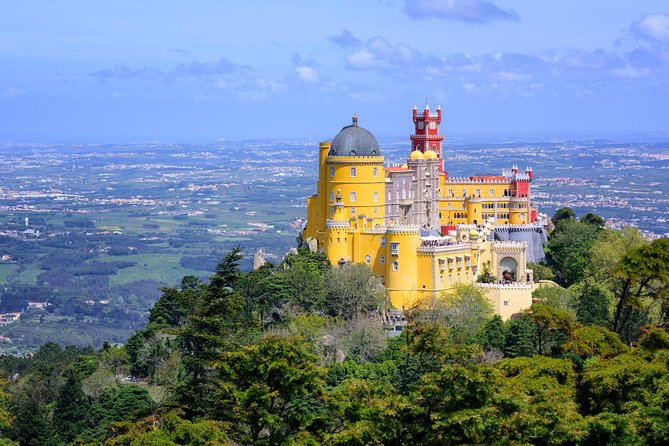
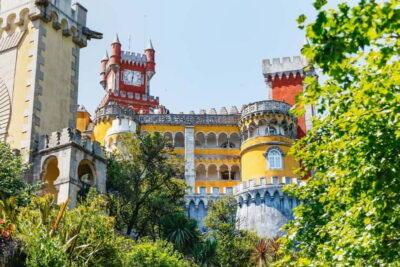
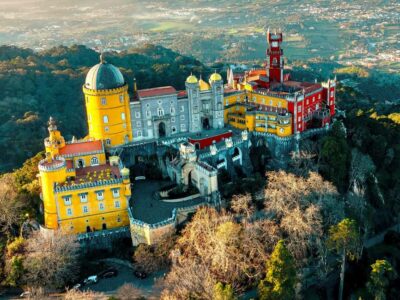
Next comes National Palace of Pena, the reason many first-timers make the trip in the first place. This palace is a major statement of 19th-century Romanticism in Portugal, sitting on top of Monte da Pena, built on the site of a former monastery.
The palace has royal backstory baked in. It was built by D. Fernando de Saxe Coburg-Gotha, who married Queen Dona Maria II in 1836. After falling for Sintra, he bought the convent and surrounding lands to create a summer palace for the royal family. That matters because it explains why Pena feels both grand and theatrical. This was designed to be seen, not just lived in.
You get about two hours at Pena, but admission is not included. There is also a restaurant installed in one of the palace wings, with a terrace view over the Sintra Mountains and the coast. If you are traveling with people who get hungry quickly, this is useful to know. You can use that terrace to pause without breaking the schedule.
The only real drawback here is simple: if the palace is affected by conditions, your time can shift. One guide example is Francisco, who had to adjust when fire risk conditions meant a palace visit could not happen. That is a reminder that Sintra is a real place with real-weather variables. A good guide helps you keep the day meaningful even when access changes.
Centro Historico de Sintra, a fast walk through UNESCO charm
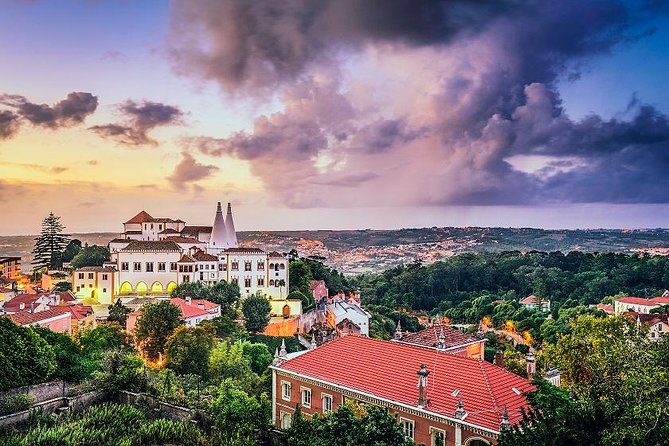
Then you drop into Centro Historico de Sintra, a UNESCO-recognized area where multiple periods and cultural movements overlap in the architecture. You get about 30 minutes, and the admission here is free.
This is not enough time to explore every alley like you live there. But it is enough time to do two smart things:
- Get your bearings. Once you understand where the historic lanes sit, the bigger monuments make more sense.
- Pick a couple of postcard-worthy corners, then stop. If you try to do everything in 30 minutes, you will feel rushed.
If you are traveling with teens or anyone who wants photos more than facts, this is the place to do quick snapshots and let the atmosphere do the work. If you are a slower walker, this short stop is also where you might ask your guide to recommend one must-see street or viewpoint so you use the half hour well.
Quinta da Regaleira, the spiral staircase and the hidden “initiation” pit
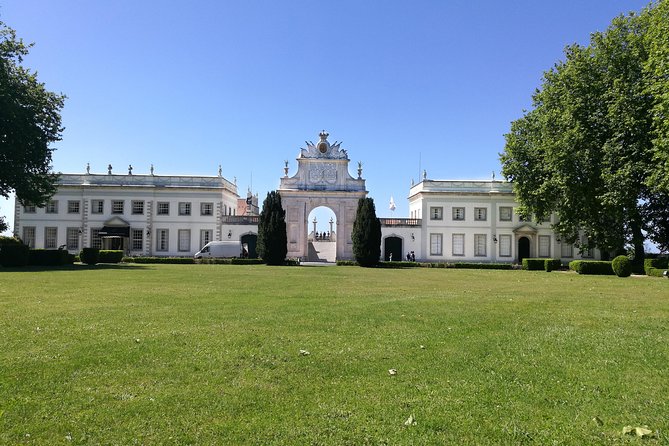
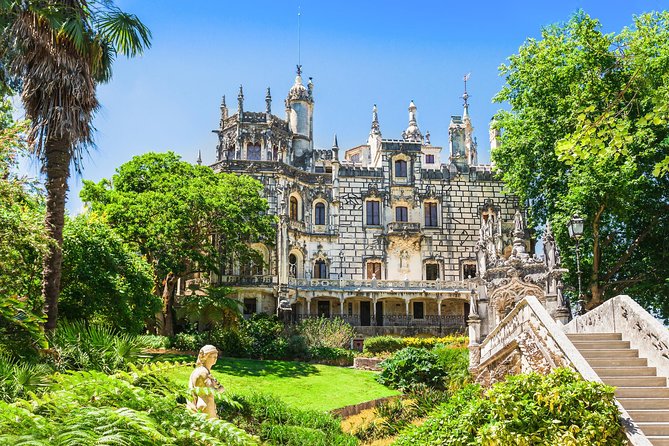
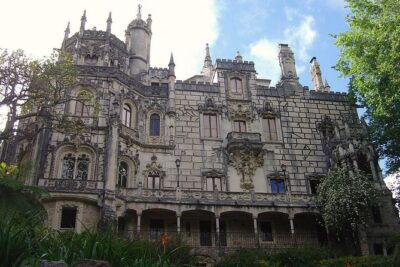
Close to the historic center is Quinta da Regaleira, one of Sintra’s most enigmatic sights. This property was built in the early 20th century by millionaire Antonio Augusto Carvalho Monteiro (1848 to 1920), using scenographic architect Luigi Manini (1848 to 1936) to shape the experience.
What stands out is how Regaleira mixes styles and symbolism. The palace is in a romantic revivalist style, imitating Gothic, Manueline, and Renaissance forms, then pairing that with esoteric, myth-based ideas. It feels like architecture with an opinion.
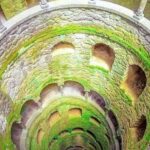
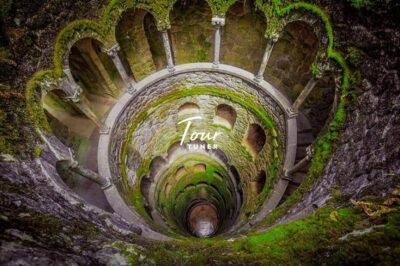
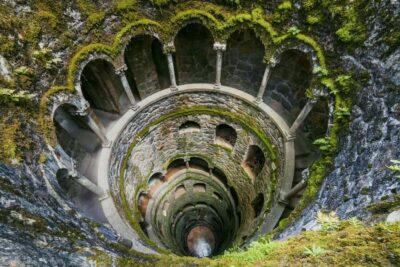
The biggest attention-grabber is the Holy Trinity Chapel. From there, visitors can take a spiral staircase down to the crypt to find the monumental initiation pit. It runs deep below, through a cave, and eventually you reach a hidden lake in the middle of the gardens.
Even on a half-day route, this stop can be worth it because it feels different from the usual royal palace boxes. You are not just touring rooms. You are touring a concept.
Practical tip: this is the kind of stop where you may want to pause, look, then read what you can. A quick audio guide or a few notes from your guide can turn it from scenery into a story you remember later.



Monserrate Park and Palace, William Beckford’s love letter to Sintra
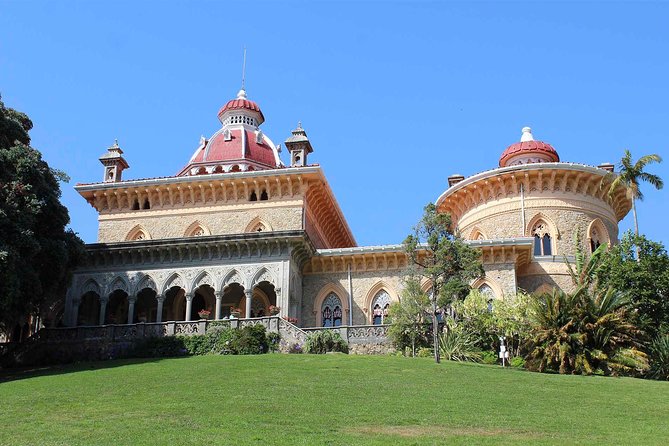
Another Romantic-minded stop is Park and Palace of Monserrate. The park was created by William Beckford, who reportedly fell for the Sintra Mountains. That “love story” angle matters because Monserrate is less about royal power and more about personal taste, with the gardens and park design doing the talking.
If Pena is about statement architecture, Monserrate is about atmosphere. It is a good counterbalance after the main palace. Even if you only get part of the time you want, Monserrate helps you feel the landscape shaping the design choices.
Here is how to make it work in real life: use your guide to focus you on what to look for. In a short day, it is easy to “see” things without noticing them. You want to come away with a couple of visual ideas, not just photos.
Cabo da Roca, westernmost mainland Europe and the wind test
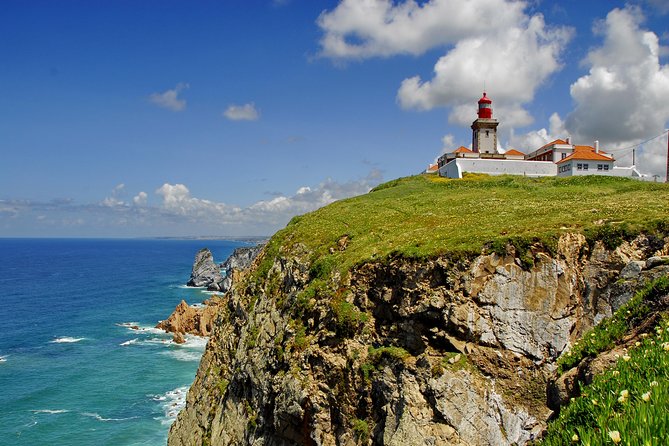
Next comes Cabo da Roca, the westernmost point of mainland Europe. This is one of those places that feels instant and universal. You get dramatic sea cliffs and huge sky, and you can sense why sailors cared about this spot.
You will find the coordinates noted for visitors: 38 degrees 47 minutes north, 9 degrees 30 minutes west. Cabo da Roca sits about 150 metres above the sea, giving you a panoramic view over the Serra de Sintra and the coast, which is why it is worth your time even if it is short.
Historically, there was a fort there in the 17th century that helped guard Lisbon’s harbour, forming a defensive line along the coast, especially during the Peninsular Wars. Today, traces remain, along with the lighthouse, which is still an important navigation point.
Cabo da Roca lies within the Parque Natural de Sintra-Cascais, and it is also tied to coastal walking trails. On this tour, you get about 15 minutes, and admission here is free.
Practical tip: wear something wind-proof. Even if the day is mild in Lisbon, cliff wind can be a different world. If you are planning to take photos, plan to hold your camera steady and take the first shot quickly, then check your angle.
Cascais historic center, seaside style and Boca do Inferno
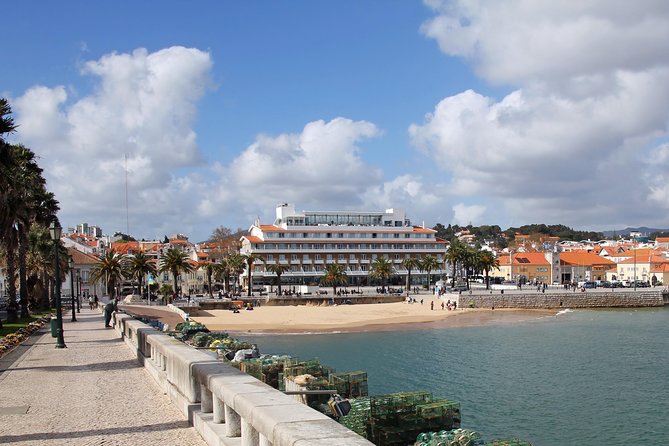
After the cliffs, you shift to Cascais, a coastal town that has been shaped by the sea for centuries. Cascais began as a fishing village, then grew during a busy medieval period in the 14th century, when it served as a major stopping point for boats heading to Lisbon.
The big transformation came in the second half of the 19th century, when sea bathing became popular. King Dom Luís I played the role of trendsetter: in 1870, he converted the Fortaleza da Cidadela into the summer residence of the Portuguese monarchy. The nobility copied him quickly, building palaces and beautiful villas that turned Cascais into a fashionable summer resort.
Cascais also became easier to reach after the railway line between Pedrouços and Cascais opened in 1889. Today, it is lively and cosmopolitan, while still preserving a taste of aristocratic atmosphere.
On this tour, your stop is about 15 minutes, and admission is free. That is just enough time for a quick walk and a reset. You can browse shops and stop at outdoor cafés and restaurants, especially if you want to treat yourself to a coffee or a small bite later.
If you want to understand Cascais fast, focus on two things:
- The seafront mood, from sheltered bay vibes to the broader coast direction
- The natural sights, especially Boca do Inferno, an inlet along the coast surrounded by steep rocks and caves where visitors come to watch the sea force
Food is also part of the Cascais story. The local cuisine is known for fresh fish and shellfish, and you can find these dishes in restaurants around town.
Price and tickets, what you are really paying for at $132.45
This tour costs $132.45 per person, and the included value is clear. You get transport by air-conditioned minivan, bottled water, hotel pickup and drop-off, a private tour, transport by private vehicle, Wi-Fi on board, and all taxes, fees, and handling charges.
The part that is not included is food and drinks, plus tickets. The itinerary specifically notes that admission for Pena Palace is not included.
Here is the practical way to think about it: you are paying for time and coordination. In Sintra and along the coast, traffic and routes can eat hours. Paying for private transport can be cheaper than you think when you compare it to the hassle of figuring it all out yourself, plus the value of getting a guided storyline so stops feel connected.
If you hate paying for tickets at the last second, budget ahead. At minimum, you should plan for Pena admission. If you want to squeeze the most out of every stop, have a little cash or card ready for whatever is ticketed.
The real win is the guide, especially when conditions change
Half-day tours succeed or fail based on how well the guide manages time and flow. The good news is the operation seems to take guiding seriously.
If you happen to get Margaride, you can expect a very friendly, accommodating approach. One key detail from her style is that she takes pictures of the group throughout the excursion, which can be a real stress-saver if your travel buddy is the one usually behind the camera.
Felipe is another example of a guide who customizes. One approach noted is that he adapts to what you want, shares history clearly, and navigates heavy traffic to keep your experience enjoyable. That matters because on this kind of route, traffic can decide whether you see the best angles or spend extra time trapped on roads.
Francisco is an example of how a guide handles disruptions. When fire risk conditions impacted the visit to Pena Palace, the plan still had to work. That is the behind-the-scenes skill you want from a private guide. You want the day to stay meaningful even when access changes.
And yes, there is one caution to keep in mind: if you expect long wandering time at every stop, this kind of route can feel like too much driving and not enough exploring. Half-day schedules are always like that. Your best tool is communication. Ask your guide what matters most to you, then let the plan center on those priorities.
Morning vs afternoon, and how to time your best photos
You can choose an option that fits your day, either morning or afternoon. Use that choice strategically.
If you want the light for cliff views at Cabo da Roca and the coast feeling crisp, afternoon can bring nice tones, depending on the weather. If you want fewer crowd vibes for photos at the palaces, morning often feels easier. Either way, keep an eye on visibility. Fog or low clouds can flatten the views, especially at the ocean edge.
In Sintra, the “best photo” is often the one you take quickly, then step back from while you enjoy the moment. In a half-day, your camera can slow you down. A guide can help by timing the best viewpoints for photos so you do not waste daylight.
Also, plan your walking shoes. You will be moving through historic areas and gardens, and you may encounter stairs, especially at places like Regaleira, where the spiral descent is part of the experience.
Who this tour fits best
This is a strong match for:
- First-time visitors who want Sintra plus Cabo da Roca plus Cascais without building a route from scratch
- Cruise passengers or anyone with limited time in Lisbon
- Couples or small groups who prefer a private vehicle and a guide telling the story as you go
- People who like structure but still want a little free time later in the day
It is less ideal if:
- You want long stays at a single site
- You picture slow, unplanned wandering as the main event
- Your group wants a lot of museum-style time inside palaces
Should you book this private half-day route?
If you want the highlights of Sintra, the western cliff energy at Cabo da Roca, and a charming coastal town like Cascais, this private half-day tour is an efficient way to get it done. The biggest reason I would book it is the combination of private pickup and drop-off, Wi-Fi onboard, and a guided route that connects the sites instead of dropping you off and hoping you know the story.
Book it if you accept the pace and you plan around the fact that tickets are not included and time at each stop is limited. Skip it if you are a slow wanderer who expects hours at Pena or you do not like tight schedules.
If you choose a morning or afternoon option based on your priorities, you will end the day with a strong “Sintra plus the Atlantic” memory, not just a list of photos.
FAQ
How long is the private tour?
It runs about 4 to 5 hours.
What does pickup and drop-off include?
The tour includes hotel pickup and drop-off, and it can also pick you up from places like the Lisbon port, airport, train station, hotels, and AirBNBs on agreement.
Is Wi-Fi provided during the tour?
Yes, Wi-Fi is provided on board.
Is this tour private?
Yes. It is a private tour, so only your group participates.
Are tickets included?
Tickets are not included. Pena Palace admission is specifically noted as not included.
Which stops are free of admission?
The Centro Historico de Sintra stop is listed as free, Cabo da Roca is free, and the Cascais historic center stop is also listed as free.
What time options are available?
You can choose between a morning or afternoon tour, leaving half a day free on your schedule.
More Private Tours in Sintra



More Tours in Sintra
More Tour Reviews in Sintra

Not for you? Here's more nearby things to do in Sintra we have reviewed








Sintra Day Trips, side by side.
 ★ 4.7Sintra, Pena, Regaleira, Cabo da Roca & CascaisTickets from $2319,656 traveller reviews
 ★ 4.2Sintra: Pena Palace and Park Entrance TicketTickets from $1117,410 traveller reviews
 ★ 4.7Pena Palace, Sintra, Cabo da Roca, & Cascais DaytripTickets from $919,981 traveller reviews
 ★ 5.0Sintra and Cascais Small-Group Day Trip from LisbonTickets from $607,018 traveller reviews
 ★ 4.8Sintra, Pena, Cabo da Roca, Cascais Tour with PickupTickets from $575,080 traveller reviews
 ★ 5.0Small Group Tour to Sintra, Pena Palace, Cabo Roca and CascaisTickets from $673,559 traveller reviews
 ★ 4.9Sintra, Pena Palace, Cabo da Roca, & Cascais TourTickets from $563,509 traveller reviews
 ★ 4.8Sintra, Pena, Cabo da Roca Coast & Cascais Day TourTickets from $413,124 traveller reviews
More useful lists for this tour