
Review · SINTRA DAY TRIPS
Magical Sintra Village Tour
Sintra feels like a movie, on a schedule. This Magical Sintra village walking tour strings together city, fountains, churches, palaces, and gardens into one smooth route, with an English guide keeping the mood light and the facts clear. I especially like the value (about $3.63) and the way the stops connect, so you understand what you are seeing instead of just collecting photos. One thing to plan for, it is brisk, it is outdoors-heavy, and the major interiors are not included on the tour.
You start at Sintra City Hall and finish in front of the Seteais gardens, with views that can include Pena Palace on a sunny day. Most people can do it, but if you have mobility limits, you may want a private tour so you can move at your pace without rushing.
Key highlights you will actually feel
- City Hall as the storyline kickoff, with Sintra’s legends and origins placed right up front
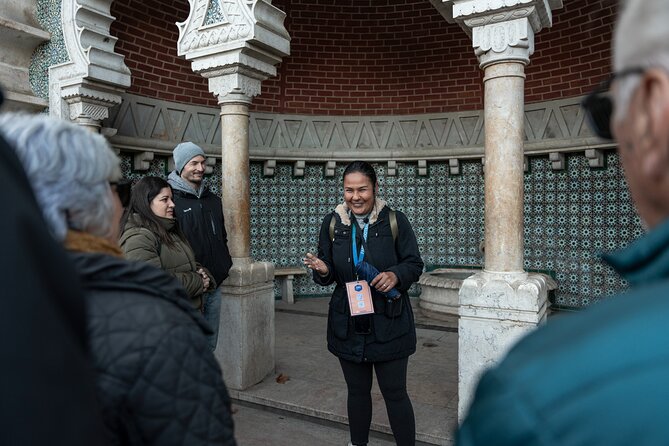
- Moorish and Roman layers at Fonte Mourisca, explained in a way that makes the architecture click
- Freemasonry and Templar themes, teased through São Martinho’s Church and the later garden stops
- National Palace exterior plus pastry timing, so you get the big symbols without waiting for entry
- Piriquita stop built in, a reliable way to try Travesseiros and Queijadas without guessing where to go
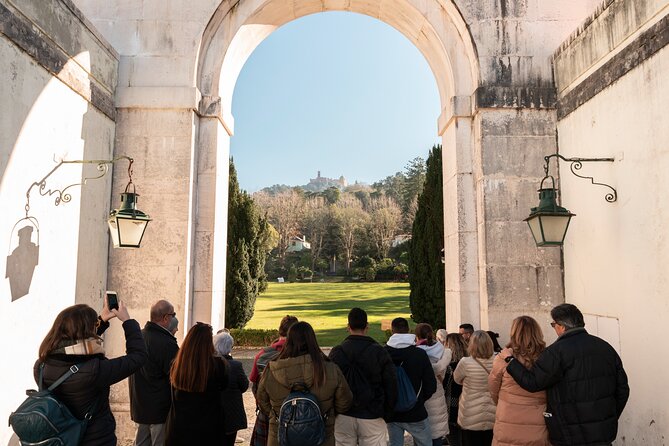
- Finish at Seteais gardens, a calm ending with panoramic views toward the Atlantic and, on clear days, Pena
Why this Magical Sintra walking loop is a great first plan
Sintra gets crowded fast, and it can feel like you are sprinting between postcards. This tour is built to give you a grounded overview in a short window of about 2 hours 10 minutes, without needing private transportation. That makes it ideal for your first morning in town, or anytime you want to get oriented before choosing what to visit in depth.
The price is the headline, but the value is bigger than the number. You get an English guide plus multiple major reference points across Sintra, and many of the stops are free to view from the street, so you are not paying for extra tickets you will never use. The max group size is 25, which is big enough to feel social, but small enough that the guide can still herd everyone toward the right corners.
The tradeoff is time. Each location gets a quick, focused visit, not a long museum-style experience. Also, the route depends on good weather, since this is mostly outdoors. If it is raining or unpleasant, you may need to be flexible with your date.
You can also read our reviews of more tours and experiences in Sintra.


Starting at Camara Municipal de Sintra, where the legends begin
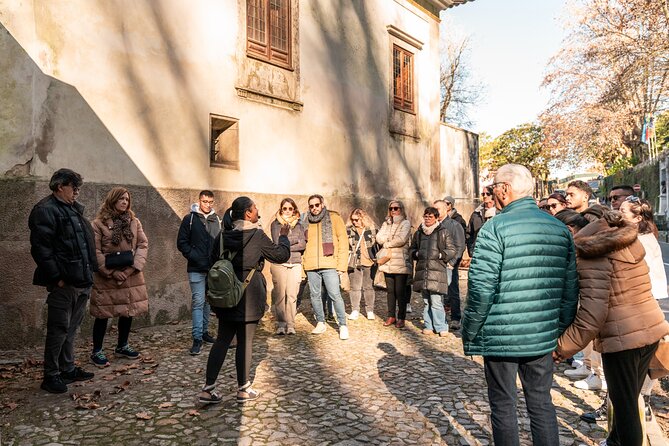
Your tour begins at the Camara Municipal de Sintra, right in the heart of town, at Largo Dr. Virgílio Horta. I like this start for one simple reason: it gives you context before you start walking into the story maze.
From here, the guide sets up Sintra as more than a pretty hillside town. You hear the name’s older roots and the idea that Sintra has always attracted people through myths, power, and reinvention. It is the kind of intro that makes later stops make sense, like you are following a thread rather than hopping between landmarks.
Practical tip: arrive a few minutes early and do a quick visual scan of your surroundings. The walk covers a lot of ground in a short time, and this first stop helps you “find your bearings fast.”
Liberdade Park and Fonte Mourisca, the Sintra backstory in two stops
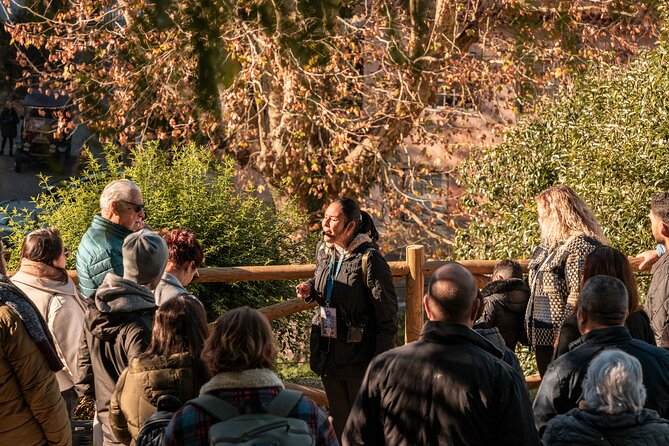
Next comes Liberdade Park. Even if you have heard the word Templars before, the guide’s job is to connect that legend to Sintra in a grounded way, including the idea that influential figures associated with the region shaped what Sintra became.
Then you hit Fonte Mourisca, the Moorish Fountain. This is one of those places where you might otherwise shrug and keep walking. But the guide frames it as a meeting point of Roman and Arabic heritage, which matters because Sintra is not just one cultural chapter. It is a series of layers stacked over time.
Why this works on your trip: Sintra’s palaces and gardens can feel like fantasy if you do not understand the human history underneath. A fountain might sound minor, but it is a shortcut to understanding how the town evolved into a royal retreat and later became tied to Romantic-era imagination.
Igreja de São Martinho, when spirituality and secrets get discussed
São Martinho’s Church is a quick stop, about 15 minutes, but it is not filler. The guide brings in the themes people associate with Sintra’s esoteric reputation, including stories linked to freemasonry and the way Romanticism shows up in the town’s cultural memory.
Here is the practical value: you start noticing symbols in nearby architecture and garden design later on the route. Even when you are viewing from the outside, you get a mental map of what the guide is pointing at and why it matters to the story of Sintra.
Just keep expectations realistic. This is not a deep, inside-the-church sermon-style visit. It is a guided interpretation meant to sharpen your eyes as you move.
Sintra National Palace exterior, plus the pastry payoff
The National Palace of Sintra stop is where your walking tour starts to feel like a hybrid of history and “what should I eat.” The big takeaway is that the tour does not go inside Palácio Nacional, even though the site is famous for rooms and details. So you will not do a full palace visit during this particular tour.
What you do get is the famous imagery and references: the Magpie Room is mentioned, the twin chimneys are a key visual cue, and the guide ties the palace back to larger Sintra legends like connections to the Moorish Castle and ideas such as secret tunnels and the mythical Mountain of the Moon.
Then comes the smartest part for many visitors: a chance to sample Sintra classics, specifically Queijadas and Travesseiro. If you have never had them, this is the moment it clicks. They are not generic sweets, they are part of Sintra’s identity.
Time tip: this is a short tour, so the pastry break is quick. If you need a long bathroom stop, plan to do that at the first decent opportunity, not at the last minute.



Piriquita and the Lawrence Hotel, two local anchors for your Sintra day
After the National Palace area, the route shifts from symbolic buildings to everyday icons.
First is Casa Piriquita, an iconic pastry shop known for Travesseiros and Queijadas, and said to be founded over a century ago. This is not just a stop to buy something. It is also a useful lesson in how Sintra’s food culture ties back to the same Romantic-era storytelling that surrounds its palaces.
Next is the Lawrence Hotel. The guide points out that it is the oldest still-functioning hotel on the Iberian Peninsula, and it connects Sintra to literary history, including Lord Byron. Even if you never step inside, seeing the hotel within the walk helps you understand how Sintra became a destination for writers, travelers, and people looking for atmosphere.
If you like travel that feels grounded, this pairing is a win. You go from myths and symbols to real-world hospitality and snacks, in one continuous circuit.
Palácio Biester and Quinta da Regaleira, mystery without the long entry time
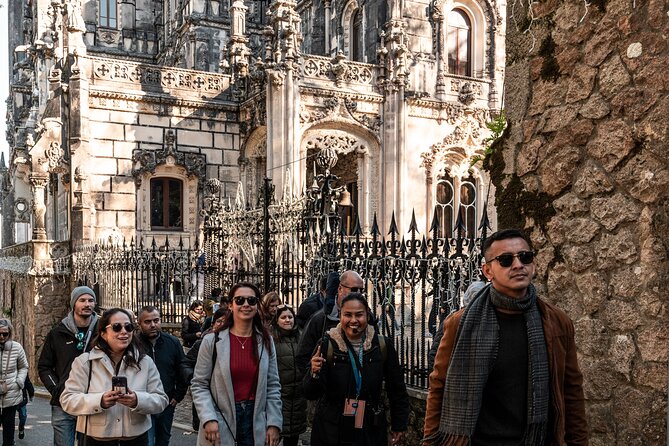
Two of the biggest “wow” names in Sintra show up in this tour, but with an important twist: you will not go inside Palácio Biester or Quinta da Regaleira during the tour. You see them and you learn the symbolism, then you have the option to visit them later on your own if you want a full experience.
Palácio Biester is framed with a cinematic connection. The guide mentions it was immortalized in Roman Polanski’s film The 9th Gate. That kind of pop-culture hook can make an architectural stop feel less intimidating and easier to remember later.
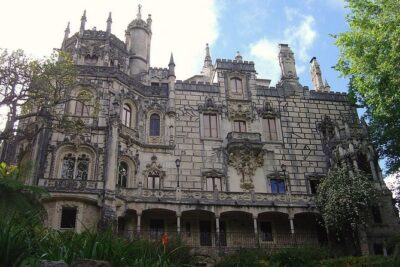
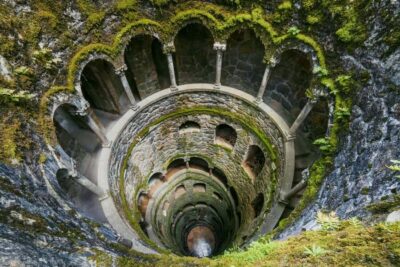
Then comes Quinta da Regaleira, the estate famous for gothic facades, gardens, and enigmatic grottoes. The guide links it to mysticism themes people associate with freemasonry, the Knights Templar, and alchemical symbolism. You are not touring the grounds with unlimited time, but you do get a guided “why it looks like that” explanation.
What this means for you: if you only have one afternoon and you do not want to spend half your day queuing, this tour gives you the story cues. Later, when you return for a longer visit, you already know what to look for.
Seteais Palace gardens finish, where your photos get better
The tour ends at Valverde Sintra Palácio de Seteais, finishing in front of the gardens. This is a very practical ending point because you get a calmer, scenic finish after the busy palace-focused stops.
You get panoramic views stretching across Sintra, with the Atlantic Ocean in sight on clear days. On a sunny day, you can even see Pena Palace in the background at the top of the mountain, which makes a nice final reward for your walking.
The Seteais gardens belong to an 18th-century neoclassical palace that now operates as a luxury hotel. You will notice romantic pathways, mythological statues, and carefully maintained hedges as you arrive.
Best next step: if you want to keep exploring after the tour, this finish is a good launching point. It helps you connect what you just learned to what you still want to see, without feeling like you are starting over.
Guide quality, and why the storytelling feels personal
This tour is heavily guide-driven. The difference shows up fast in how the facts are delivered and how smoothly the group is managed across many stops.
In the English-language version, you might hear names like Nir, Claudia, Silverster, Catalina, Joao, or Fernando associated with past groups. The common thread is delivery style. Guides are described as using humor, drama, and a sense of narrative so you keep paying attention even when the stop is only ten or fifteen minutes.
One practical tip: if you want the most value, ask one question early. For example, ask what theme links the churches and the later estates. Once you know the thread, the rest feels like it clicks into place.
Also note the pacing. In a walking tour this short, the guide has to cover ground. If you have mobility needs, the safest move is to choose a private tour so you can slow down without disrupting the entire group’s timing.
Price and logistics, the real meaning of $3.63
At $3.63 per person, this tour is priced like an orientation and story walk, not a full-ticket palace itinerary. That is why it feels like such a bargain. Many major stops are viewable from the outside, and the tour does not include private transportation, so you are not paying to be driven between sites.
You also get a mobile ticket, which makes the check-in step simpler. The tour is offered in English, and confirmation is received at booking time.
The biggest logistical consideration is that you are walking and moving through multiple neighborhoods. Wear shoes you can handle on uneven stone streets and bring a light layer, because Sintra weather can shift quickly.
For value seekers, this is also a smart “decide your next tickets” plan. After the tour, you will know which places you want to spend money and time on later. And since the tour does not go inside certain key sites, you keep the option open.
What to pack and how to time your day
This is a short tour, but it still moves enough that a few small choices matter.
Bring:
- Comfortable walking shoes with good grip
- A small water bottle
- A light rain layer or compact umbrella, just in case
Plan:
- Use the pastry stop strategically. If you want to try both Queijadas and Travesseiro, do it during the guided window so you are not rushed later.
- Do not schedule your most time-sensitive ticket entry immediately afterward. Build in a buffer for the finish area, photos, and getting your bearings.
If you are sensitive to walking pace, do not “tough it out.” This route can cut into your comfort if you try to match everyone else’s speed.
Should you book this Sintra village tour?
If you want a quick overview of Sintra with an English guide, this tour is a strong yes. The low cost, the tight route, and the way the guide ties multiple sites together make it a practical way to understand the town fast. It is also a good match if you like food stops and want Queijadas and Travesseiro without hunting for the right shop.
I would skip it or consider a private alternative if you cannot walk comfortably for a brisk 2-plus hours, or if you need long time inside major monuments. Since the tour does not include entry to Palácio Nacional, Palácio Biester, or Quinta da Regaleira, you will have to plan separate visits if you want the full interior experience.
FAQ
How long is the Magical Sintra Village Tour?
It runs for about 2 hours 10 minutes.
Where does the tour start and end?
It starts at Câmara Municipal de Sintra (Largo Dr. Virgílio Horta, 2714-501 Sintra) and ends at Valverde Sintra Palácio de Seteais (R. Barbosa du Bocage 8, 2710-517 Sintra), in front of the gardens.
What time does it start?
The start time is 10:30 am.
Is private transportation included?
No. Private transportation is not included.
Will we go inside Palácio Nacional, Palácio Biester, or Quinta da Regaleira?
No. The tour notes that it will not go inside Palácio Nacional, Palácio Biester, or Quinta da Regaleira.
Is the tour offered in English?
Yes. The tour is offered in English, with an expert and passionate English guide.
More Tours in Sintra


More Tour Reviews in Sintra
Not for you? Here's more nearby things to do in Sintra we have reviewed











Sintra Day Trips, side by side.
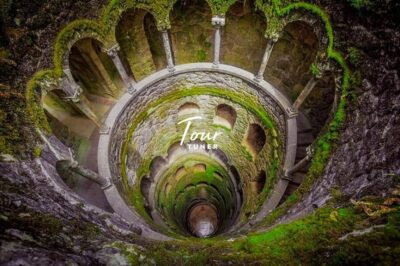 ★ 4.7Sintra, Pena, Regaleira, Cabo da Roca & CascaisTickets from $2319,656 traveller reviews
 ★ 4.2Sintra: Pena Palace and Park Entrance TicketTickets from $1117,410 traveller reviews
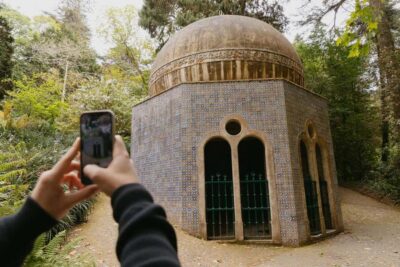 ★ 4.7Pena Palace, Sintra, Cabo da Roca, & Cascais DaytripTickets from $919,981 traveller reviews
 ★ 5.0Sintra and Cascais Small-Group Day Trip from LisbonTickets from $607,018 traveller reviews
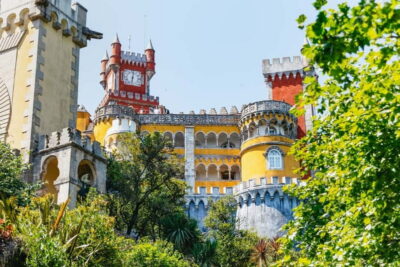 ★ 4.8Sintra, Pena, Cabo da Roca, Cascais Tour with PickupTickets from $575,080 traveller reviews
 ★ 5.0Small Group Tour to Sintra, Pena Palace, Cabo Roca and CascaisTickets from $673,559 traveller reviews
 ★ 4.9Sintra, Pena Palace, Cabo da Roca, & Cascais TourTickets from $563,509 traveller reviews
 ★ 4.8Sintra, Pena, Cabo da Roca Coast & Cascais Day TourTickets from $413,124 traveller reviews