
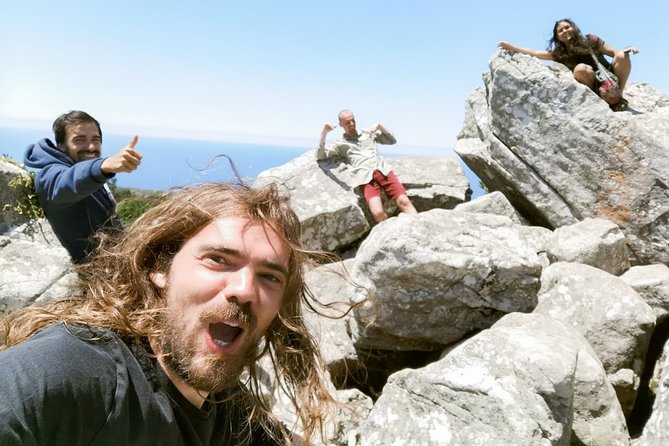
Review · SINTRA DAY TRIPS
Know Sintra through the eyes of a local archeologist private tour
Sintra has layers most tours miss. This private tour lets you see Sintra through the eyes of a local archaeologist, moving from ruin to ruin with context you will not get on a quick bus stop.
I love the full attention you get on a private outing, plus the way each stop connects the dots between stone, faith, and everyday life in older eras. I also like that the major sights here are marked as admission free, so your money goes toward interpretation and guiding instead of ticket lines.
One consideration: you will do some walking on forest paths, including a short descent for the final viewpoint. If you prefer flat, paved routes only, plan on choosing more gentle footwear and a slower pace.
Key highlights you will feel immediately
- Private guide, private pacing, so you can ask questions and linger when something grabs your attention
- Diogo’s archaeology angle, with on-site explanations tied to excavations and artifacts
- Classic car or electric Jeep transfers, so you spend less time negotiating Sintra’s roads
- Three archaeology-focused stops, each with a different kind of ruin and a different story
- Mostly free admissions, which helps this feel like value when you want guided meaning, not entrance costs
- Forest escape energy at Peninha and Adrenunes, away from the loudest crowds
Private archaeology in Sintra: why this format works
Sintra can be a bit of a theme park if you only chase the big names. This is different. You ride into the mountains with someone who studies what you are looking at, then you slow down at places where the ground still holds the evidence.
The best part is that your guide is not just reciting dates. Diogo, the local archaeologist behind the experience, explains how sites were used, what was found, and what might be missing. That shift helps you see ruins as places people actually lived through, visited, feared, and rebuilt.
Because it is private, the day can bend a little around your interests. If you want more time for questions about Moorish-era remains, you can usually get it. If you would rather focus on religious sites and ancient “mystery stone” vibes, you can steer the conversation. That kind of flexibility is hard to find on a group tour.
You can also read our reviews of more private tours in Sintra



Getting to the sites: classic car or electric Jeep, plus snacks
The tour runs about 3 to 4 hours, with pickup offered, and it starts back at the area around Queijadas da SapaVolta do Duche 12, 2710-631 Sintra. You will also see a pickup at the Sintra train station mentioned in the flow of the day, so it is set up for easy arrival.
Transportation matters here. Sintra’s roads and hills can be tiring, and the stops are scattered. The classic car or electric Jeep option helps you conserve energy for the walk and the viewpoints, not for traffic stress.
Another small but meaningful win: snacks are included. In a place where you are moving between forest air and uphill ruins, having something on hand keeps the day comfortable. You will not be hunting for food between stops.
Stop 1: Castelo dos Mouros and the open-air excavation museum
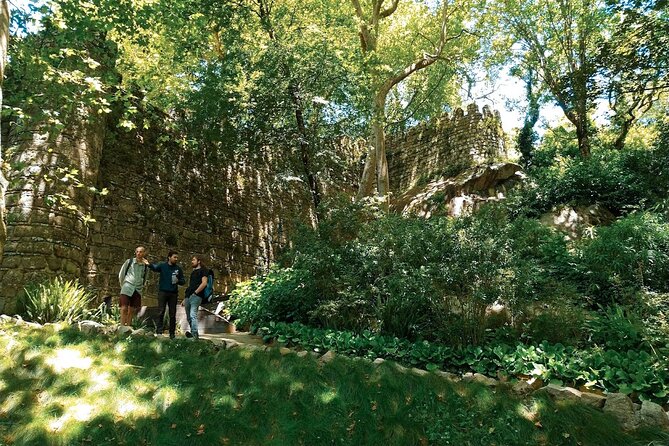
You start with Castelo dos Mouros, beginning with pickup at the station area and then heading to the gates of the Moorish castle. The setting is a ruined medieval village, and it feels like history is hovering right at eye level.
This stop is special because it is not just “old stones.” You are shown an open-air archaeological museum tied to excavations. Diogo specifically references work from 2012, and you see old structures, graves and remains that seem to rise from the ground, plus a museum area with artifacts discovered there.
What you should expect on the ground:
- A ruined village atmosphere, where the scale of settlement is easier to grasp than in a museum room
- Archaeology explanations that connect the place to what was uncovered and how the site is interpreted today
- Enough time to see the museum elements without rushing, about 45 minutes of focus time
Possible drawback: this is a ruin and open-air setting. If weather is rainy or very hot, you will feel it more than you would inside. Bring a light layer, and if you are sensitive to sun, use sunscreen. The time block is short enough that you can still make it enjoyable.
Stop 2: Santuario da Peninha, chapel ruins, and Lisbon bay views
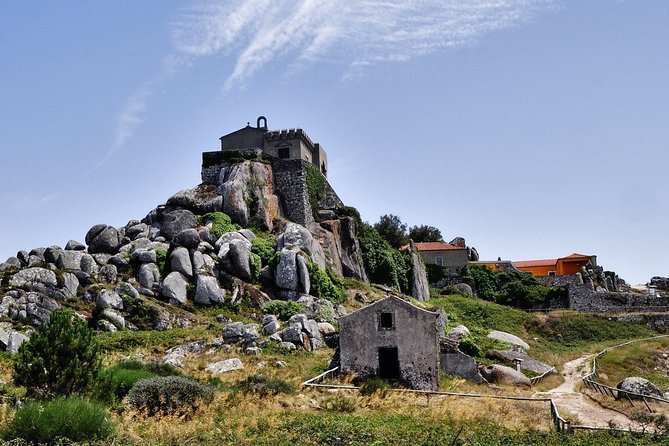
Next comes Santuario da Peninha, tucked into the Sintra forest. You climb toward a hilltop where an old chapel sits, known as a pilgrimage spot tied to a miracle. Even if you are not focused on religion, the human story matters, because pilgrimage sites often explain why certain views and places stay important for centuries.
You also spot another ruined building on the hilltop. The foundations are described as connected to the foundation of Portugal itself. That kind of layered meaning is one reason I like this stop: it is not a single-era monument. It is a crossroads of eras, beliefs, and local memory.
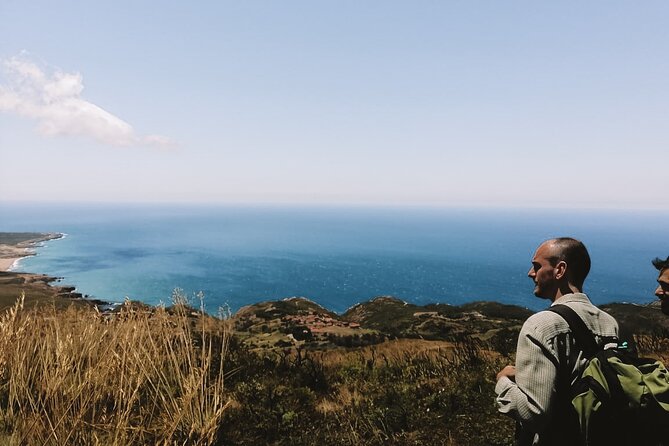
Then you move onward to a viewpoint area that is more off the crowd path. The day explicitly aims to keep you away from the busiest zones, and Diogo positions it as mostly known by locals.
What makes this stop worth your time:
- A hilltop chapel atmosphere, where ruins feel tied to walking paths and intention
- A “peaceful distance from crowds” feeling, especially once you get to the less-frequented viewpoints
- One of the best vantage moments described for the Lisbon bay area
Time is about 30 minutes here. That can sound short, but it works because the main goal is viewpoint and interpretation, not a long hike. Wear shoes that handle forest ground, because you will still be moving on uneven terrain.
Stop 3: Penedo de Adrenunes and the Stonehenge-like mystery
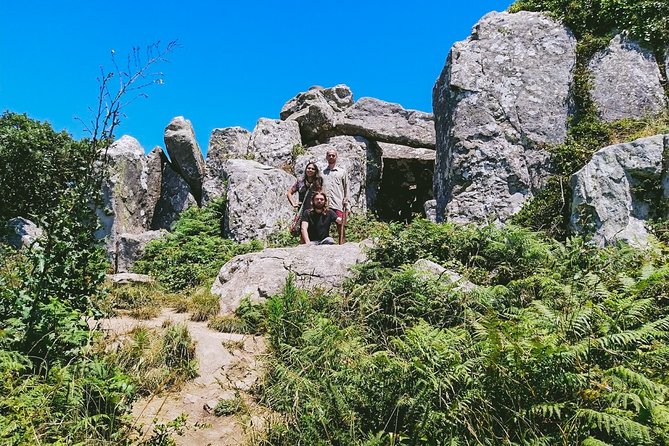
The final stop, Penedo de Adrenunes, is where the day shifts from “documented ruins” into “ancient mystery.” After about a 15 minute walk deep into the Sintra forest, you reach a hilltop facing the westernmost point of continental Europe.
The site gets described with Stonehenge vibes, which is a great mental hook even before you arrive. The key detail is that archaeological artifacts have not been found there, yet it is believed the place may have been used by ancestors about 5000 years ago.
So what are you doing here, exactly?
- You are looking at a prehistoric-era speculation framed by evidence and by absence of evidence
- You are getting a guide who can explain why a site can be important even when proof is limited
- You are pairing the “what we know” with the “what we think” in a way that feels honest
Time for this stop is about 45 minutes, which is enough to enjoy the viewpoint without feeling like you rushed the walk. The main drawback is the walking portion, not the time at the top. If you know you do not love forest paths, keep your expectations realistic and take it at an easy pace.




What you are really paying for: value, not just transportation
At $113.84 per person, you might wonder if this is “worth it” compared to a standard Sintra day. Here is how I judge it.
You are paying for three things that usually cost extra elsewhere:
- A private, archaeology-led guide who can answer questions on the spot.
- Transport that reduces hassle across hill terrain, handled by classic car or electric Jeep.
- The interpretive layer at stops that are often hard to understand without someone translating the ground-level meaning.
Also, each stop lists admission ticket free. That matters because it shifts your day away from budgeting for entries and toward budgeting for time and guidance. In a place like Sintra, where the big-name attractions can eat up the day fast, having a route built around meaning feels like a smart trade.
One more value signal: the day seems designed to avoid wasted time. The pacing is tight enough to cover three stops, but not so frantic that you cannot absorb what you are seeing. People who care about history tend to love that balance.
The guide factor: Diogo’s style and how it shows up
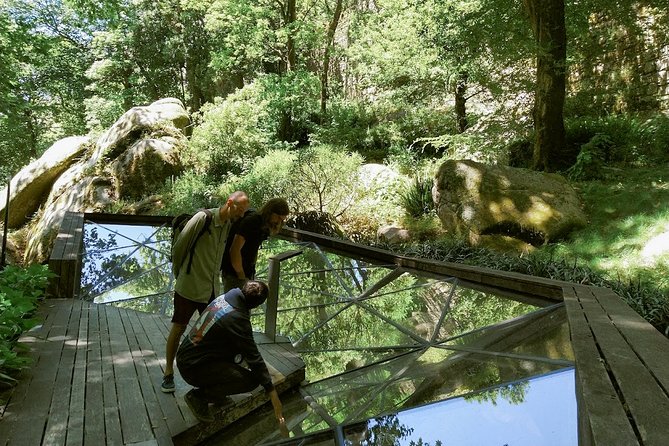
Diogo comes through in the way the day is described: adaptable, story-driven, and willing to tailor. You can feel it in the tour concept itself, which is not just a checklist. It is built around interpretation, small route adjustments, and taking questions seriously.
What this means for you in real life:
- If you want more context about Moorish castle-era remains, you can expect deeper explanations tied to excavation findings.
- If you care about views and atmosphere, Peninha is positioned for that payoff away from the busiest areas.
- If you want a “mystery with boundaries,” Adrenunes gives you speculation framed around missing evidence.
It also sounds like the experience can handle changes if a site is closed for maintenance. That sort of flexibility is a quiet quality upgrade, because ruins do not care about your schedule, and a good guide does.
Who this tour fits best
This experience is ideal if you:
- Like ruins more than gift shops
- Want history explained in plain language tied to what you see on the ground
- Enjoy off-the-main-path viewpoints and forest walks
- Prefer a day that can adjust to your interests rather than forcing you through a rigid script
It is also a good choice for families who want education without turning the day into a lecture. The approach can be tailored, and the mix of archaeology and viewpoints keeps things varied.
If you strongly dislike walking on uneven forest paths, you might prefer a less hiking-focused outing. The walks are not described as extreme, but they are real.
Should you book this Sintra archaeologist tour?
If your ideal Sintra day includes ruins you can actually understand, a guide who connects evidence to stories, and viewpoints that feel calmer than the loudest hotspots, I would book this.
It is not the best pick if you only want famous landmark photos with minimal effort. This tour is built around interpretation, including moments where evidence is partial, like at Penedo de Adrenunes.
My practical recommendation: book if you can handle light forest walking and you want history explained by someone who treats the ground like a source document. If that sounds like your kind of travel day, you will likely leave with Sintra feeling personal, not just photographed.
FAQ
How long is the Sintra local archaeologist tour?
It lasts about 3 to 4 hours.
Is this tour private?
Yes. It is a private tour, and only your group participates.
Do I need to pay admission tickets at the stops?
Admission tickets are listed as free for Castelo dos Mouros, Santuario da Peninha, and Penedo de Adrenunes.
Is pickup included?
Pickup is offered, and the tour starts around the meeting point area in Sintra. Pickup is also described as available from the Sintra train station.
What language is the tour in?
The tour is offered in English.
What is the cancellation policy?
Free cancellation is available up to 24 hours in advance for a full refund.
More Private Tours in Sintra



More Tours in Sintra


More Tour Reviews in Sintra
Not for you? Here's more nearby things to do in Sintra we have reviewed











Sintra Day Trips, side by side.
 ★ 4.7Sintra, Pena, Regaleira, Cabo da Roca & CascaisTickets from $2319,656 traveller reviews
 ★ 4.2Sintra: Pena Palace and Park Entrance TicketTickets from $1117,410 traveller reviews
 ★ 4.7Pena Palace, Sintra, Cabo da Roca, & Cascais DaytripTickets from $919,981 traveller reviews
 ★ 5.0Sintra and Cascais Small-Group Day Trip from LisbonTickets from $607,018 traveller reviews
 ★ 4.8Sintra, Pena, Cabo da Roca, Cascais Tour with PickupTickets from $575,080 traveller reviews
 ★ 5.0Small Group Tour to Sintra, Pena Palace, Cabo Roca and CascaisTickets from $673,559 traveller reviews
 ★ 4.9Sintra, Pena Palace, Cabo da Roca, & Cascais TourTickets from $563,509 traveller reviews
 ★ 4.8Sintra, Pena, Cabo da Roca Coast & Cascais Day TourTickets from $413,124 traveller reviews